The Methylation Gap
Since 1998, synthetic folic acid has been in every loaf of bread in America. Up to 60% of people can't fully process it. The downstream effects reach your serotonin, your cognition, and the physical structure of your brain.
The Methylation Gap
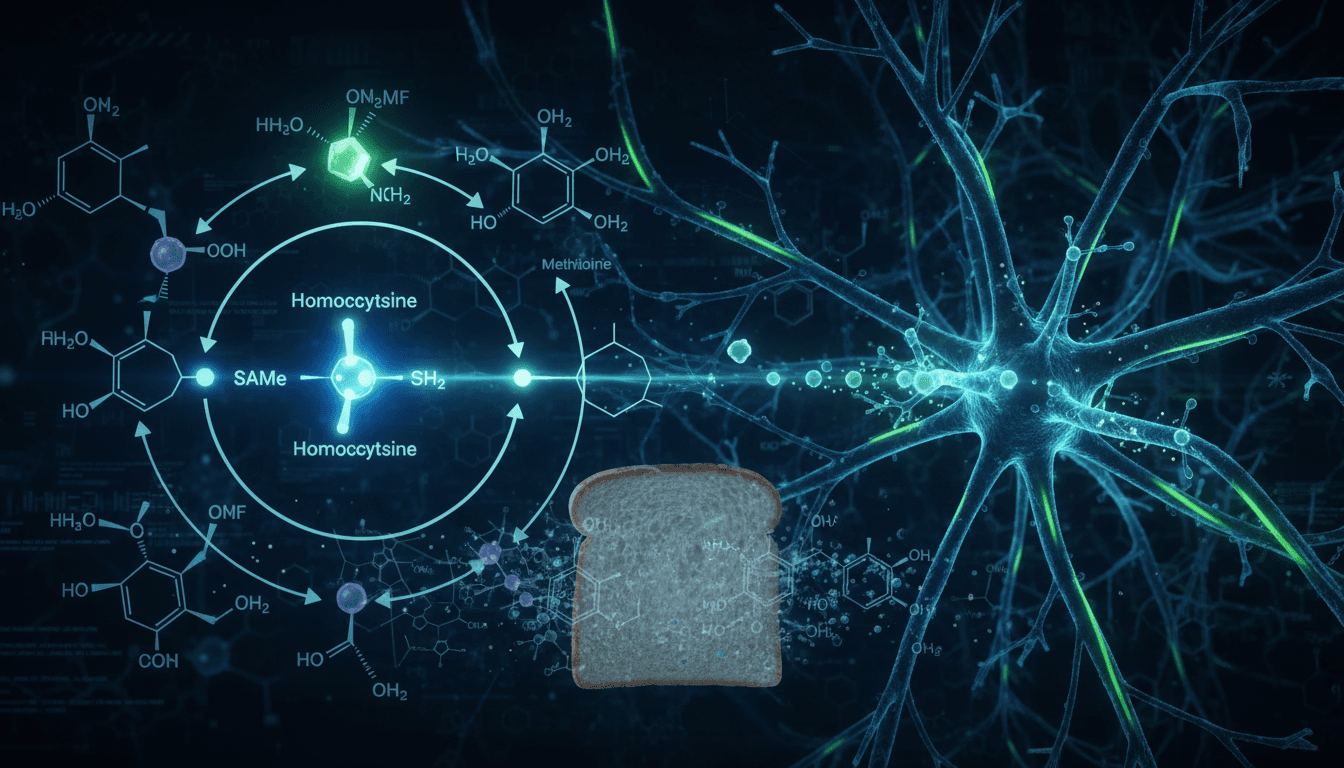
Every loaf of enriched bread in America has been chemically altered since 1998. The FDA mandated synthetic folic acid in all enriched grain products to prevent neural tube defects, and it worked. But that same synthetic vitamin requires a specific enzyme to convert it into something your body can use, and up to 60% of the population carries gene variants that slow that enzyme down. The unconverted folic acid accumulates. The methylation cycle it was supposed to support runs below capacity. And that cycle controls everything from DNA repair to the production of serotonin and dopamine.
This ten-part series traces a line from the bread aisle to your brain chemistry. You'll learn what methylation actually is and why it matters, what the MTHFR gene variants do to your enzyme activity, and how impaired methylation connects to depression, cognitive decline, and brain atrophy. You'll find out what a thought physically is at the cellular level, patterns of electrochemical activity that depend on nutrients most people never think about. And you'll learn about the blood test most doctors never order that could explain a lot.
In This Series
- 1
What's Actually In Your Bread
Since 1998, every slice of enriched bread in America contains synthetic folic acid. The policy saved thousands of babies. It also created a problem nobody talks about.
4 min read - 2
Your Body is Contaminated by the Vitamin In Your Bread
Folic acid and folate get used interchangeably. They're not the same chemical. Your body knows the difference even if your doctor doesn't.
4 min read - 3
The Gene 60% of Americans Carry (That Most Doctors Ignore)
MTHFR variants reduce your ability to convert folic acid into usable folate. Up to 60% of the population has one. Most have never been tested.
4 min read