Rewriting the Predictions: A User Manual for Your Brain
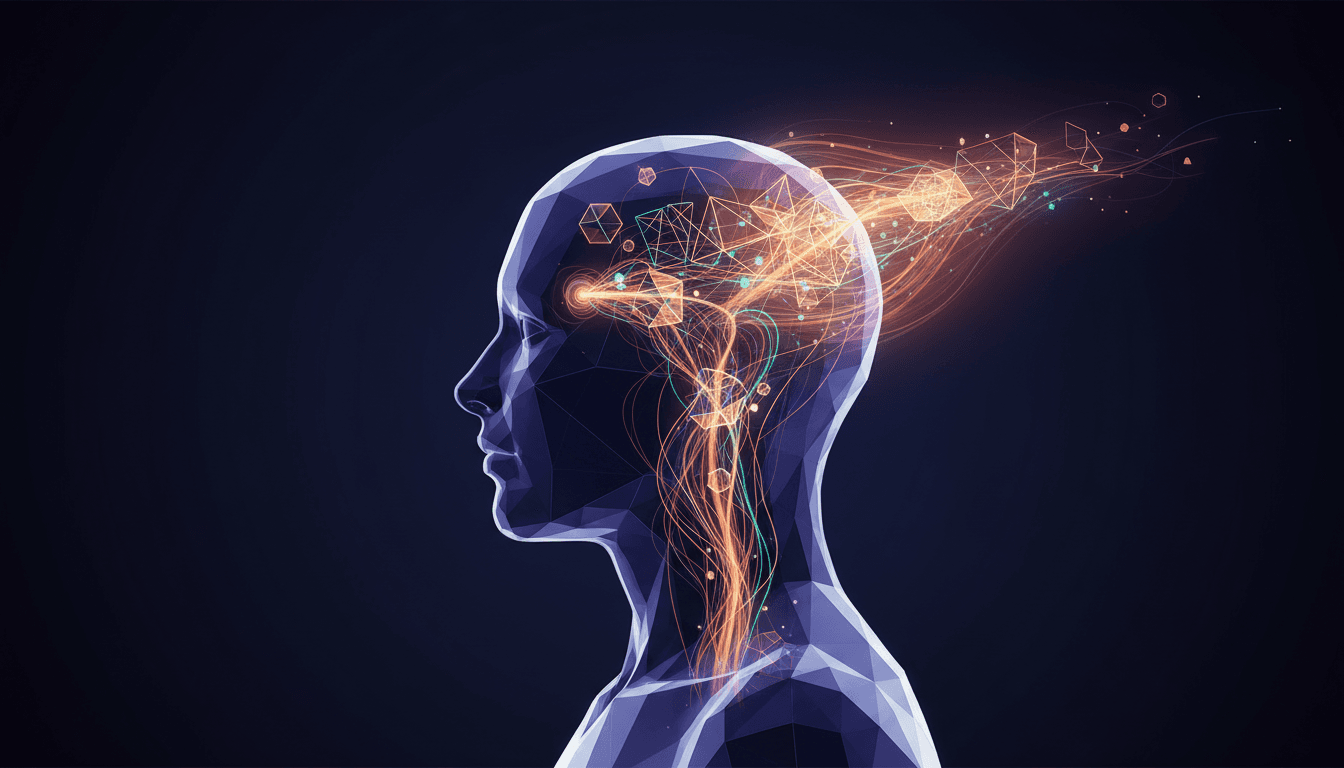
If your brain is a prediction machine, then changing your life means changing your predictions. The research points to specific mechanisms for doing exactly that.
This entire series has been building to one question. If your brain is a prediction machine that generates reality from the top down, checks for errors, and updates accordingly, how do you change the predictions?
Not philosophically. Mechanically. What are the specific things that force your brain's generative model to rewrite itself?
The answer turns out to be surprisingly simple. You need prediction errors. Lots of them. In the right contexts. With the right precision-weighting. Everything that reliably changes minds, from meditation to therapy to travel to exercise, works because it generates prediction errors that your brain can't ignore.
Here's the user manual.
Meditation: Turning Down the Worry Signal
Mindfulness has a reputation problem. It sounds soft. Vague. Like something you do when you've given up on real solutions.
The mechanism is more precise than that. Norman Farb and colleagues at the University of Toronto showed in 2007 that mindfulness training shifts neural activity from the default mode network (the story-telling machine) to the insula and somatosensory cortex (the body-sensing system). From running simulations about what might go wrong tomorrow to registering what's actually happening now.
That's not relaxation. That's recalibrating the precision knobs on your prediction machinery. Sahib Khalsa and colleagues argued in a 2018 paper in Biological Psychiatry that this kind of interoceptive accuracy is foundational to nearly every mental health condition.
I started meditating about a year ago. Not because I believed in it. Because I'd read enough of this research to understand why it should work. My brain still generates anxious predictions. It just holds them with less conviction.
Exercise: Safe Panic
Your heart races. You sweat. You breathe hard. Every interoceptive signal screams that something is wrong.
But nothing is wrong. You're just running.
Exercise generates massive prediction errors in a safe context. Your brain predicts danger, encounters no actual threat, and has to update. Session after session.
Joshua Broman-Fulks and colleagues demonstrated in a 2004 study in Behaviour Research and Therapy that aerobic exercise significantly reduces anxiety sensitivity. The effect was particularly strong for panic disorder. Which makes sense. Panic disorder is catastrophic precision-weighting on normal arousal signals. Your heart beats a little fast and your brain treats it like a heart attack. Exercise teaches the brain, through thousands of repeated errors, that elevated heart rate is not evidence of dying.
Lisa Feldman Barrett's constructed emotion theory generalizes this. In her 2017 framework, emotions aren't hardwired circuits. They're the brain's best prediction about what interoceptive signals mean in context. Change the predictions, change the emotional experience attached to them.
Therapy: Prediction Errors on Purpose
Every form of psychotherapy that works, works by generating prediction errors. The mechanisms differ. The principle doesn't.
CBT tests catastrophic predictions against reality. You believe "if I speak up in the meeting, everyone will think I'm stupid." Your therapist makes you speak up. Nobody thinks you're stupid. Prediction error. Model updates.
Michelle Craske and colleagues reframed exposure therapy through this exact lens in a 2014 paper in Behaviour Research and Therapy. The goal isn't habituation. It's inhibitory learning. The spider prediction doesn't disappear. A new prediction forms alongside it: "spiders are usually harmless." With enough error signals, the new one wins.
Psychodynamic therapy surfaces predictions you don't even know you're running. Childhood priors about whether people can be trusted, whether you deserve love, whether conflict means abandonment. They shape perception for decades from below conscious awareness. Making them explicit is step one to generating errors against them.
ACT goes the other direction. It doesn't try to change predictions. It reduces the precision assigned to distressing ones. Your brain still forecasts catastrophe. You learn to hold the forecast lightly. As Harriet Feldman and Karl Friston argued in their 2010 paper on attention and free-energy, precision-weighting determines which predictions drive behavior. Turn down the precision and the prediction loses its grip.
Novel Experience: Forcing Updates
Travel to a country where you don't speak the language. Learn an instrument. Talk to someone whose worldview is nothing like yours.
Every one of these experiences generates prediction errors by definition. Your brain's model doesn't cover the new territory. Errors cascade up the hierarchy. The model has to update.
Andy Clark's "The Experience Machine" describes how predictive brains actively seek the right kind of novelty. Not chaos. Not routine. The productive middle ground where prediction errors are frequent enough to drive learning but manageable enough to integrate.
This explains something most people have noticed but can't articulate. Time feels slower during novel experiences. Jakob Hohwy's "The Predictive Mind" framework suggests why. More prediction errors means more updating per unit of time. More updating means more distinct moments encoded. More encoded moments means the subjective experience of duration expands.
Routine does the opposite. When every day matches your predictions, minimal updating occurs. Minimal encoding. Years vanish.
Building something I've built before, time evaporates. Working with a framework I've never used, hours feel substantial. Same chair. Same screen. The difference is prediction error density.
The Meta-Principle
Karl Friston's free-energy principle says the brain minimizes prediction error across its lifetime. That's the prime directive. The brain has two ways to do it. It can update its predictions to match reality (learning). Or it can change reality to match its predictions (action). A healthy mind does both. An unhealthy mind gets stuck doing only one.
Depression looks like a brain that won't update. The model says "nothing will work, nothing will change, I am helpless." Contradictory evidence gets explained away. The predictions are held with such high precision that error signals can't break through. Robin Carhart-Harris and Karl Friston's REBUS model from 2019 suggests this is exactly why psychedelics (which temporarily flatten precision across the hierarchy) can sometimes break the logjam.
Anxiety looks like the same machinery cranked toward threat. Forecasts about what could go wrong, held so tightly they override present-moment evidence of safety.
The user manual is this: generate prediction errors deliberately. In safe contexts. Meditation, exercise, therapy, novel experience. They're all doing the same thing through different mechanisms.
You Are the Predictions
Anil Seth put it precisely in "Being You." The self is the brain's best prediction about the source of its own interoceptive signals. You are not a fixed thing observing predictions. You are the predictions.
Which means changing your predictions is changing yourself. Not metaphorically. The brain that runs different predictions perceives a different world, feels different emotions, makes different choices. It is, in every meaningful sense, a different brain.
So growth is not willpower. It's not positive thinking. It's putting yourself in contexts where your brain's model encounters reality and has to change.
Sit still and notice what's actually happening in your body. Move hard enough to generate safe arousal. Talk to someone trained to surface your hidden assumptions. Go somewhere your model has never been.
Your brain is a prediction machine. Feed it errors.
Sources
- Whatever Next? Predictive Brains, Situated Agents, and the Future of Cognitive Science (Clark, 2013, Behavioral and Brain Sciences) (opens in new tab)
- A Theory of Cortical Responses (Friston, 2005, Philosophical Transactions of the Royal Society B) (opens in new tab)
- Being You: A New Science of Consciousness (Seth, 2021, Dutton/Faber & Faber) (opens in new tab)
- The Theory of Constructed Emotion (Barrett, 2017, Social Cognitive and Affective Neuroscience) (opens in new tab)
- REBUS and the Anarchic Brain: Toward a Unified Model of the Brain Action of Psychedelics (Carhart-Harris & Friston, 2019, Pharmacological Reviews) (opens in new tab)
- Interoception and Mental Health: A Roadmap (Khalsa et al., 2018, Biological Psychiatry: CCNNI) (opens in new tab)
- Attention, Uncertainty, and Free-Energy (Feldman & Friston, 2010, Frontiers in Human Neuroscience) (opens in new tab)
- Attending to the Present: Mindfulness Meditation Reveals Distinct Neural Modes of Self-Reference (Farb et al., 2007, SCAN) (opens in new tab)
- Attention Regulation and Monitoring in Meditation (Lutz et al., 2008, Trends in Cognitive Sciences) (opens in new tab)
- Effects of Aerobic Exercise on Anxiety Sensitivity (Broman-Fulks et al., 2004, Behaviour Research and Therapy) (opens in new tab)
- Maximizing Exposure Therapy: An Inhibitory Learning Approach (Craske et al., 2014, Behaviour Research and Therapy) (opens in new tab)
- The Predictive Mind (Hohwy, 2013, Oxford University Press) (opens in new tab)
- The Experience Machine: How Our Minds Predict and Shape Reality (Clark, 2023, Pantheon) (opens in new tab)
- An Interoceptive Predictive Coding Model of Conscious Presence (Seth, Suzuki & Critchley, 2012, Frontiers in Psychology) (opens in new tab)
Part of the Prediction Machine series. Previous: You Are a Hallucination You Tell Yourself.