Post-Traumatic Growth: Why Trauma Builds More Than It Breaks
50-70% of trauma survivors report meaningful positive change afterward. Not despite the suffering, but through it. The science of post-traumatic growth explains why.
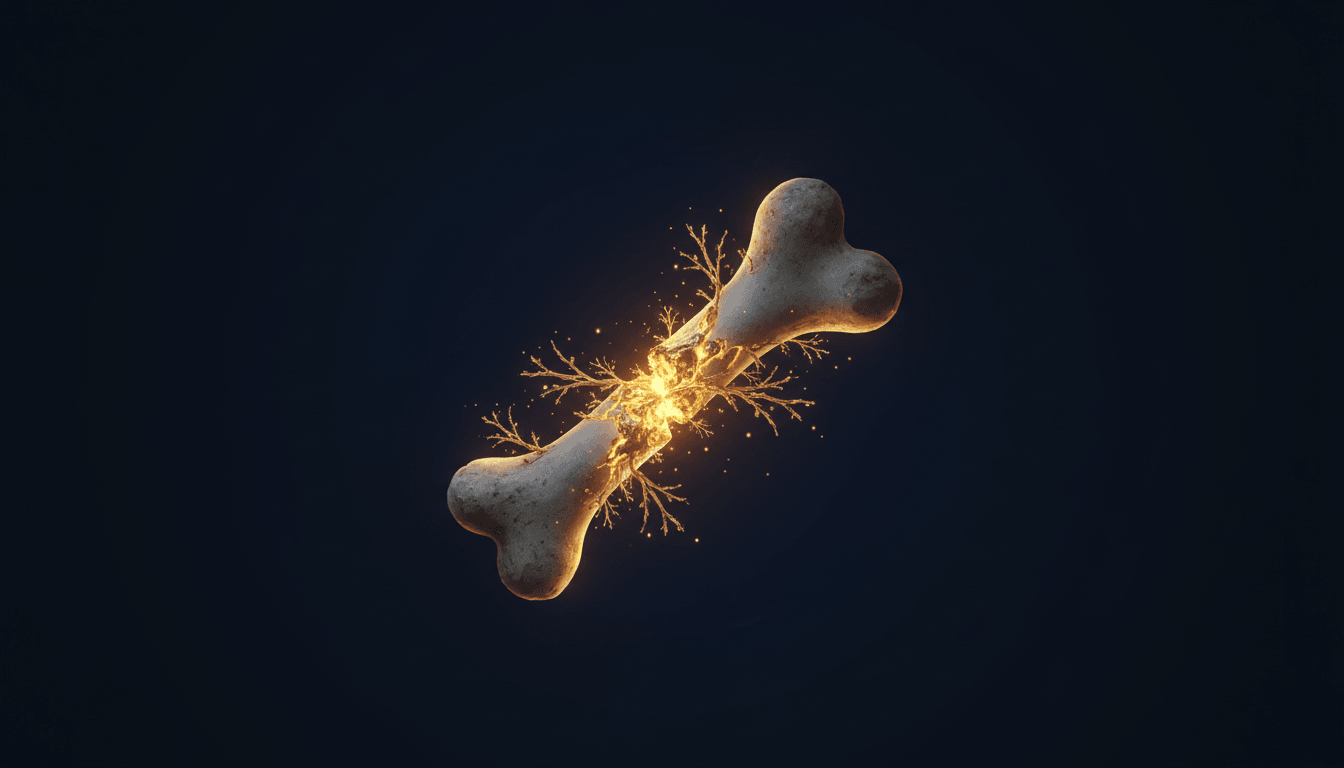
Bones that break under stress heal thicker at the fracture site.
That's not a metaphor. It's called Wolff's Law. The body deposits extra calcium and collagen at the point of failure, building a structure stronger than the original. The bone remembers where it broke, and it overcompensates.
In the mid-1990s, two psychologists at the University of North Carolina Charlotte asked whether humans do the same thing psychologically. Richard Tedeschi and Lawrence Calhoun spent years interviewing people who had survived the worst things that can happen to a person. Combat. Cancer. Bereavement. Assault. Sexual violence. What they found wasn't just survival. It was transformation.
They called it post-traumatic growth.
The Five Domains
Tedeschi and Calhoun developed the Post-Traumatic Growth Inventory to measure what changed in people after severe trauma. The changes clustered into five domains.
Greater appreciation for life. Deeper relationships. Increased personal strength. Recognition of new possibilities. Spiritual or existential development.
The numbers are striking. Across studies, 50-70% of trauma survivors report significant growth in at least one domain. Not feeling okay. Not getting back to baseline. Actual positive change that wasn't there before.
A 2019 meta-analysis by Grace Wu and colleagues covering 52 studies found something even more counterintuitive. There was a moderate positive correlation between trauma severity and subsequent growth. The worse the disruption, the more potential for reorganization.
That finding makes people uncomfortable. It should. It doesn't mean trauma is good. It means humans are more adaptive than our cultural narrative about trauma suggests.
Shattered Assumptions
The mechanism isn't mysterious once you understand it.
Tedeschi describes it as "shattered assumptions." You walk through life with a mental model of how the world works. You're safe. Bad things happen to other people. The future is roughly predictable. Then something destroys that model completely.
The rebuilding is where growth happens. Not the trauma itself. The cognitive reconstruction afterward.
Tedeschi separates two types of post-trauma thinking. Intrusive rumination is the flashbacks, the unwanted replays, the 3am spirals. Deliberate rumination is the active process of making meaning. Asking what this changes about how you see the world. Both involve thinking about the event repeatedly. Only one produces growth.
Narrative construction matters too. The act of building a coherent story about what happened and what it means appears to be one of the primary engines of growth. Social disclosure accelerates it. Telling your story to people who can receive it without judgment isn't just processing. It changes the processing.
James Coan at the University of Virginia showed in 2006 that simply holding a partner's hand reduced the brain's threat response to electric shocks. We handle adversity differently when we're not doing it alone.
Not Bouncing Back. Building Forward.
Stephen Joseph at the University of Nottingham pushed the theory further with what he calls "organismic valuing theory." His argument is that humans have an innate tendency toward growth following adversity. Not resilience in the sense of returning to the previous state. Growth in the sense of becoming something new.
Joseph draws a critical line between two post-trauma responses. Accommodation means revising your worldview to incorporate what happened. It's painful. It requires admitting that your old model was incomplete. But it produces a more complex, more accurate understanding of reality. Assimilation means forcing the trauma to fit your existing beliefs. Minimizing it. Pretending you're fine. Getting "back to normal" as fast as possible.
Most of what our culture calls recovery is actually assimilation. Get back to work. Move on. Be strong. That approach preserves the old worldview but leaves the person more fragile, because the model that already failed once is still running.
Accommodation breaks the old model down and builds something better. It's slower. It's messier. It's where growth lives.
The Stress Mindset Connection
This connects directly to the broader stress paradox. Alia Crum at Stanford showed in 2013 that people who view stress as enhancing (rather than debilitating) show fundamentally different physiological responses to challenge. More DHEA relative to cortisol. Better cardiovascular profiles. Greater cognitive flexibility under pressure.
Post-traumatic growth follows the same logic at a larger scale. People who believe that struggle can produce growth are more likely to engage in the deliberate rumination and meaning-making that actually produces it. The belief doesn't cause the growth directly. It changes the behavior that causes the growth.
Kelly McGonigal makes this point in The Upside of Stress. The most important factor in whether stress helps or harms you is whether you believe stress can help you. Keller and colleagues found in their 2012 study of 28,000 adults that high stress combined with the belief that stress is harmful increased mortality risk by 43%. High stress without that belief? No increased risk at all.
Scale that finding up to trauma, and the implications are profound. The cultural narrative that trauma permanently damages people may itself be causing damage. Not because trauma isn't terrible. It is. But because the story we tell about trauma's effects shapes the cognitive and behavioral response that determines the actual outcome.
What Growth Is Not
Post-traumatic growth isn't "everything happens for a reason." That's assimilation disguised as wisdom. It takes a random, often senseless event and wraps it in a narrative that preserves the existing worldview.
It's not "what doesn't kill you makes you stronger." Sometimes what doesn't kill you leaves you with PTSD, chronic pain, and broken relationships. Growth isn't automatic. It isn't guaranteed.
And it's not a reason to minimize suffering. Telling someone in acute trauma that they'll grow from this is about as helpful as telling someone with a broken leg that the bone will heal thicker. Technically true. Completely unhelpful in the moment.
Post-traumatic growth requires time, supportive relationships, and the specific cognitive process of deliberate meaning-making. Feder, Nestler, and Charney documented in their 2009 review in Nature Reviews Neuroscience that resilience and growth depend on a complex interplay of neurobiological factors, social support, and active coping strategies. The capacity is built into the system. The outcome depends on the environment.
The Bone That Remembers
I lost my best friend Riley to suicide when I was 20. What followed was years of alcohol abuse and self-destruction that I'm not going to romanticize by calling it a growth journey.
But something did change on the other side. Not because the loss was meaningful. It wasn't. A 20-year-old dying is not meaningful. It's a waste.
What changed was my model of the world. The old version assumed permanence. That people would just be there. That I had unlimited time. That loss was something that happened to other people. That model shattered completely, and the one I rebuilt was different. More honest. More urgent. More attentive to the people still here.
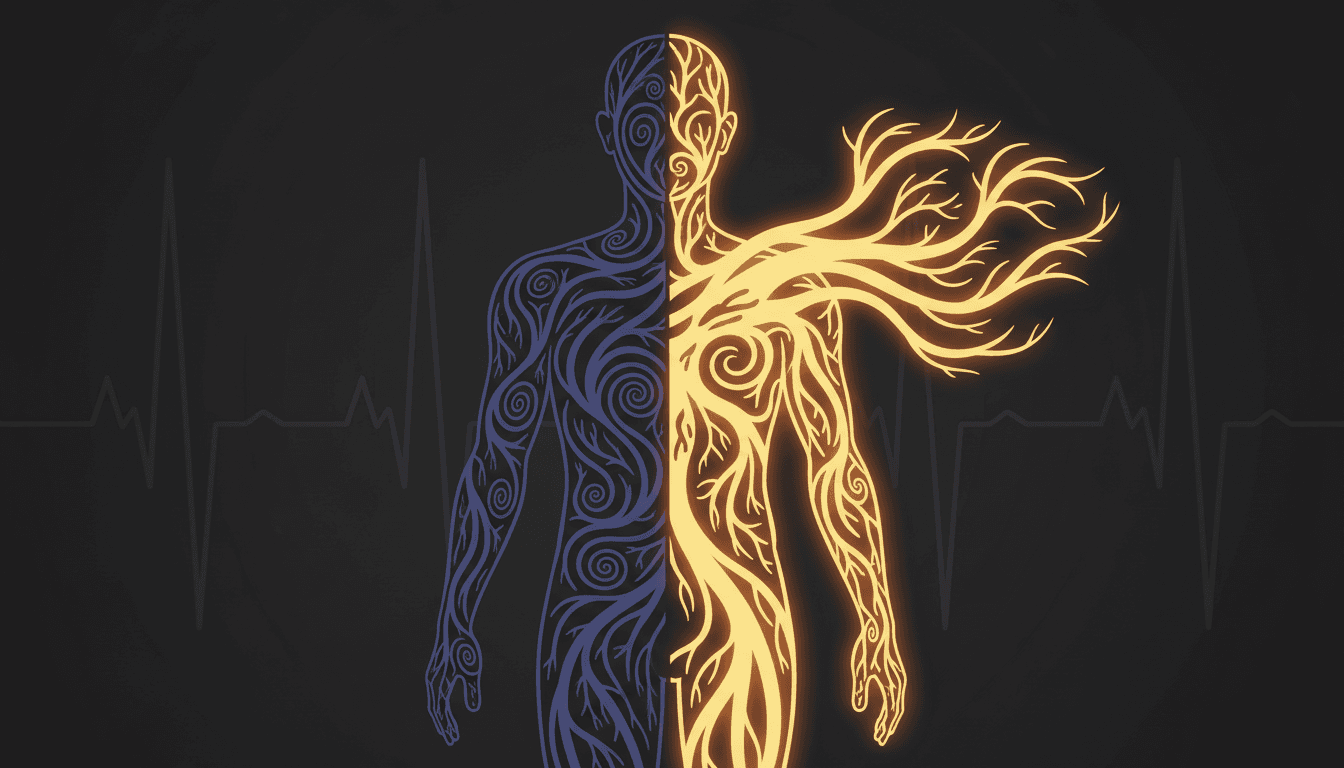
That's not silver lining. It's Wolff's Law applied to a worldview. The model broke under stress, and the one that replaced it was built thicker at the fracture site.
Tedeschi himself is careful to say that post-traumatic growth and post-traumatic distress coexist. You don't trade one for the other. The growth doesn't erase the pain. It exists alongside it, in the same person, at the same time. That paradox is the whole point.
The stress response isn't a design flaw. Neither is the capacity to be transformed by the worst thing that ever happened to you. Both are features of a system that was built to adapt under pressure.
The trauma breaks the model. The growth is in what you build next.
Sources
- Posttraumatic growth: Conceptual foundations and empirical evidence (Tedeschi & Calhoun, 2004, Psychological Inquiry) (opens in new tab)
- What Doesn't Kill Us: The New Psychology of Posttraumatic Growth (Joseph, 2011, Basic Books) (opens in new tab)
- Does the perception that stress affects health matter? The association with health and mortality (Keller et al., 2012, Health Psychology) (opens in new tab)
- Rethinking stress: The role of mindsets in determining the stress response (Crum, Salovey, & Achor, 2013, JPSP) (opens in new tab)
- Lending a hand: Social regulation of the neural response to threat (Coan, Schaefer, & Davidson, 2006, Psychological Science) (opens in new tab)
- Psychobiology and molecular genetics of resilience (Feder, Nestler, & Charney, 2009, Nature Reviews Neuroscience) (opens in new tab)
- The Upside of Stress: Why Stress Is Good for You, and How to Get Good at It (McGonigal, 2015, Avery) (opens in new tab)
- Posttraumatic Growth and Internet-Based Interventions: A Systematic Review and Meta-Analysis (Wu et al., 2019, JMIR Mental Health) (opens in new tab)
Part of the Stress Paradox series. Previous: Tell Yourself You're Excited: The Three-Word Stress Intervention That Actually Works. Next: Your Stress Response Has a Social Setting.