Twenty Thousand Neurons That Run Your Life
In 1972, two labs independently destroyed a tiny brain region in rats and wiped out their sense of time. That region contains 0.00002% of your neurons. It controls everything.
Your body doesn't have a clock. It has billions of them. And the thing coordinating all of them is a cluster of 20,000 neurons sitting right above where your optic nerves cross.
That's 0.00002% of your brain's total neurons. Destroy it and you lose all sense of time.
The Discovery Nobody Expected
In 1972, two research groups found this structure independently and didn't know about each other's work. Robert Moore and Victor Eichler at the University of Chicago lesioned a tiny region in rat brains called the suprachiasmatic nucleus. The rats stopped having circadian rhythms. Their cortisol cycles vanished. Same year, Friedrich Stephan and Irving Zucker at UC Berkeley did the same thing. Their rats lost rhythmic drinking behavior and locomotor activity. Both papers published within months of each other.
The SCN had been sitting there the whole time. Nobody knew what it did.
This resolved a debate that had been running for decades. Were biological rhythms truly internal, or were organisms just responding to environmental cues? The sun comes up, you wake up. Simple stimulus-response. No internal clock needed.
Jürgen Aschoff tested this in 1962 by putting humans in underground bunkers with no time cues. No sunlight. No clocks. No schedules. The subjects maintained roughly 24-hour cycles anyway. Their bodies kept time on their own. Though Aschoff initially measured the free-running period at about 25 hours, Charles Czeisler's group at Harvard corrected this to approximately 24.2 hours in a 1999 Science paper that used more precise methods to control for self-selected light exposure.
Michel Siffre, a French cave explorer, took this further by actually living it. He spent months underground in caves during the 1960s and 1970s. No sunlight. No external timing. His body maintained its own internal day. But it gradually drifted out of sync with the outside world. He'd go to sleep later and later, his subjective "day" stretching past 24 hours without the sun to anchor it.
The clock was real. It was internal. And it lived in 20,000 neurons.
A Clock You Can Transplant
The wildest evidence for how autonomous the SCN is came from a 1996 transplant study. Ralph Silver and colleagues took SCN tissue from one animal and transplanted it into another animal whose own SCN had been destroyed. Published in Nature.
The transplanted tissue restored circadian rhythms. That alone is remarkable. But the restored rhythm matched the donor's genetics, not the recipient's. The new clock ran on the old animal's schedule.
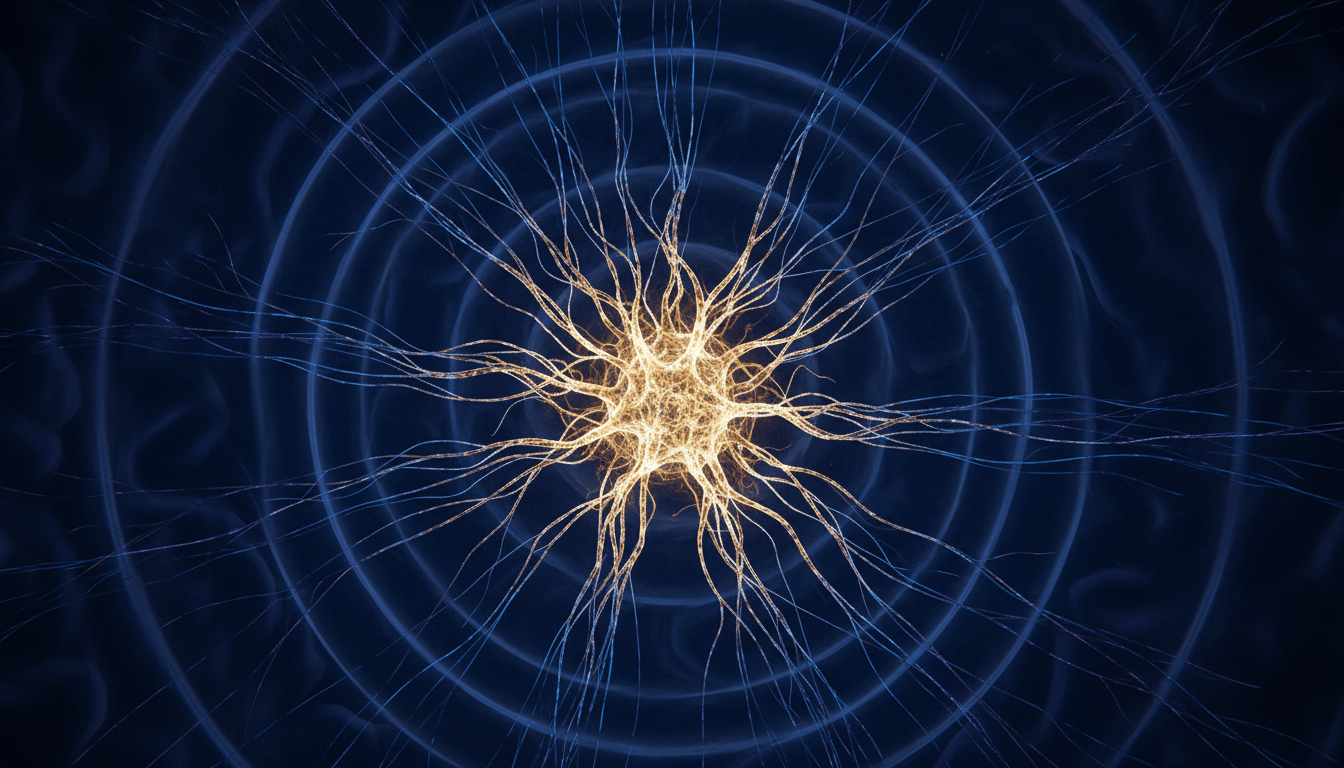
Each individual SCN neuron is an independent oscillator. It generates its own roughly 24-hour rhythm through a molecular feedback loop involving clock genes. Michael Hastings at the MRC Laboratory of Molecular Biology has shown that what makes the master clock precise isn't any single neuron. Individual neurons are noisy. Sloppy. Their timing drifts. But the network of 20,000 neurons coupled together is extraordinarily precise. The group corrects for the noise of its members.
It's like 20,000 mediocre musicians playing together somehow producing a perfect tempo. The coupling is the magic.
The Molecular Machinery
The clock genes driving these oscillations were first identified in fruit flies. Jeffrey Hall and Michael Rosbash at Brandeis, along with Michael Young at Rockefeller, mapped the molecular feedback loop. A gene called period gets transcribed into protein. The protein accumulates. Eventually it inhibits its own transcription. The protein degrades. Transcription starts again. One cycle takes about 24 hours.
This won them the 2017 Nobel Prize in Physiology or Medicine.
Joseph Takahashi's group at Northwestern found the mammalian equivalent. In 1997, they positionally cloned the Clock gene in mice, published in Cell. Mutations in this gene changed how long the animal's internal day lasted. The Fu lab at UCSF found a human version of this. In 2001, they published in Science a study of a family with Familial Advanced Sleep Phase Syndrome. A single mutation in the hPer2 gene made them fall asleep around 7:30 PM and wake at 4:30 AM. Their clock ran fast. Not because of habits or discipline. Because of a single phosphorylation site on one protein.
Your chronotype isn't just preference. It's partially genetic. A 2019 genome-wide association study by Jones and colleagues, published in Nature Communications, identified 351 genetic loci associated with chronotype in nearly 700,000 people. Whether you're a morning person or a night owl has a significant biological component that no alarm clock is going to overwrite.
What the Clock Actually Controls
The SCN doesn't just tell you when to sleep. It orchestrates your entire physiology across the 24-hour day.
Core body temperature bottoms out around 4:30 AM. Cortisol peaks around 6:30 AM to get you moving. Blood pressure rises sharply around 6:45 AM. Melatonin secretion begins around 9 PM. These aren't rough guidelines. They're tightly coordinated programs.
Satchin Panda's group at the Salk Institute published a landmark paper in Cell in 2002 showing that the circadian clock controls the transcription of key metabolic pathways. Somewhere between 8% and 43% of all mammalian genes show circadian expression patterns, depending on the tissue. Your liver, your gut, your immune cells. They all run on clocks.
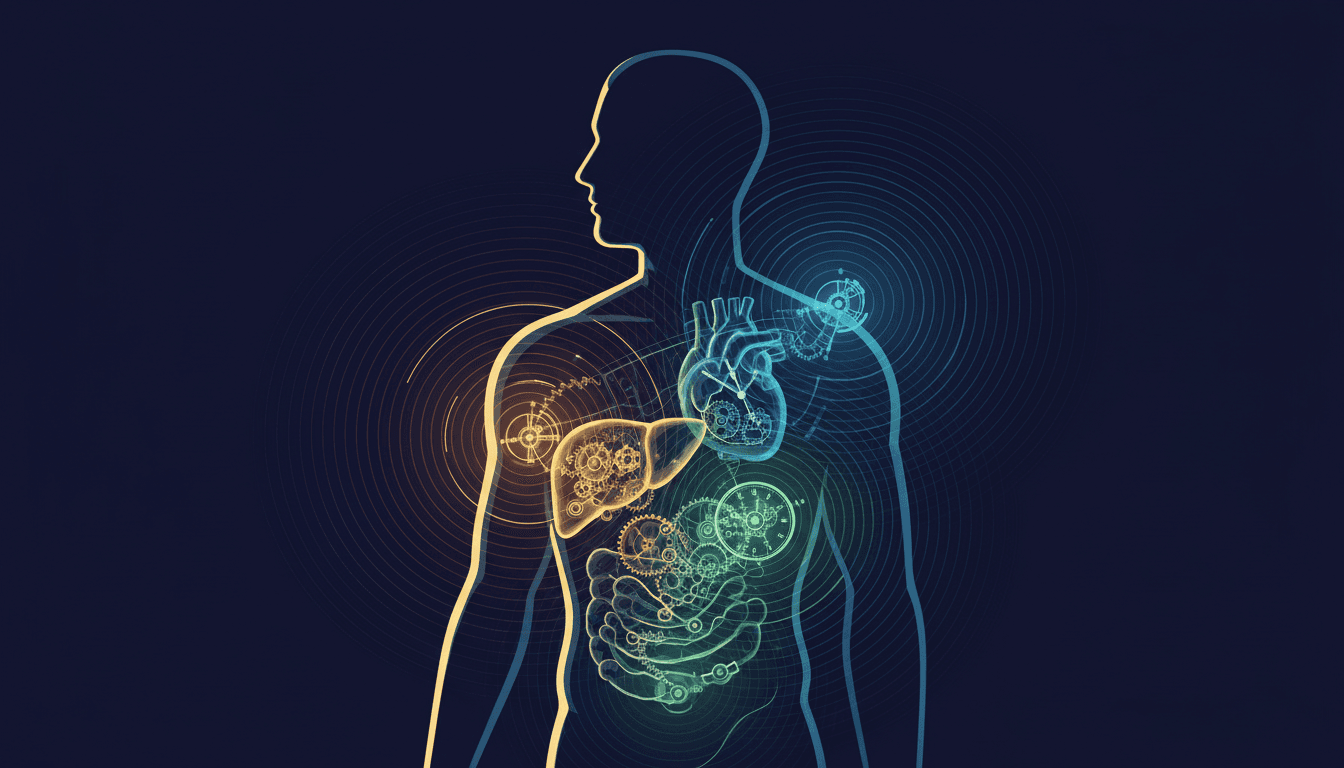
And here's where it gets complicated. The SCN is the master clock, but it's not the only clock. Nearly every cell in your body has its own molecular oscillator running that same transcription-translation feedback loop. The SCN synchronizes them. It's the conductor, and the rest of the body is the orchestra.
Light Is the Signal
The SCN sits directly above the optic chiasm for a reason. Light is its primary input.
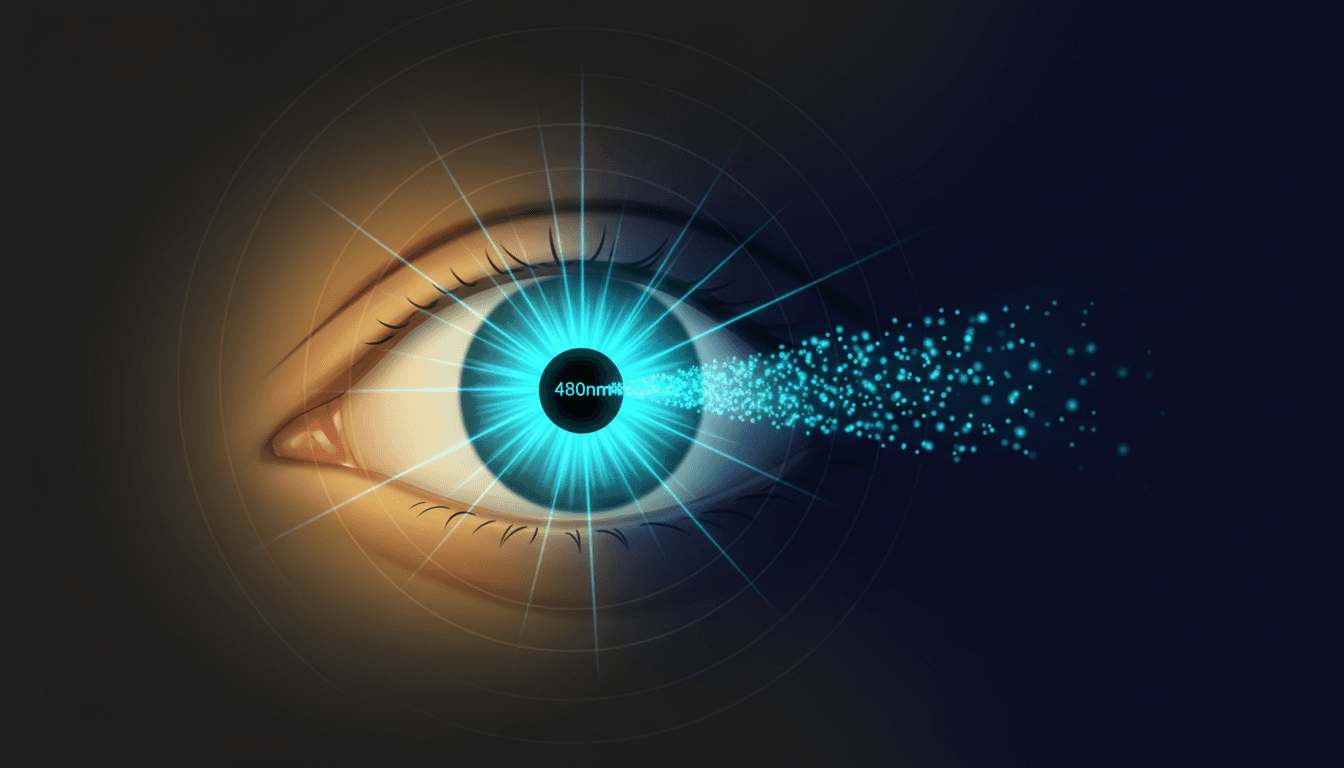
But not through the rods and cones you use to see. In 2002, two groups independently identified a third type of photoreceptor in the retina. Samer Hattar and colleagues, and separately David Berson, Felice Dunn, and Motoharu Takao, both published in Science that year describing melanopsin-containing retinal ganglion cells. These cells don't help you see images. They detect ambient light levels and send that information directly to the SCN.
This is why totally blind people can still have functioning circadian rhythms if their retinal ganglion cells are intact. The clock doesn't need vision. It needs light information.
Czeisler's group demonstrated in 1986 that bright light could reset the human circadian pacemaker independent of the sleep-wake cycle. And Kenneth Wright's lab at the University of Colorado showed in a 2013 Current Biology paper that a week of camping with only natural light shifted participants' melatonin onset by almost two hours earlier. One week. No supplements. No behavioral protocols. Just sunlight during the day and darkness at night.
We evolved with a signal that was perfectly reliable for hundreds of thousands of years. The sun came up. The sun went down. The SCN tracked it and kept everything synchronized.
Then we invented electric light.
The Desynchronization Problem
Modern life doesn't destroy the master clock. It confuses it.
You stare at screens emitting blue-enriched light at 11 PM. The melanopsin cells report daylight to the SCN. You eat dinner at 9 PM. The peripheral clocks in your liver and gut get a timing signal that conflicts with what the SCN is saying. You fly across three time zones. Every clock in your body is suddenly set to a different time.
The SCN can handle small deviations. It's robust. That neuronal coupling that Hastings described makes it resistant to noise. But it can only adjust about one hour per day. When the signals it receives are consistently contradictory, the system starts to fracture.
This series is about that fracture. About what happens when the master clock says one thing and the peripheral clocks say another. About the metabolic, psychiatric, and cognitive consequences of living out of sync with your own biology.
Because the SCN isn't just some interesting neuroscience trivia. Those 20,000 neurons are running programs that affect every system in your body, every hour of the day. And almost everything about modern life is designed to interfere with them.
The orchestra is still playing. But the conductor is getting signals from a dozen different stages at once.
Sources
- Loss of a Circadian Adrenal Corticosterone Rhythm Following Suprachiasmatic Lesions in the Rat (Moore & Eichler, 1972, Brain Research)
- Circadian Rhythms in Drinking Behavior and Locomotor Activity of Rats Are Eliminated by Hypothalamic Lesions (Stephan & Zucker, 1972, PNAS)
- Stability, Precision, and Near-24-Hour Period of the Human Circadian Pacemaker (Czeisler et al., 1999, Science)
- A Diffusible Coupling Signal from the Transplanted Suprachiasmatic Nucleus Controlling Circadian Locomotor Rhythms (Silver et al., 1996, Nature)
- Positional Cloning of the Mouse Circadian Clock Gene (King, Takahashi et al., 1997, Cell)
- An hPer2 Phosphorylation Site Mutation in Familial Advanced Sleep Phase Syndrome (Toh et al., 2001, Science)
- Genome-Wide Association Analyses of Chronotype in 697,828 Individuals (Jones et al., 2019, Nature Communications)
- Coordinated Transcription of Key Pathways in the Mouse by the Circadian Clock (Panda et al., 2002, Cell)
- Melanopsin-Containing Retinal Ganglion Cells (Hattar et al., 2002, Science)
- Phototransduction by Retinal Ganglion Cells That Set the Circadian Clock (Berson, Dunn & Takao, 2002, Science)
- Bright Light Resets the Human Circadian Pacemaker Independent of the Timing of the Sleep-Wake Cycle (Czeisler et al., 1986, Science)
- Entrainment of the Human Circadian Clock to the Natural Light-Dark Cycle (Wright et al., 2013, Current Biology)
- Genetics and Molecular Biology of Rhythms in Drosophila and Other Insects (Hall & Rosbash, 2003, Advances in Genetics)
- The Circadian Code (Panda, 2018, Rodale Books)
Part of the Body Clock series. Next: The Molecular Gears: How a Single Cell Keeps Time.