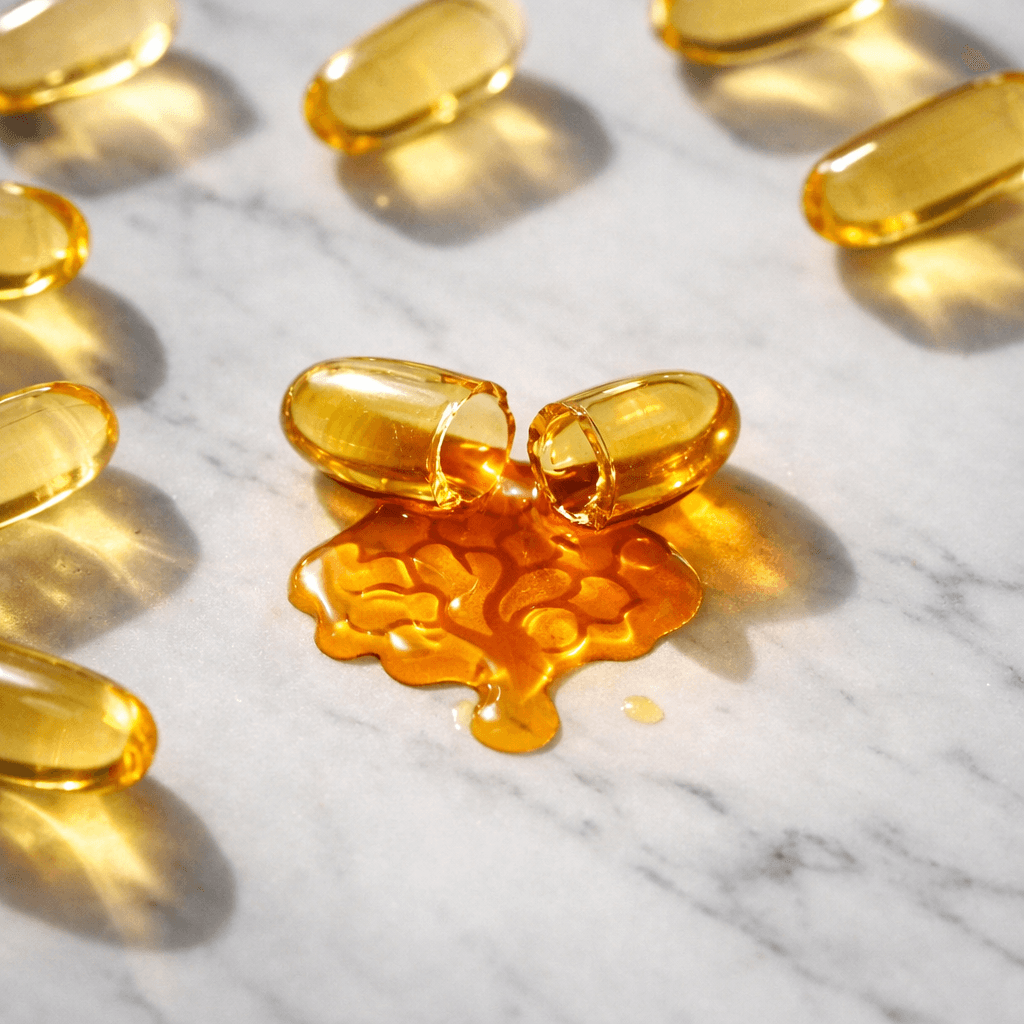
Your Diet Is Changing Your Personality
A meta-analysis of 29 studies shows omega-3 supplements reduce aggression by 30%, revealing how what you eat literally shapes who you are.
In 2002, a researcher at Oxford named Bernard Gesch gave 231 prisoners a daily supplement. Vitamins, minerals, and omega-3 fatty acids. Nothing fancy. The kind of thing you'd find at any pharmacy for $15.
The prisoners who got the real supplements committed 35% fewer violent offenses. The ones on placebo? No change.
A fish oil pill made people in prison less violent.
That sounds like the setup for a bad infomercial. But Gesch published it in the British Journal of Psychiatry, and it kicked off two decades of research that keeps confirming the same weird thing: what you eat literally changes how you behave.
The Numbers
In 2024, Adrian Raine, a neurocriminologist at the University of Pennsylvania, published the most comprehensive review of this research to date. He pulled together 29 randomized controlled trials from 19 independent laboratories. 3,918 participants total.
The result: omega-3 supplementation reduces aggression by about 30%.
Not in one specific population. Across the board. Kids, adults, prisoners, patients, healthy people. Men, women. Short-term supplementation, long-term. Different dosages. Didn't matter. The effect held.
That's not a nutrition fact. That's a personality intervention.
The Kids
Raine ran his own study in Mauritius back in 2015. He gave 100 children aged 8 to 16 a juice drink with one gram of omega-3 per day. Another 100 kids got the same drink without it.
After six months, both groups improved (placebo effect, as expected). But at 12 months, the placebo group went back to baseline. The omega-3 group kept getting better. 42% reduction in aggressive and rule-breaking behavior. 62% reduction in anxiety and depression symptoms.
A gram of fish oil in a juice box. For a year. And the kids became measurably calmer, less aggressive, less anxious.
Why It Works
About 95% of your body's serotonin is produced in your gut. Not your brain. Your gut. The bacteria living in your intestines are directly involved in manufacturing the neurotransmitter that regulates mood, impulse control, and your ability to stay calm under pressure.
Omega-3 fatty acids reduce inflammation in the brain, particularly in the prefrontal cortex, the part responsible for impulse control and decision-making. When that area is inflamed or under-fueled, you react instead of respond. You snap instead of pause.
Your brain is a physical organ. It runs on what you feed it.
Food Is a Drug
This is the part that keeps getting me. We think of food as energy, maybe as health. We don't think of food as a behavior-altering substance. But it is.
Processed food increases inflammation in the brain, specifically in the amygdala, the area that controls fear and aggression. Diets high in processed meat correlate with impulsivity and irritability. The Western diet (fast food, sugar, soft drinks) is significantly associated with higher aggression levels.
Meanwhile, one cheap supplement reduces violent behavior by 30%.
Raine said it plainly: "I think the time has come to implement omega-3 supplementation to reduce aggression, irrespective of whether the setting is the community, the clinic, or the criminal justice system."
He's not saying fish oil is a magic bullet. He's saying it's a lever. A real, measurable, cheap lever that we're mostly ignoring.
The Bigger Pattern
Your food doesn't just fuel your body. It builds your brain. It manufactures your neurotransmitters. It regulates your inflammation. It shapes your impulses.
What you eat becomes who you are. Not metaphorically. Chemically.
Choose wisely.
Sources
- Omega-3 supplementation reduces aggressive behavior: A meta-analytic review (Raine et al., 2024) (opens in new tab)
- Influence of supplementary vitamins, minerals and essential fatty acids on the antisocial behaviour of young adult prisoners (Gesch, 2002) (opens in new tab)
- Reduction in behavior problems with omega-3 supplementation in children aged 8-16 years (Raine et al., 2015) (opens in new tab)
- The case for omega-3 supplementation to lower aggression, Penn Today (opens in new tab)
- Microbes Help Produce Serotonin in Gut, Caltech (opens in new tab)