Admit You Have a Problem, The Addiction to Being Right
>-
In 2009, neuroscientist Vasily Klucharev put people in an fMRI scanner and asked them to rate the attractiveness of faces. Simple enough. But here's what made it interesting: after each rating, participants were shown what a group of peers had rated the same face.
When the participant's rating matched the group, the ventral striatum lit up. That's the brain's reward center. The same region that fires when you eat chocolate, win money, or get a like on your post.
When their rating differed from the group, a completely different signal fired. The rostral cingulate zone. Your brain's error-detection system. The same mechanism that tells you something went wrong.
Your brain treats disagreeing with people the same way it treats making a mistake.
It Gets Worse
In 2016, researchers at USC put people in brain scanners and challenged their political beliefs with counterevidence. Facts. Data. The kind of stuff that should change a mind.
Instead, the amygdala lit up. That's your threat center. The same region that fires when you see a snake or hear a strange noise at 2 AM. Participants whose amygdalas fired the hardest were the ones who resisted changing their minds the most.
Your brain doesn't process "you might be wrong" as new information. It processes it as danger.
That's not stubbornness. That's a threat response.
50,000 Years of Programming
This makes sense when you zoom out. For most of human history, you lived in a tribe of maybe 150 people. Your survival depended on the group. On being accepted. On fitting in.
Disagreeing with the tribe's beliefs wasn't just socially awkward. It was dangerous. Getting exiled meant death. Your brain evolved to treat group consensus as a survival signal and deviation as a threat.
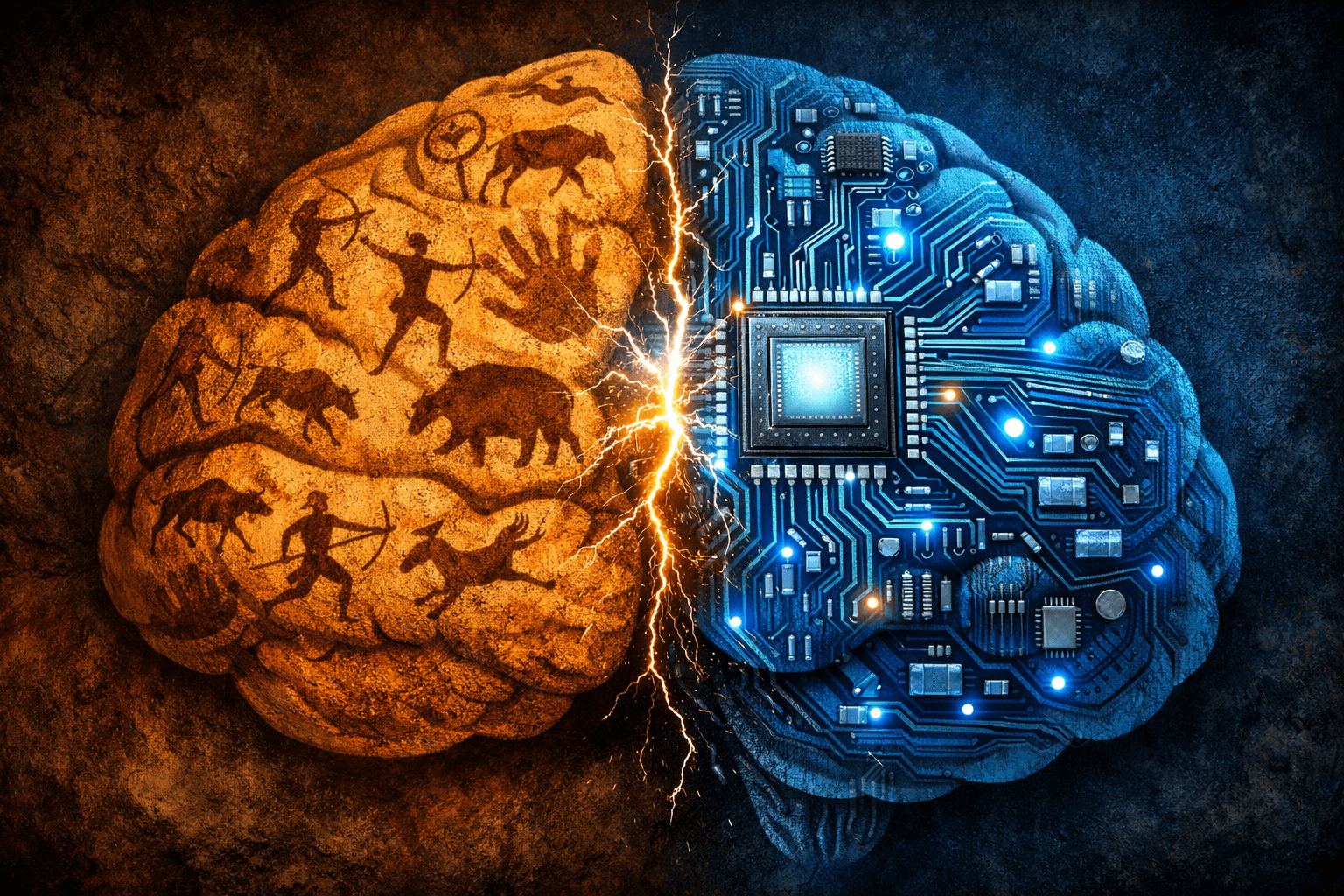
Confirmation bias isn't a bug. It's a feature from a world that no longer exists.
The problem is you're still running that software. In a world where "the tribe" is your Twitter feed, your friend group, your political party. The stakes aren't life and death anymore. But your brain can't tell the difference.
The Dopamine Loop
A 2011 study in the Journal of Neuroscience found that dopaminergic genes, the ones controlling your dopamine system, predict how susceptible you are to confirmation bias. Some people are literally more genetically wired to get a reward hit from being right.
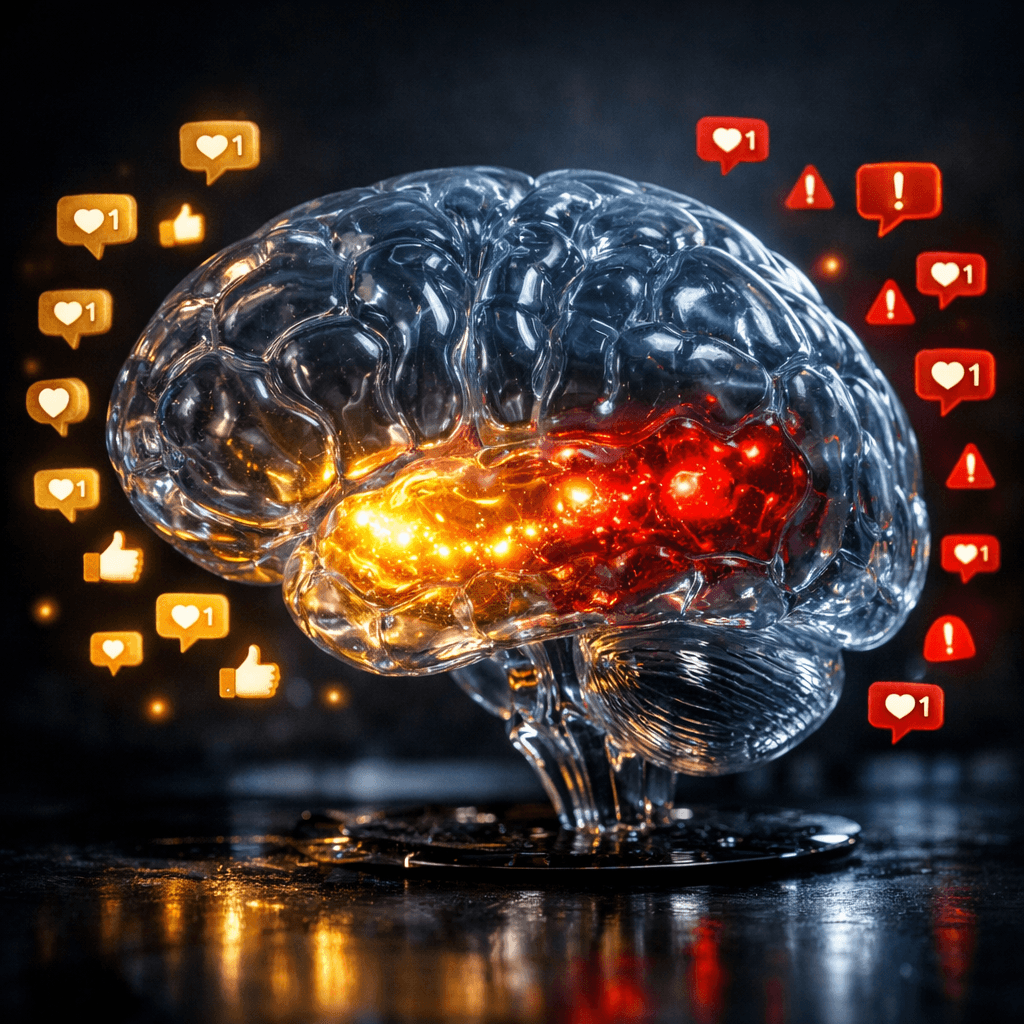
Every time you scroll past a headline that confirms what you already believe, your brain gives you a tiny hit of dopamine. Every time you "win" an argument, another hit. Every time you find evidence that your side is correct, another.
Sound familiar? That's the same reward loop that makes social media addictive. That makes gambling addictive. That makes your phone impossible to put down.
Being right is a drug. And the internet is an unlimited supply.
Why Arguments Don't Work
Pew Research found that only 14% of Americans have ever changed their view on a political or social issue because of something they saw on social media. Fourteen percent. Billions of posts. Trillions of comment section arguments. And almost none of it changes anyone's mind.
Because you can't logic someone out of a position their amygdala put them in. When you challenge someone's deeply held belief, you're not engaging their reasoning. You're triggering their threat detection. They're not thinking. They're defending.
And honestly? So are you. So am I.
The Override
The first step is knowing the machinery exists. You can't patch an exploit you don't know about.
When you feel that rush of satisfaction from being right, that's dopamine. Not truth. When you feel defensive after someone challenges your belief, that's your amygdala. Not logic.
The people who actually change their minds are the ones who can feel the threat response and choose not to act on it. Who can sit with the discomfort of being wrong long enough for their prefrontal cortex to catch up.
It's not natural. Your hardware was built for tribal consensus, not independent thinking. Changing your mind requires consciously overriding 50,000 years of programming.
But knowing that is the first step. And the fact that it feels uncomfortable? That's not a sign you're doing it wrong. That's a sign you're doing it right.
Sources
- Klucharev, V. et al. Reinforcement Learning Signal Predicts Social Conformity (opens in new tab). Neuron, 2009.
- Kaplan, J.T., Gimbel, S.I. & Harris, S. Neural correlates of maintaining one's political beliefs in the face of counterevidence (opens in new tab). Scientific Reports, 2016.
- Doll, B.B. et al. Dopaminergic Genes Predict Individual Differences in Susceptibility to Confirmation Bias (opens in new tab). Journal of Neuroscience, 2011.
- Pew Research Center. 14% of Americans say social media led them to change their mind about an issue (opens in new tab). 2018.