Failing Before You're Taught Is the Best Way to Learn
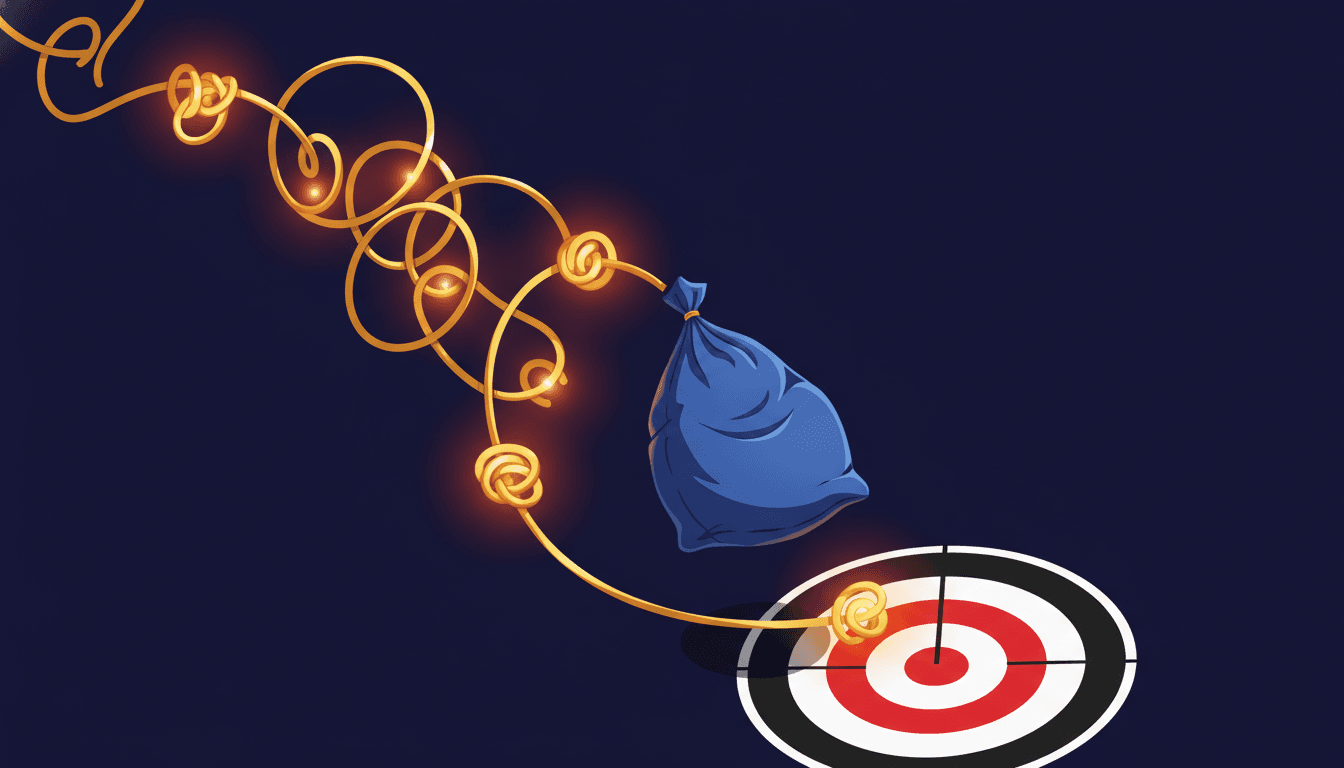
Two separate lines of research arrived at the same uncomfortable conclusion: struggling with a problem you can't yet solve makes you learn the solution better than just being told it.
In 1978, two researchers at New York University ran a deceptively simple memory experiment. Norman Slamecka and Peter Graf gave participants a list of word pairs. Half the time, participants saw both words: "hot — cold." The other half, they saw only the first word and a partial cue: "hot — c___" and had to generate the missing word themselves.
Same word. Same information. Different act of getting there.
A week later, the words participants had generated themselves were recalled significantly better than the words they had simply read. Not somewhat better. Substantially better. The act of producing an answer, even a trivially easy one, created a stronger memory trace than passively receiving the same answer.
This became known as the generation effect. And it set the stage for one of the most counterintuitive findings in the science of learning.
The Logic Behind Generation
Slamecka and Graf weren't just demonstrating that effort helps. They were isolating something more specific. The generation condition didn't involve more time on task. It didn't involve deeper semantic processing in the traditional sense. It involved the act of reaching for information rather than receiving it.
Your brain, it turns out, treats those two events very differently.
When you read "hot — cold," you process the relationship. When you generate "cold" from "hot — c___," your brain has to activate the relevant knowledge, search for what fits, evaluate candidates, and commit to an answer. That process leaves a different kind of trace. It's not just that you worked harder. It's that you ran a retrieval-like operation during the initial encoding, and retrieval is exactly what makes memories stick. (The testing effect, which I covered in article three of this series, is the same mechanism running in the other direction.)
The generation effect has been replicated across hundreds of studies since 1978. Vocabulary lists. Mathematical formulas. Scientific concepts. Prose passages. It holds in children, adults, and older adults. It holds whether generation requires one word or a whole sentence. The basic finding is about as robust as findings get in cognitive psychology.
Manu Kapur's Radical Extension
For about three decades, the generation effect was understood as a memory phenomenon. Make someone generate information, they remember it better. Useful, but limited.
Then Manu Kapur, a learning scientist working in Singapore schools (now at ETH Zurich), pushed the idea somewhere much more uncomfortable.
His question: what if you made students try to generate not just a word, but a solution to a math problem they hadn't been taught yet?
In a 2008 study published in Cognition and Instruction, Kapur worked with 11th-grade physics students. One group followed the standard sequence: teacher explains the concept, students practice problems. The other group started by attempting problems without any instruction. They collaborated in groups, generated multiple approaches, argued with each other, and mostly failed to arrive at correct solutions. Then they received the same direct instruction as the first group.
Both groups then took a test.
The students who had failed first performed better. Not on easy recall questions. On transfer problems, the kind that required understanding the underlying concept well enough to apply it in a new context.
Kapur called this "productive failure." And he ran it again.
The 2014 Replication
The 2008 study used collaborative group work, which introduced confounding variables. Maybe it was the collaboration, not the failure, that drove the effect. Kapur addressed this in a 2014 study published in Cognitive Science, this time using individual problem solving with math concepts in Singapore classrooms.
Same basic design. Students either solved problems first and then received instruction, or received instruction first and then solved problems. Same total time. Same teacher. Same instruction.
On procedural tests (can you execute the method?), the two groups performed about equally. But on conceptual understanding and transfer, the failure-first group won, by a significant margin.
The key variable wasn't success or failure per se. It was what the attempt did to the brain before instruction arrived.
Preparation for Future Learning
Kapur and Bielaczyc described the mechanism in a 2012 paper: "preparation for future learning." The idea is that struggling with a problem you can't yet solve does several things simultaneously.
It activates prior knowledge. When you're handed a statistics problem you don't know how to solve, your brain starts pulling up everything it already knows that might be relevant. Averaging. Spread. Comparison. You're building a contextual scaffold without knowing you're doing it.
It reveals gaps. The moment you try to solve something, you discover what you don't understand. This isn't abstract. It's concrete. "I don't know what to do when the numbers are different distances from the center." That specific gap makes you exquisitely attentive when instruction arrives and addresses it.
It creates a state of motivated attention. You've been struggling. You have active questions. When the teacher explains the correct method, you're not passively receiving information. You're checking it against your failed attempts. Pieces click into place that wouldn't click if you'd never tried.
Loibl, Roll, and Rummel reviewed 49 studies on this design in 2017, published in Educational Psychology Review. The productive failure approach showed a significant advantage over direct instruction, particularly for conceptual understanding and transfer. The benefit wasn't uniform. It worked best when students could at least partially understand the problem space, when their attempts generated relevant (even if wrong) representations. Pure confusion, trying to solve something you have zero context for, helps less. The difficulty has to be at the right level. Desirable, as Bjork would say.
The Uncomfortable Implication
Standard instruction runs on an efficiency logic. You want to convey information. The fastest way to do that is to explain it clearly and have people practice. Confusion is waste. Errors are problems to eliminate. Get the student to the right answer quickly, then practice the right answer until it's automatic.
Productive failure says this logic is wrong for the outcomes that matter most.
If you want someone to execute a practiced procedure, efficiency wins. But if you want them to understand a concept well enough to apply it to new problems they've never seen, you need to let them fail first.
That distinction matters enormously. Procedural knowledge is useful. But most real-world challenges aren't solved by running a practiced procedure. They're solved by recognizing that a certain type of approach applies, adapting it to fit the specific situation, and diagnosing when your method isn't working. That's conceptual knowledge. And it develops differently.
Kapur puts it directly: the confusion and frustration of early failure aren't noise in the learning process. They're the signal.
Two Things That Happen in Your Brain
At the neural level, this connects to the prediction error mechanism running underneath all effective learning.
When you attempt a problem and fail, your brain generates a large prediction error. You expected to solve it. You didn't. That mismatch triggers elevated attention and deeper encoding in the regions associated with memory consolidation. Then when instruction arrives with the correct approach, your brain processes it against the backdrop of your failed attempt. The correction hits harder. The encoding goes deeper. The connection to relevant prior knowledge is more explicit because you just spent ten minutes activating that prior knowledge.
Kornell, Hays, and Bjork demonstrated this in 2009 from the retrieval angle. Unsuccessful retrieval attempts, trying and failing to recall something before receiving the correct answer, produced better final learning than simply studying the answer without attempting retrieval. The failure to retrieve primed the brain for the incoming information. Failing and then learning beats just learning.
The generation effect, productive failure, and the testing effect are all pointing at the same underlying biology. The brain's learning rate scales with prediction error. Surprises get encoded. Corrections get encoded. Smooth confirmations of what you already know don't.
Where This Shows Up
I keep running into this in my own learning. There's a very strong pull to watch the tutorial before trying the thing, to read the documentation before writing the code, to study the approach before attempting the problem. The logic is compelling. If I understand it first, I'll waste less time being confused.
But being confused is often the point. The twenty minutes I spend flailing with a React hook I don't fully understand make the documentation paragraph that explains it land completely differently than if I'd read it first. The confusion created questions. The documentation answered them. That's a fundamentally different cognitive event than reading the documentation without questions.
This doesn't mean you should never look at explanations first. Procedural tasks, situations where you really do need the steps before you can engage at all, are different. But when the goal is understanding rather than execution, there's real value in failing in the dark for a while before someone turns the lights on.
The failure isn't wasted time. It's doing something instruction alone can't do.
What This Does to "Covering the Material"
Educational systems are built around coverage. You need to get through chapters 1 through 12. There's a pacing guide. There are standards. Every day where students are struggling without having been taught yet looks, from the outside, like a day of inefficiency.
But Kapur's students who failed first didn't take longer to learn the material. They learned it in the same amount of time as the direct instruction group. They just used some of that time differently, attempting problems before receiving explanation rather than after.
The total time was the same. The conceptual understanding and transfer performance were not.
The efficiency logic of standard instruction optimizes for a smooth journey through content. Productive failure optimizes for what happens inside a brain when concepts arrive in the context of active, effortful struggle. Those are different targets, and they produce different results on the measures that matter.
Forty-nine studies say so.
Sources
- The Generation Effect: Delineation of a Phenomenon (Slamecka & Graf, 1978, Journal of Experimental Psychology: Human Learning and Memory)
- Productive Failure (Kapur, 2008, Cognition and Instruction)
- Designing for Productive Failure (Kapur & Bielaczyc, 2012, Journal of the Learning Sciences)
- Productive Failure in Learning Math (Kapur, 2014, Cognitive Science)
- Towards a Theory of When and How Problem Solving Followed by Instruction Supports Learning (Loibl, Roll, & Rummel, 2017, Educational Psychology Review)
- Unsuccessful Retrieval Attempts Enhance Subsequent Learning (Kornell, Hays, & Bjork, 2009, Journal of Experimental Psychology: Learning, Memory, and Cognition)
- Making Things Hard on Yourself, But in a Good Way (Bjork & Bjork, 2011, Psychology and the Real World)
- Test-Enhanced Learning (Roediger & Karpicke, 2006, Psychological Science)
Part of the Practice Paradox series. Previously: Experts Don't Think Harder. They See Different.