The Worse You Practice, the Better You Learn
Robert Bjork's 'desirable difficulties' framework explains why the learning strategies that feel the smoothest produce the least durable results, and why struggle is the actual signal of progress.
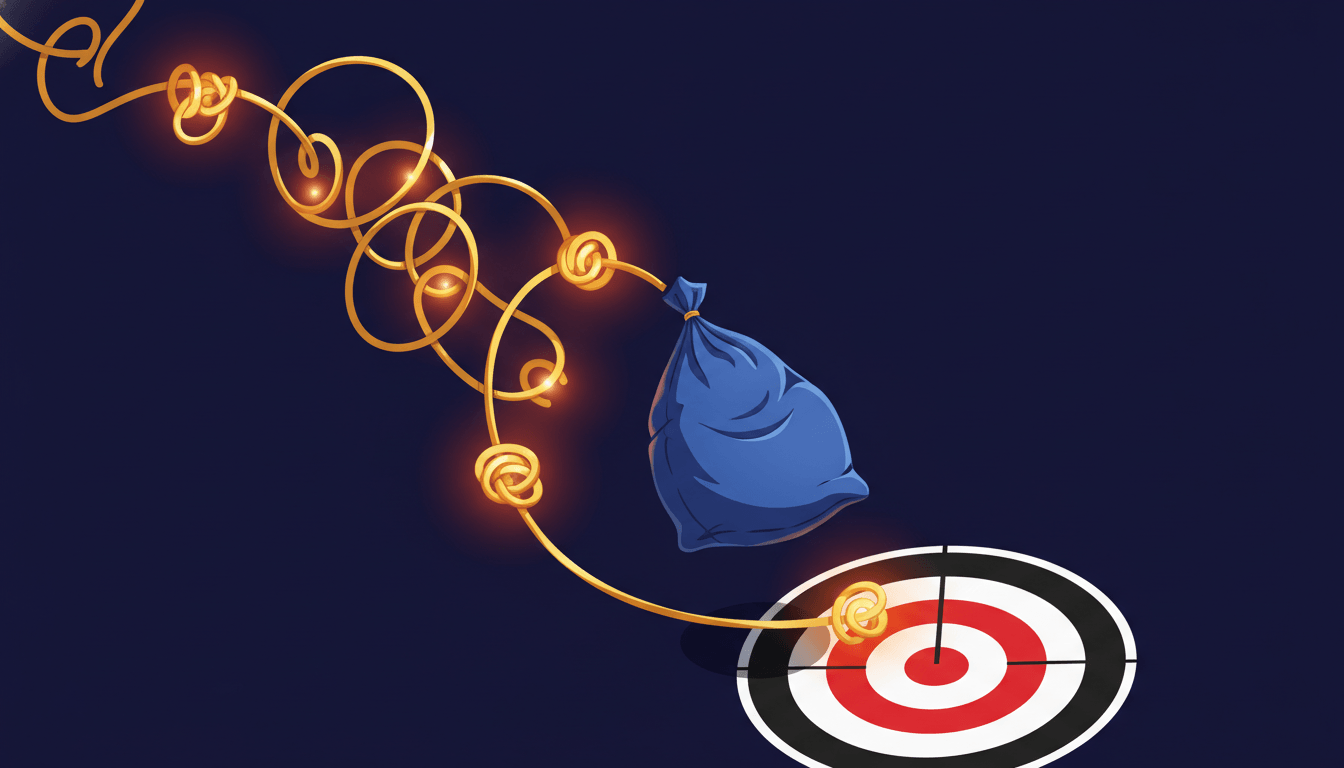
In 1978, researchers Robert Kerr and Ben Booth had children practice tossing beanbags at a target 3 feet away. One group practiced exactly at 3 feet, over and over. The other group practiced at 2 feet and 4 feet but never once at the test distance.
On the final test at 3 feet, the group that had never practiced at 3 feet was significantly more accurate.
Read that again. The kids who never practiced the thing they were tested on outperformed the kids who practiced it exclusively. If that doesn't break something in your model of how learning works, you weren't paying attention.
The Name for This
Robert Bjork at UCLA coined the term "desirable difficulties" in 1994. It describes a class of learning conditions that make practice feel harder, slower, and more frustrating in the moment but produce dramatically better retention and transfer over time.
The word "desirable" is doing real work in that phrase. Not all difficulty helps. Trying to learn calculus in a language you don't speak isn't a desirable difficulty. It's just difficulty. The distinction is whether you can still meaningfully engage with the material while struggling. If yes, the struggle is building something. If no, you're just lost.
Bjork and Bjork laid this out clearly in their 2011 chapter "Making Things Hard on Yourself, But in a Good Way." The core principle: learning conditions that require more cognitive effort during practice create stronger and more flexible memory representations. Smooth practice creates fragile memory. Effortful practice creates durable memory.
This is the opposite of what every intuition tells you.
Why Easy Practice Lies to You
When you reread your notes and the material flows smoothly, your brain interprets that fluency as evidence of learning. You feel like you know it. Nate Kornell's 2009 research on flashcard optimization showed that learners consistently chose strategies that felt more fluent over strategies that produced better results. We are reliably terrible judges of our own learning.
The spacing effect, which I wrote about in article two of this series, is a desirable difficulty. Ebbinghaus documented it in 1885. Cepeda and colleagues confirmed it in a 2006 meta-analysis of 184 verbal recall studies. Spreading practice across time feels worse because each session starts with partial forgetting. You feel rusty. You struggle to recall things that felt solid yesterday. That struggle is the point. Each time you rebuild a fading memory, the reconstruction makes it stronger.
The testing effect is a desirable difficulty. Roediger and Karpicke showed in 2006 that students who tested themselves remembered significantly more after a week than students who spent the same time rereading. Testing feels harder. You sit there staring at a blank page knowing the answer is somewhere in your head but unable to reach it. That failure to retrieve, that tip-of-the-tongue frustration, is strengthening the retrieval pathway. Karpicke and Blunt pushed this further in 2011, publishing in Science that retrieval practice produced more learning than elaborative studying with concept mapping. Not marginally more. Substantially more.
Interleaving is a desirable difficulty. Rohrer and Taylor demonstrated in 2007 that shuffling math problem types during practice led to worse practice scores but better test performance. Kornell and Bjork found the same thing in 2008 with category learning. Birnbaum, Kornell, Bjork, and Bjork explored why in 2013, showing that interleaving enhances inductive learning by forcing you to discriminate between categories rather than just repeat within one. It feels chaotic. It feels like you're not getting anywhere. The chaos is the mechanism.
The Beanbag Problem Everywhere
Schmidt and Bjork documented this pattern across motor learning in 1992, calling it "contextual interference." Higher interference during practice consistently led to poorer practice performance but superior retention and transfer. The variable practice group looks worse in the gym but performs better in the game.
Kornell, Hays, and Bjork found something even stranger in 2009. Unsuccessful retrieval attempts, trying to recall something and failing, actually enhanced subsequent learning of that material. Getting it wrong made you learn the right answer better than if you'd never tried at all. Your brain treats failed retrieval as a signal to strengthen that pathway. The error itself becomes part of the encoding.
This connects to Manu Kapur's work on productive failure. In studies from 2008 and 2014, Kapur showed that students who struggled with problems before receiving instruction outperformed students who received instruction first. The struggle created a kind of mental scaffolding that made the eventual explanation click into place. Loibl, Roll, and Rummel built on this in 2017, working toward a theory of when and how problem-solving followed by instruction supports learning.
The generation effect, documented by Slamecka and Graf in 1978, shows the same principle from another angle. Information you generate yourself, even partially, sticks better than information you passively receive. Generating is harder than reading. That's why it works.
The Tragedy
Frank Dempster wrote a paper in 1988 called "The Spacing Effect: A Case Study in the Failure to Apply the Results of Psychological Research." He documented how one of the most robust findings in all of cognitive psychology, that spacing improves learning, had been known for over a century and was still almost completely ignored in educational practice.
Nearly 40 years later, not much has changed.
Bjork has argued this is the central tragedy of education. The methods that maximize the appearance of learning minimize actual learning. And vice versa. When a teacher introduces spacing or interleaving or retrieval practice and the students' practice performance dips, everyone panics. The students feel like they're failing. The teacher gets nervous. The administration looks at the numbers and demands a return to methods that "work."
But the numbers they're looking at measure practice performance, not learning. They're optimizing for how smooth things look during the session rather than how much sticks three weeks later.
McDaniel, Agarwal, and colleagues tested this directly in a 2011 study in a middle school science classroom. Students who used retrieval practice during the semester scored significantly higher on unit exams and end-of-semester exams. The practice itself felt harder. The results were better. Agarwal, Bain, and Chamberlain documented in 2012 how applied research like this could bridge the gap between laboratory findings and classroom reality.
Corporate training has the same problem, maybe worse. A training session where everyone nods along and completes exercises smoothly gets high satisfaction scores. A session with desirable difficulties, where people struggle and make errors and feel confused, gets low satisfaction scores. Guess which one the company keeps running.
The Meta-Problem
Here's what I keep coming back to. Dekker, Lee, Howard-Jones, and Jolles surveyed teachers across the UK and Netherlands in 2012 and found that neuromyths were rampant in education. Teachers believed in learning styles, left-brain/right-brain thinking, and the idea that we only use 10% of our brains. Pashler, McDaniel, Rohrer, and Bjork reviewed the evidence on learning styles in 2008 and found essentially zero support for matching instruction to supposed learning styles. Rogowsky, Calhoun, and Tallal confirmed it again in 2015. Husmann and O'Hara drove another nail in the coffin in 2019.
Newton and Miah asked an important question in 2017: is the learning styles myth actually important? Their answer was yes, because it crowds out evidence-based strategies. Every hour a teacher spends trying to identify and cater to "visual learners" and "auditory learners" is an hour not spent implementing spacing, testing, and interleaving. The myth isn't just wrong. It's an opportunity cost.
We know what works. We've known for decades. The problem is that what works feels bad, and we've built entire educational systems around making learning feel good.
What This Means for You
I think about this every time I'm learning a new framework or debugging a concept I don't fully understand. The moment where I want to go back and reread the docs one more time, where the comfortable thing is to review what I already sort of know, that's the moment where desirable difficulty says: no. Test yourself. Try to build it from memory. Get it wrong. Try again.
It feels terrible. Every time. My brain tells me I'm wasting time, that I should just look up the answer and move on. But the research is absurdly clear. That struggle is literally the mechanism by which durable learning occurs.
The beanbag kids never practiced at 3 feet. They were more accurate at 3 feet than the kids who only practiced at 3 feet. Variable, difficult, frustrating practice built something that smooth, repetitive, comfortable practice couldn't.
Your brain doesn't learn from fluency. It learns from effort. The difficulty is the feature.
Sources
- Specific and Varied Practice of Motor Skill (Kerr & Booth, 1978, Perceptual and Motor Skills)
- Making Things Hard on Yourself, But in a Good Way (Bjork & Bjork, 2011, Psychology and the Real World)
- Optimising Learning Using Flashcards (Kornell, 2009, Applied Cognitive Psychology)
- Über das Gedächtnis (Ebbinghaus, 1885)
- Distributed Practice in Verbal Recall Tasks (Cepeda et al., 2006, Psychological Bulletin)
- Test-Enhanced Learning (Roediger & Karpicke, 2006, Psychological Science)
- Retrieval Practice Produces More Learning than Elaborative Studying with Concept Mapping (Karpicke & Blunt, 2011, Science)
- The Shuffling of Mathematics Problems Improves Learning (Rohrer & Taylor, 2007, Instructional Science)
- Learning Concepts and Categories: Is Spacing the "Enemy of Induction"? (Kornell & Bjork, 2008, Psychological Science)
- Why Interleaving Enhances Inductive Learning (Birnbaum et al., 2013, Journal of Experimental Psychology: Learning, Memory, and Cognition)
- New Conceptualizations of Practice (Schmidt & Bjork, 1992, Psychological Science)
- Unsuccessful Retrieval Attempts Enhance Subsequent Learning (Kornell, Hays, & Bjork, 2009, Journal of Experimental Psychology: Learning, Memory, and Cognition)
- Productive Failure (Kapur, 2008, Cognition and Instruction)
- Productive Failure in Learning Math (Kapur, 2014, Journal of the Learning Sciences)
- Towards a Theory of When and How Problem Solving Followed by Instruction Supports Learning (Loibl, Roll, & Rummel, 2017, Educational Psychology Review)
- The Generation Effect (Slamecka & Graf, 1978, Journal of Experimental Psychology: Human Learning and Memory)
- The Spacing Effect: A Case Study in the Failure to Apply the Results of Psychological Research (Dempster, 1988, American Psychologist)
- Test-Enhanced Learning in a Middle School Science Classroom (McDaniel et al., 2011, Journal of Educational Psychology)
- The Value of Applied Research (Agarwal, Bain, & Chamberlain, 2012, Educational Psychology Review)
- Neuromyths in Education (Dekker et al., 2012, Frontiers in Psychology)
- Learning Styles: Concepts and Evidence (Pashler et al., 2008, Psychological Science in the Public Interest)
- Matching Learning Style to Instructional Method (Rogowsky, Calhoun, & Tallal, 2015, Journal of Educational Psychology)
- Another Nail in the Coffin for Learning Styles? (Husmann & O'Hara, 2019, Anatomical Sciences Education)
- Evidence-Based Higher Education — Is the Learning Styles "Myth" Important? (Newton & Miah, 2017, Frontiers in Psychology)
Part of the Practice Paradox series. Previous: Stop Rereading. You're Just Feeling Smart.. Next: Your Brain Learns Better When It Feels Like It's Failing.