Same Drug, Different Clock: Why When You Take Medicine Matters More Than You Think
Chronotherapy has shown that identical treatments produce wildly different outcomes depending on when they're administered. The future of medicine isn't just what you take. It's when.
Francis Lévi gave cancer patients the exact same drugs at the exact same doses. The only thing he changed was the time on the clock. Survival rates jumped 50%.
That's not a rounding error. That's not a marginal improvement in a lab setting. Lévi, working at the Hôpital Paul Brousse in Paris through the 1990s and 2000s, ran clinical trials showing that the chemotherapy drug oxaliplatin worked best and caused the least damage when given around 4 PM. Another drug, 5-fluorouracil, peaked in effectiveness at 4 AM. His group's 2006 meta-analysis in Chronobiology International found that this chronomodulated approach improved 5-year survival in colorectal cancer by roughly 50% compared to the standard method of constant-rate infusion.
Same chemicals entering the same bodies. The only variable was timing.
This shouldn't be surprising by now. If you've followed this series, you know that your body isn't running on one clock. It's running on billions. Every organ, every tissue, every cell keeps its own circadian schedule. Satchin Panda's landmark 2002 study in Cell showed that roughly 10% of the entire mammalian genome cycles on a 24-hour rhythm. Your liver is on a different schedule than your heart. Your immune system ramps up and winds down on its own timeline. Your kidneys filter differently at noon than at midnight.
So why would we expect a drug to work the same way at 8 AM and 8 PM?
We wouldn't. If we were paying attention.
The Blood Pressure Problem
Ramón Hermida asked a simple question. What if people took their blood pressure medication at bedtime instead of the morning?
His Hygia Chronotherapy Trial, published in the European Heart Journal in 2020, followed 19,084 patients. The results were striking. Bedtime dosing reduced cardiovascular death by 56%. Heart attacks dropped 34%. Strokes dropped 49%.
Blood pressure naturally dips 10-20% while you sleep. That's called the "dipper" pattern, and it's a sign your cardiovascular system is doing what it's supposed to do. People whose blood pressure doesn't dip at night have significantly higher cardiovascular risk. By timing medication to support the natural overnight dip rather than fighting the morning surge, Hermida's approach worked with the clock instead of ignoring it.
(A note on this trial. It's faced legitimate scrutiny over methodology, and the debate is ongoing. But the broader principle of chronopharmacology is well-supported across smaller, controlled studies. The clock matters. The exact magnitude is what's being argued.)
Your Immune System Has a Schedule
Anna Phillips at the University of Birmingham published a 2016 study in Vaccine that should have changed how every clinic in the world schedules flu shots.
She vaccinated one group in the morning, between 9 and 11 AM. Another group got the same vaccine in the afternoon. One month later, the morning group had significantly higher antibody titers.
Same vaccine. Same needle. Same dose. Different clock position.
The reason maps directly to circadian biology. T-cell trafficking peaks at specific times. Cytokine production follows a rhythm. Antigen presentation, the process by which your immune system learns to recognize a threat, is clock-dependent. Your immune system is more teachable at certain hours.
Think about that the next time someone schedules your vaccine appointment. Nobody asks what time works best for your immune system. They ask what time works best for your schedule.
The Surgery Clock
Multiple studies have found that the time of day you go under the knife affects your outcome. Afternoon surgeries tend to have worse results than morning ones. Part of this is surgeon fatigue and decision quality declining across the day. But part of it is your body's own readiness. Inflammatory responses, wound healing, even anesthesia metabolism all follow circadian patterns.
Kenneth Wright's research group has shown something similar with exercise. The same workout produces different metabolic effects depending on when you do it. Morning exercise and evening exercise don't just feel different. They are metabolically different events as far as your body is concerned.
This shouldn't be revolutionary. But it challenges a core assumption in medicine that a treatment is a treatment regardless of when it's administered. The FDA doesn't require drug trials to account for time of day. Most clinical protocols don't specify dosing time. Hospitals run on institutional schedules, not biological ones.
Light as Medicine
The most accessible chronotherapy doesn't come in a pill.
Francesco Benedetti's work on light therapy and mood disorders has shown that morning bright light treatment accelerates the antidepressant effect of medication in bipolar depression. His 2003 study found that adding morning light to citalopram (an SSRI) produced faster recovery than medication alone. His broader work on antidepressant chronotherapeutics, including sleep deprivation therapy timed to specific circadian phases, has shown rapid mood improvements in patients who hadn't responded to drugs.
This connects directly to what we know about circadian disruption and mental health. Lyall and colleagues' 2018 study in The Lancet Psychiatry, analyzing over 91,000 people, found that disrupted circadian rhythmicity was associated with greater odds of major depression, bipolar disorder, and lower wellbeing. Cathy McClung's 2007 review mapped how circadian genes directly influence mood regulation pathways.
The clock isn't just involved in mood disorders. It may be a primary mechanism.
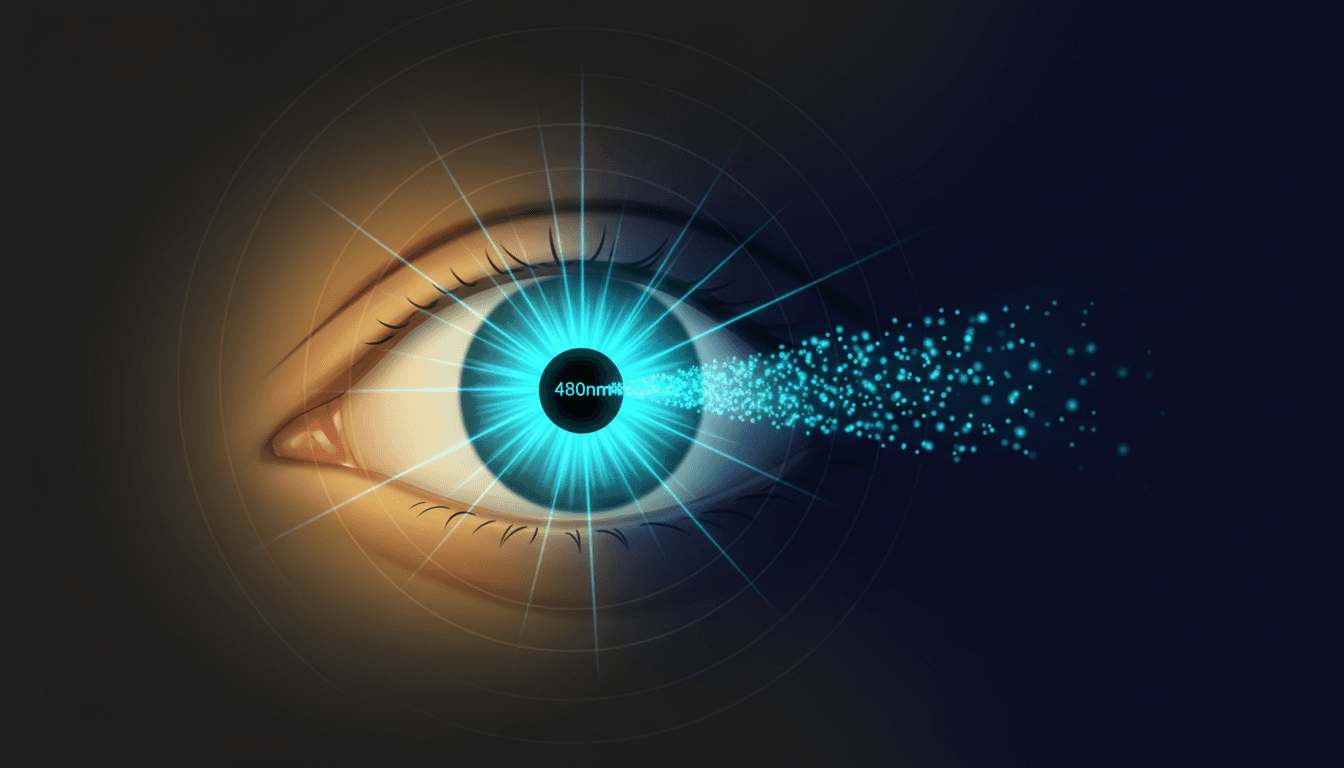
And the most direct way to set that clock is light. The same system that Berson, Dunn, and Takao identified in 2002, the melanopsin-containing retinal ganglion cells that detect light for circadian purposes, is the input channel for the most powerful chronotherapeutic tool we have. Czeisler showed in 1986 that bright light resets the human circadian pacemaker independent of when you sleep. Wright's 2013 camping study demonstrated that a week of natural light exposure shifted participants' clocks by nearly two hours.
Free. No prescription. Available to everyone with access to the outdoors.
The Accessible Intervention
Here's what strikes me about all of this.
Throughout this series, I've written about the discovery of the master clock in the suprachiasmatic nucleus. About how Moore and Eichler, and Stephan and Zucker, identified it in 1972. About how Hall, Rosbash, and Young won the Nobel Prize for uncovering the molecular gears. About how Takahashi's group cloned the Clock gene. About peripheral clocks in every organ. About shift work and social jet lag and chrononutrition and chronotypes and circadian disruption in mental illness.
It all leads to the same conclusion Satchin Panda makes in The Circadian Code. The circadian system may be the single most accessible point of intervention for chronic disease. Unlike your genetics, you can change when you eat. When you sleep. When you exercise. When you see light. When you take your medication.
The clock is already running. It's been running since before you were born. Czeisler's 1999 study in Science showed the human pacemaker maintains a near-24-hour period with remarkable precision. Silver's 1996 transplant experiments proved the SCN broadcasts timing signals throughout the body. Stokkan and colleagues showed in 2001 that feeding schedules can entrain peripheral clocks in the liver independent of the master clock.
The machinery exists. The evidence exists. The interventions exist.
What doesn't exist, mostly, is medical practice built around timing. Your doctor probably doesn't ask when you take your medication relative to your sleep cycle. Your surgeon doesn't schedule your operation based on your circadian phase. Your vaccine appointment is determined by the clinic's availability, not your immune system's peak responsiveness.
The Future That Already Has Evidence
Chronotherapy isn't a theory waiting for proof. The proof is sitting in journals from the last three decades. Lévi's cancer trials. Hermida's blood pressure data. Phillips' vaccination study. Benedetti's light therapy work. Wright's exercise timing research.
The gap isn't in the science. It's in the translation.
Roenneberg wrote in Internal Time that we've built an entire civilization around social time while ignoring biological time. The result is the desynchronization I've been describing across this whole series. Billions of clocks in your body set to different times. Metabolic disease, cognitive decline, mood disorders, and cancer risk all elevated by the simple fact that we don't respect what time it is inside.
Timing is the cheapest variable in medicine. It costs nothing to take a pill at 10 PM instead of 8 AM. It costs nothing to schedule a vaccine in the morning. It costs nothing to get bright light before noon.
The clock has been telling us what it needs. Ten articles later, I hope the message is clear.
It was never about sleeping more. It was about understanding that you're a time-keeping organism living in a world that's decided time doesn't matter. Every meal, every light exposure, every medication, every workout is a signal to a system that's listening. The question was never whether the clock is running. The question is whether you'll start working with it.
Sources
- Chronomodulated chemotherapy against metastatic colorectal cancer (Lévi et al., 2006, Chronobiology International)
- Bedtime hypertension treatment improves cardiovascular risk reduction: the Hygia Chronotherapy Trial (Hermida et al., 2020, European Heart Journal)
- Effect of time of vaccination on antibody response (Phillips et al., 2016, Vaccine)
- Coordinated transcription of key pathways in the mouse by the circadian clock (Panda et al., 2002, Cell)
- Antidepressant chronotherapeutics for bipolar depression (Benedetti, 2012, Dialogues in Clinical Neuroscience)
- Morning light treatment hastens the antidepressant effect of citalopram (Benedetti et al., 2003, Journal of Clinical Psychiatry)
- Association of disrupted circadian rhythmicity with mood disorders (Lyall et al., 2018, The Lancet Psychiatry)
- Circadian genes, rhythms and the biology of mood disorders (McClung, 2007, Pharmacology & Therapeutics)
- Phototransduction by retinal ganglion cells that set the circadian clock (Berson et al., 2002, Science)
- Bright light resets the human circadian pacemaker independent of the timing of the sleep-wake cycle (Czeisler et al., 1986, Science)
- Entrainment of the human circadian clock to the natural light-dark cycle (Wright et al., 2013, Current Biology)
- Stability, precision, and near-24-hour period of the human circadian pacemaker (Czeisler et al., 1999, Science)
- A diffusible coupling signal from the transplanted suprachiasmatic nucleus (Silver et al., 1996, Nature)
- Entrainment of the circadian clock in the liver by feeding (Stokkan et al., 2001, Science)
- Loss of a circadian adrenal corticosterone rhythm following suprachiasmatic lesions in the rat (Moore & Eichler, 1972, Brain Research)
- Circadian rhythms in drinking behavior and locomotor activity are eliminated by hypothalamic lesions (Stephan & Zucker, 1972, PNAS)
- Genetics and molecular biology of rhythms in Drosophila and other insects (Hall & Rosbash, 2003, Advances in Genetics)
- The Circadian Code (Panda, 2018, Rodale Books)
- Internal Time: Chronotypes, Social Jet Lag, and Why You're So Tired (Roenneberg, 2012, Harvard University Press)
Part of the Body Clock series. Previous: Your Broken Clock Is Breaking Your Mind.