Your Alarm Clock Is Giving You Jet Lag
The gap between when your body wants to sleep and when your alarm goes off creates a chronic form of jet lag. Most people have it. Almost nobody knows.
Till Roenneberg, a chronobiologist at Ludwig Maximilian University of Munich, has a name for the thing most people feel every Monday morning. He calls it social jet lag.
Not real jet lag. You didn't fly anywhere. But your body doesn't know that.
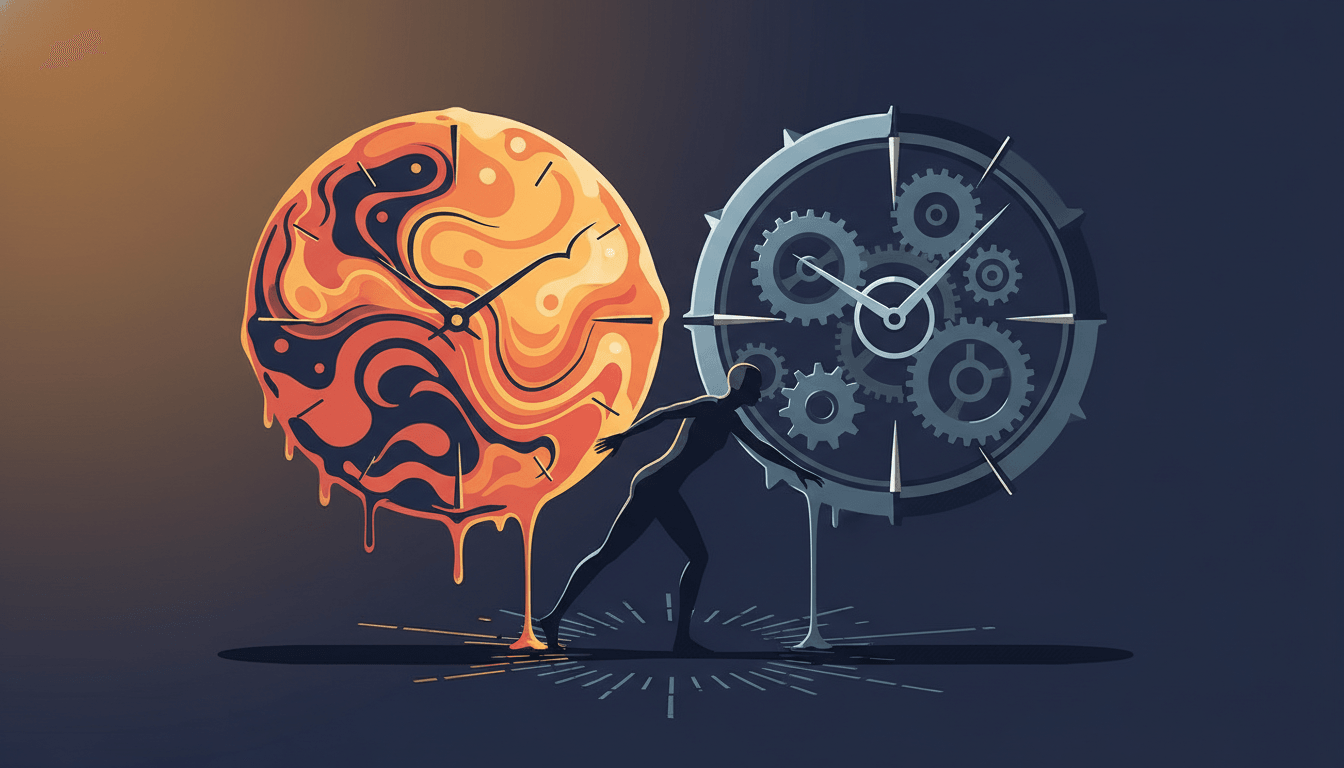
The concept is simple. Your biological clock wants you to sleep at a certain time. Your alarm clock demands you wake at a different time. The gap between those two creates a chronic form of jet lag that resets every single week.
Say your body naturally falls asleep around midnight and wants to wake at 8 AM. But your job starts at 8, so your alarm fires at 6. That's a 2-hour deficit every workday. By Friday, you're running on fumes. Saturday you sleep until 10 or 11, trying to pay back the debt. Sunday night you can't fall asleep until 1 AM because you slept late. Monday the alarm hits at 6 again.
You just flew from New York to Denver and back. Every week. For years.
Roenneberg coined the term in a 2006 paper, but the data behind it is massive. His Munich ChronoType Questionnaire has been taken by over 300,000 people. The results are blunt. The average person in industrialized countries carries about 1 to 2 hours of social jet lag. Roughly a third of the population carries 2 or more hours. That's not a sleep problem. That's a circadian problem. And no amount of sleep hygiene fixes it if you're still waking at the wrong biological time.
The Weight Connection
In 2012, Roenneberg published a study in Current Biology that should have been front-page news. Each hour of social jet lag correlated with a 33% increase in the odds of being overweight. Independent of sleep duration. You could get a full 8 hours and still gain weight if those hours were misaligned with your internal clock.
This isn't about willpower or calories. Michael Parsons and colleagues at MRC Harwell ran a mouse study in 2015 that proved it. They shifted the light-dark cycle by 6 hours every week, mimicking chronic jet lag. The disrupted mice gained significantly more weight than controls. Same food. Same activity levels. The only variable was circadian disruption.
The effect was purely timing.
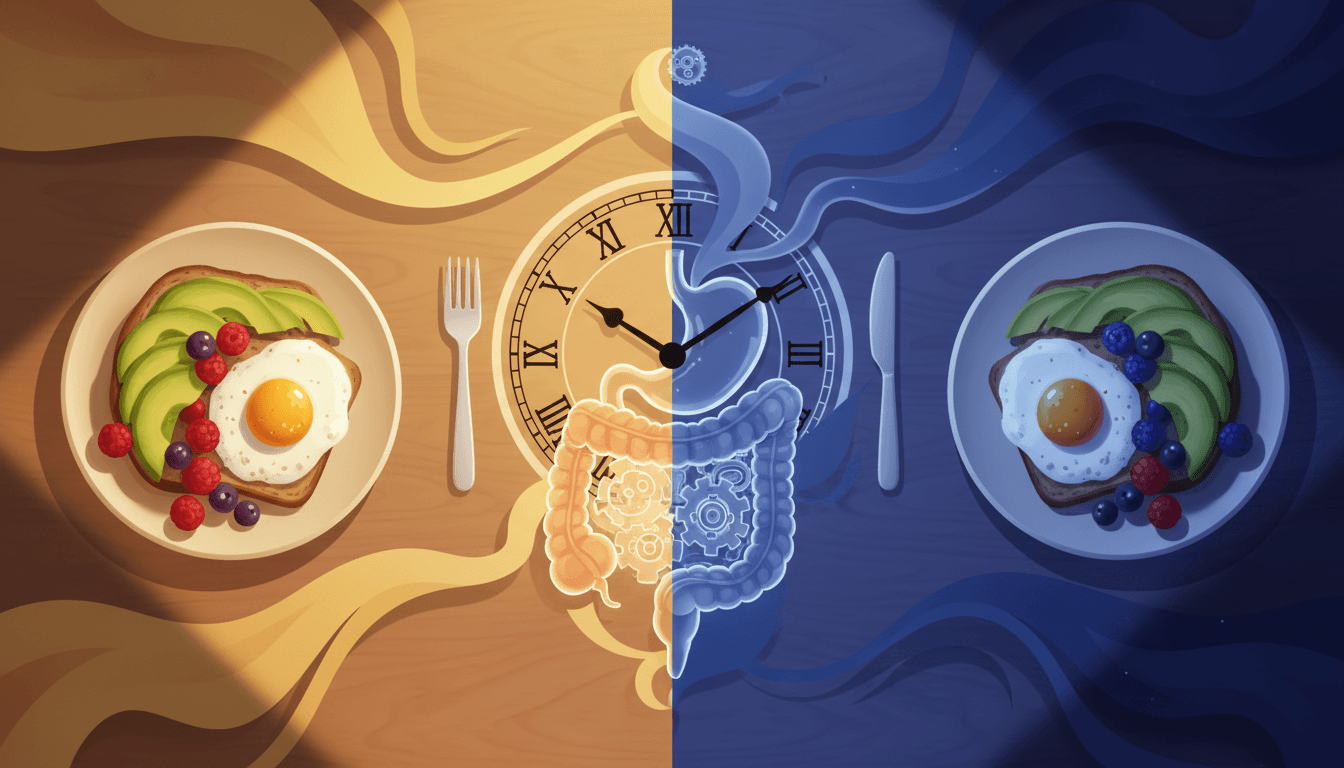
Satchin Panda's lab at the Salk Institute found the same pattern from a different angle. His 2012 study in Cell Metabolism showed that mice on a high-fat diet stayed metabolically healthy when restricted to eating within an 8-hour window aligned with their active phase. The mice eating the same diet spread across the day became obese and diabetic. Same calories. Different timing. Wildly different outcomes.
In 2015, Panda and Shubhroz Gill tracked human eating patterns via a smartphone app and found that most people eat across a 15-hour window or longer. When participants restricted their eating to a 10-hour window, they lost weight and reported better sleep and more energy. No calorie counting. Just alignment.
Beyond the Scale
Céline Vetter, now at the University of Colorado, published a 2015 study in Current Biology that followed 800 adults for two years. Social jet lag predicted worse metabolic health across the board. Higher cortisol. Higher resting heart rate. Higher BMI. Greater likelihood of depression. All after controlling for sleep duration and chronotype.
That last part is the key. It wasn't that late sleepers were unhealthy. It was that people whose schedules forced them to sleep at the wrong time were unhealthy. An early bird forced to work night shifts would show the same damage as a night owl dragged out of bed at 5 AM.
The 2009 study by Frank Scheer and colleagues at Harvard, published in PNAS, demonstrated this directly. They put healthy volunteers on a forced circadian misalignment protocol and watched their biology fall apart in real time. Blood pressure rose. Insulin dropped. Glucose spiked after meals. Cortisol rhythms inverted. Three of the participants became technically prediabetic within days. They weren't sleep-deprived. They were sleep-misaligned.
A 2018 study in The Lancet Psychiatry by Lyall and colleagues at the University of Glasgow analyzed circadian disruption data from over 91,000 participants in the UK Biobank. Greater circadian disruption was significantly associated with major depression, bipolar disorder, lower subjective wellbeing, greater mood instability, and worse cognitive function. The association held after adjusting for age, sex, lifestyle, and socioeconomic factors.
Social jet lag isn't just making people tired. It's making them sick, heavy, and depressed.
The Fix Nobody Wants to Talk About
Roenneberg has called social jet lag "the most overlooked epidemic in modern health." What makes it frustrating is that the fixes are known. They're just structurally inconvenient.
Later school start times are the most studied intervention. Kyla Wahlstrom and colleagues at the University of Minnesota published a 2014 study showing that when schools pushed start times from 7:35 to 8:55 AM, students got more sleep, had better grades, fewer car accidents, and improved mental health. Gideon Dunster and colleagues confirmed this in a 2018 Science Advances study in Seattle. When the district delayed start times by nearly an hour, students slept 34 minutes more on average. Their grades improved. The effect was strongest among students from disadvantaged backgrounds.
The biology here is straightforward. Adolescent chronotypes shift late during puberty. A teenager whose body wants to sleep from midnight to 9 AM is being asked to function at 7 AM. That's like asking a 40-year-old to start work at 4 AM. Nobody would call the 40-year-old lazy. But we call teenagers lazy every day.
For adults, the fix involves flexible work hours, reduced emphasis on early starts as a virtue, and chronotype-aware scheduling. Francesco Benedetti and colleagues have shown that aligning treatment timing with circadian phase accelerates antidepressant response. Morning light treatment combined with standard medication worked faster than medication alone. Francis Lévi's work on chronotherapy in cancer treatment found that the same chemotherapy drugs were more effective and less toxic when administered at specific circadian phases.
Even something as simple as when you take your blood pressure medication matters. The 2020 Hygia Chronotherapy Trial published in the European Heart Journal by Hermida and colleagues followed nearly 20,000 patients and found that taking blood pressure medication at bedtime instead of morning reduced cardiovascular events by 45%.
Timing isn't a footnote. It's the variable.
The Alarm Clock Problem
I grew up in Alaska, where the sun disappears for months and then refuses to set. Your body doesn't know what to do with 22 hours of daylight. You stay up too late. You wake up groggy. The environment itself creates social jet lag because the social clock and the solar clock disagree completely.
But you don't need to live in Alaska to experience this. You just need an alarm clock and a job that starts before your biology is ready.
Kenneth Wright Jr. at the University of Colorado ran a 2013 study in Current Biology where he sent people camping for a week with no artificial light. Their circadian rhythms shifted to align almost perfectly with the solar cycle within days. Melatonin onset moved 2 hours earlier. The gap between biological time and clock time collapsed.
The participants didn't try to fix their sleep. They just removed the thing disrupting it.
Your alarm clock isn't neutral. It's a tool that forces your biology onto someone else's schedule. For some people, the fit is fine. For roughly a third of the population, it's a chronic source of metabolic and psychological stress that accumulates across decades.
Roenneberg wrote in Internal Time that if we designed society around circadian biology instead of industrial convenience, we'd see measurable drops in obesity, depression, and cardiovascular disease. Not because people would sleep more. Because they'd sleep at the right time.
The alarm clock isn't making you tired. It's making you sick. And the fact that everyone uses one doesn't make it harmless. It just makes the damage invisible.
Sources
- Social Jetlag and Obesity (Roenneberg et al., 2012, Current Biology)
- Aligning Work and Circadian Time in Shift Workers Improves Sleep and Reduces Circadian Disruption (Vetter et al., 2015, Current Biology)
- Adverse Metabolic and Cardiovascular Consequences of Circadian Misalignment (Scheer et al., 2009, PNAS)
- Association of Disrupted Circadian Rhythmicity with Mood Disorders (Lyall et al., 2018, The Lancet Psychiatry)
- Time-Restricted Feeding without Reducing Caloric Intake Prevents Metabolic Diseases (Hatori et al., 2012, Cell Metabolism)
- A Smartphone App Reveals Erratic Diurnal Eating Patterns (Gill & Panda, 2015, Cell Metabolism)
- Entrainment of the Human Circadian Clock to the Natural Light-Dark Cycle (Wright et al., 2013, Current Biology)
- Examining the Impact of Later High School Start Times (Wahlstrom et al., 2014, University of Minnesota)
- Sleepmore in Seattle: Later School Start Times (Dunster et al., 2018, Science Advances)
- Morning Light Treatment Hastens the Antidepressant Effect of Citalopram (Benedetti et al., 2003, Journal of Clinical Psychiatry)
- Chronomodulated Chemotherapy Against Metastatic Colorectal Cancer (Lévi et al., 2006, Chronobiology International)
- Bedtime Hypertension Treatment Improves Cardiovascular Risk Reduction (Hermida et al., 2020, European Heart Journal)
- Roenneberg T. Internal Time: Chronotypes, Social Jet Lag, and Why You're So Tired (2012, Harvard University Press)
- Panda S. The Circadian Code (2018, Rodale Books)
Part of the Body Clock series. Previous: The Night Shift Problem: When Work Breaks the Clock. Next: When You Eat Matters More Than What You Eat.