Why Sugar Pills Actually Work
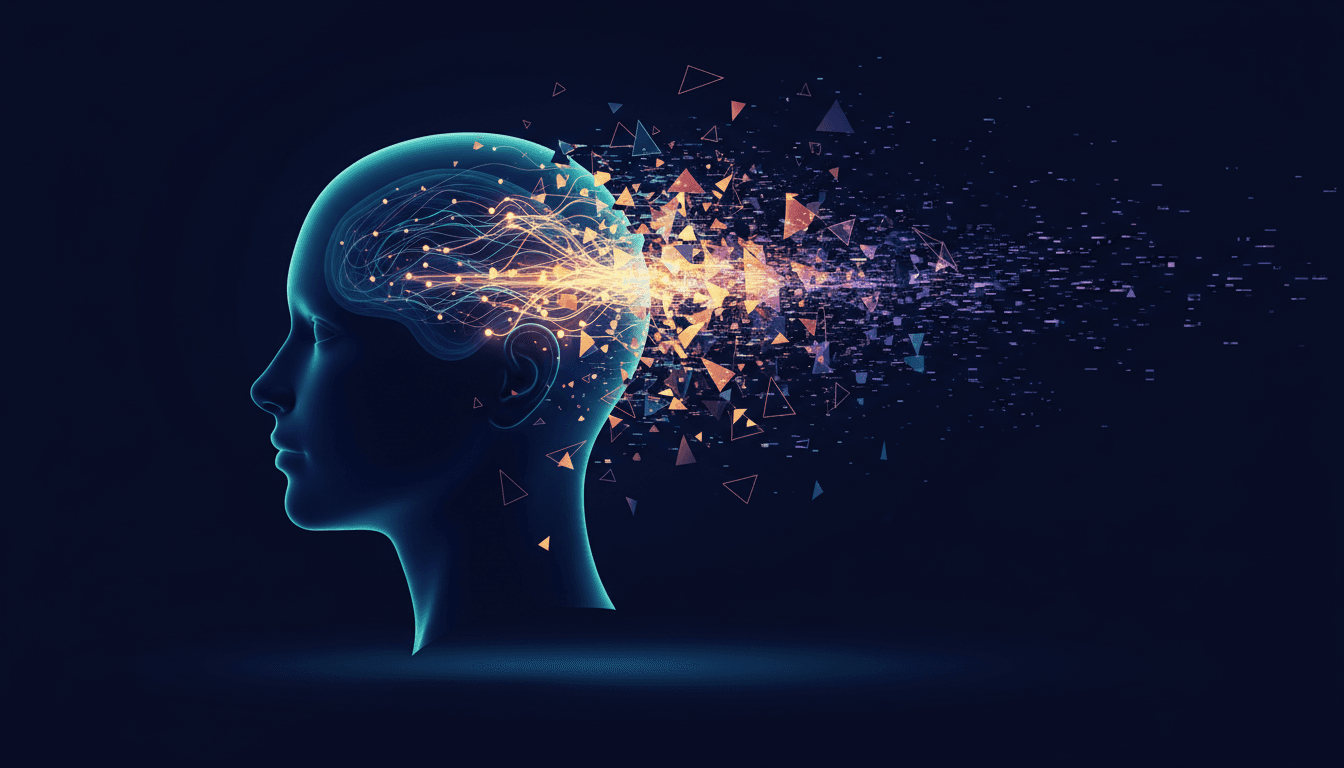
The placebo effect isn't a trick. It's your brain's prediction engine rewriting your neurochemistry in real time.
A doctor gives you a sugar pill. Tells you it's a painkiller. Your pain decreases. Not because the sugar did anything. Because your brain did.
This has been documented thousands of times. Placebo responses show up in pain, depression, Parkinson's disease, irritable bowel syndrome, anxiety. They show up even when people know the pill is fake. And for decades, nobody had a good explanation for how.
Predictive processing has one.
Your Brain Fills the Prescription
In 2004, Tor Wager at Columbia University published a study in Science that made the mechanism visible. He put people in an fMRI scanner, applied a placebo cream to their skin, and told them it would reduce pain. Then he delivered a painful heat stimulus.
The results were not subtle. Before the pain stimulus even arrived, activity in the anterior cingulate cortex, thalamus, and insula (the brain's core pain-processing regions) had already decreased. The brain's prediction of relief was filtering the incoming pain signal before it reached conscious experience.
This is the predictive processing framework in action. Your brain doesn't wait for sensory data and then react. It generates predictions about what's coming and uses those predictions to shape how incoming signals get processed. When the prediction says "relief is coming," the pain signal gets turned down at the neural level.
Not psychologically. Neurochemically.
Real Drugs From Fake Pills
Fabrizio Benedetti at the University of Turin has spent decades mapping exactly what the brain releases during placebo responses. His work, compiled in Placebo Effects: Understanding the Mechanisms in Health and Disease, shows the specificity is remarkable.
Give someone a placebo painkiller and their brain releases endogenous opioids. You can prove this because naloxone, an opioid blocker, eliminates the placebo analgesic effect. Block the brain's own opioid system and the sugar pill stops working. The pill was never doing anything. The brain's opioid system was doing everything.
It gets more specific. In 2001, Raúl de la Fuente-Fernández and colleagues published a study in Science on Parkinson's patients who received placebo injections they believed were anti-Parkinson's medication. PET scans showed their brains released real dopamine in the striatum. The same neurotransmitter, in the same brain region, that actual Parkinson's drugs target.
The patients' motor symptoms improved. Not because of the injection. Because their brains predicted the injection would help, and that prediction triggered the neurochemical cascade that actually helps.
Placebo anxiolytics reduce amygdala activity. Placebo antidepressants shift serotonin processing. The brain doesn't produce a generic "feel better" response. It produces the specific neurochemical response it predicts should follow from the specific treatment it thinks it's receiving.
The Prediction Doesn't Need You to Believe It
This is where it gets weird.
Ted Kaptchuk at Harvard has been running studies that should break the placebo effect. In a 2010 study published in PLOS ONE, he gave patients with irritable bowel syndrome pills in bottles clearly labeled "placebo pills." He told them explicitly. These are sugar pills with no active ingredient. He explained the placebo effect. No deception whatsoever.
They improved significantly compared to no-treatment controls.
If placebo required conscious belief, this shouldn't work. You can't trick someone who knows the trick. But the predictive processing framework explains it cleanly. The brain's prediction engine operates largely below conscious awareness. The ritual of taking a pill. The clinical setting. The doctor handing you something and telling you to take it twice a day. All of that generates unconscious predictions about therapeutic outcomes.
Your conscious mind can know the pill is fake. Your predictive machinery doesn't care. It reads the contextual cues (white coat, clinical environment, pill-taking ritual) and generates physiological predictions based on a lifetime of associations between those cues and feeling better.
Andy Clark describes this in The Experience Machine. The brain is a prediction machine that treats every piece of contextual information as evidence. The label on the bottle is one piece of evidence. The act of receiving treatment from a medical professional is another. The prediction engine weighs all of it.
Context Is the Drug
A placebo isn't a fake treatment. It's a real context.
Anil Seth's interoceptive predictive coding model, outlined with Keisuke Suzuki and Hugo Critchley in a 2012 Frontiers in Psychology paper, argues that your brain is constantly generating predictions about your body's internal states. Pain, energy, nausea, mood. These predictions don't just forecast your body's condition. They shape it.
When a doctor tells you a treatment will reduce your pain, that information updates your brain's predictive model. The updated model predicts less pain. Predictions cascade downward through the neural hierarchy, which changes how pain signals get processed at lower levels.
Karl Friston's free energy framework provides the math. In his 2005 paper in Philosophical Transactions of the Royal Society B, he describes how the brain minimizes prediction error two ways. Updating predictions to match input, or acting on the world to make input match predictions. Placebo is the second mechanism turned inward. The prediction of improvement changes the physiological signals.
This is why clinical warmth matters. Kaptchuk's research shows the same placebo pill works better when delivered by an attentive doctor than a dismissive one. The pill hasn't changed. The prediction context has.
Nocebo Is the Same Mechanism in Reverse
If positive predictions improve symptoms, negative predictions should worsen them. They do.
Tell someone a sugar pill might cause headaches and a significant percentage will develop headaches. Warn patients about medication side effects and they're more likely to experience those specific side effects, even in the placebo arm of the study. Benedetti's work documents this extensively.
Your brain's prediction engine doesn't distinguish between helpful and harmful predictions. It just generates physiological states that match whatever prediction it's running. Predict relief and your neurochemistry moves toward relief. Predict suffering and it moves toward suffering.
Wake up with a slight headache and spend the morning telling yourself it's going to be a terrible day. That's not pessimism. That's running a nocebo protocol. Your brain takes the forecast and does its best to make it accurate.
Lisa Feldman Barrett's constructed emotion theory, described in How Emotions Are Made, connects here directly. Your brain constructs your experience of your body based on predictions. Those predictions are shaped by your concepts, your context, your expectations. Change the predictions and you change the experience. Not metaphorically. Physiologically.
A Window Into the Operating System
The placebo effect isn't a curiosity or a footnote in pharmacology textbooks. It's a window into how you actually run.
Your brain is generating predictions about your body's state right now. Those predictions are shaping your actual physiology right now. The context you put yourself in, the expectations you carry, the rituals you maintain, all of it feeds the prediction engine.
This doesn't mean you can think your way out of cancer. The prediction engine works within biological constraints. But the range is wider than most people assume. Benedetti measured the neurochemical changes. Wager's fMRI showed the brain activity changes. De la Fuente-Fernández showed real dopamine release from fake drugs.
Your predictions aren't passive observations about what might happen. They're active instructions your brain sends to your body.
The pill was never the treatment. The prediction was.
Sources
- Placebo-Induced Changes in fMRI in the Anticipation and Experience of Pain (Wager et al., 2004, Science) (opens in new tab)
- Expectation and Dopamine Release: Mechanism of the Placebo Effect in Parkinson's Disease (de la Fuente-Fernández et al., 2001, Science) (opens in new tab)
- Placebos Without Deception: A Randomized Controlled Trial in Irritable Bowel Syndrome (Kaptchuk et al., 2010, PLOS ONE) (opens in new tab)
- Placebo Effects: Understanding the Mechanisms in Health and Disease (Benedetti, 2014, Oxford University Press) (opens in new tab)
- A Theory of Cortical Responses (Friston, 2005, Philosophical Transactions of the Royal Society B) (opens in new tab)
- An Interoceptive Predictive Coding Model of Conscious Presence (Seth, Suzuki & Critchley, 2012, Frontiers in Psychology) (opens in new tab)
- The Experience Machine: How Our Minds Predict and Shape Reality (Clark, 2023, Pantheon) (opens in new tab)
- How Emotions Are Made: The Secret Life of the Brain (Barrett, 2017, Houghton Mifflin Harcourt) (opens in new tab)
- Being You: A New Science of Consciousness (Seth, 2021, Dutton) (opens in new tab)
Part of the Prediction Machine series. Previous: Your Anxiety Is a Weather Forecast That's Always Wrong. Next: Your Brain on Psychedelics Is Your Brain with the Filter Off.