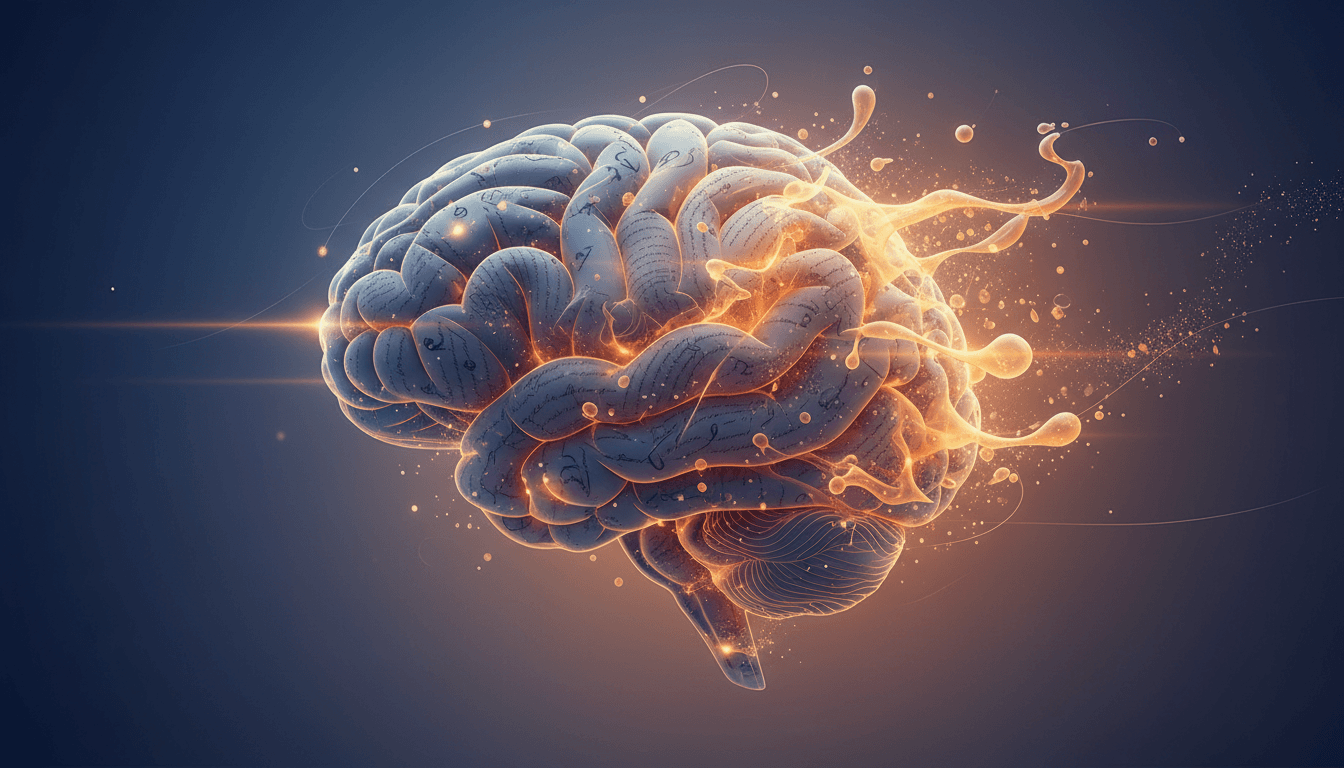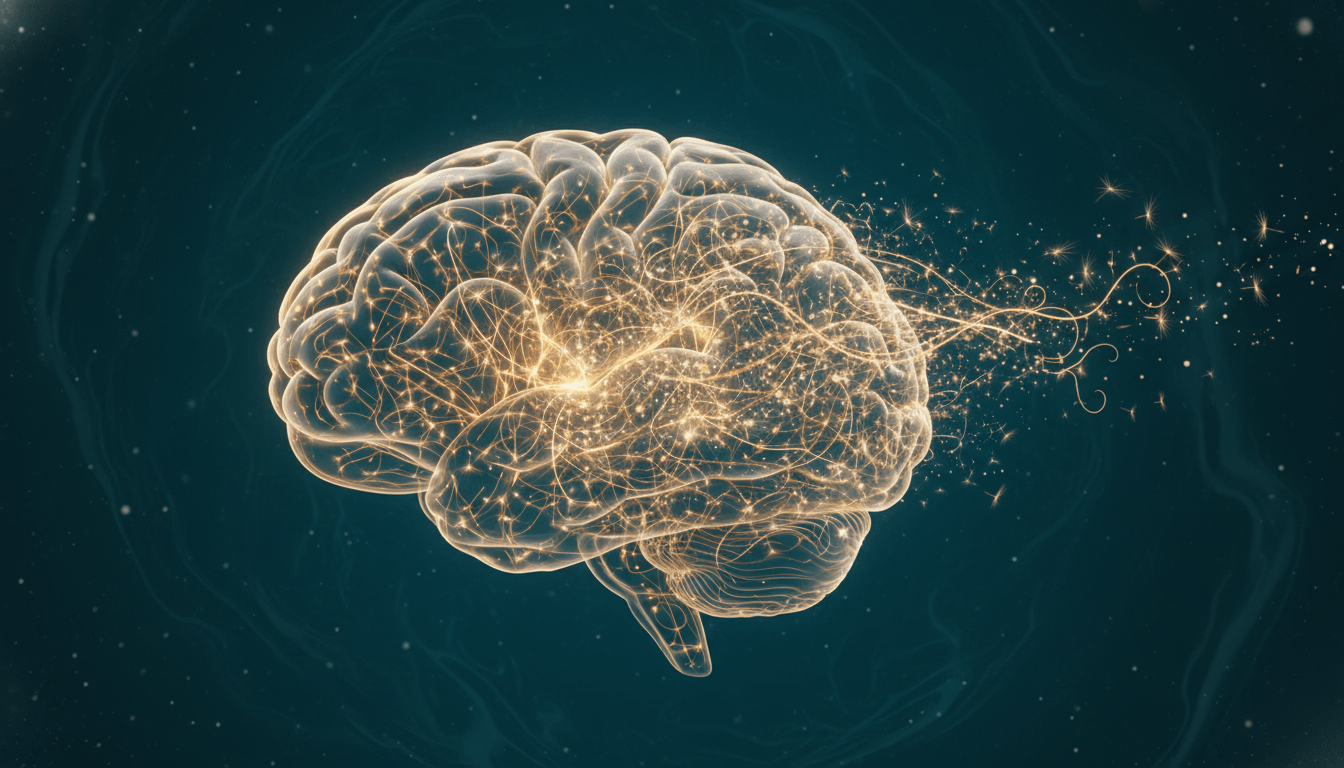
Forgetting Is the Brain's Best Feature
Your brain doesn't forget because it's broken. It forgets on purpose. Neuroscience shows that active forgetting is a skill your prefrontal cortex runs every day.
Try to remember what you had for lunch last Tuesday. Not yesterday. Tuesday.
Most people can't. And the reaction is usually something like frustration. Why can't I remember a simple thing? What's wrong with my brain?
Nothing. Your brain is doing exactly what it's supposed to do. It threw that memory away because you don't need it. And the system that did the throwing is one of the most sophisticated features you have.
The Prefrontal Delete Key
Michael Anderson at the University of Cambridge has spent years proving that forgetting isn't passive decay. It's an active process run by the prefrontal cortex. Same brain region that handles impulse control, decision-making, and executive function.
His think/no-think paradigm works like this. Participants learn word pairs. Then they're shown one word and told either to recall the paired word or to suppress it. Actively not think about it. The people who successfully suppress show measurable forgetting of those items afterward. The memories aren't just hidden. They're degraded.
Brain imaging shows what's happening under the hood. The prefrontal cortex sends inhibitory signals directly to the hippocampus. It's not that the memory fades on its own. The prefrontal cortex reaches in and turns it down. Same neural circuitry you use to stop yourself from saying something you'll regret. Except aimed at a memory.
Anderson calls this retrieval-induced forgetting. Every time you successfully retrieve one memory, competing memories for that same cue get suppressed. Your brain is running a constant background process. Strengthen the winners, weaken the losers. It's not keeping everything. It's keeping what's useful.
What Happens When You Can't Forget
There are people who remember almost everything. The condition is called highly superior autobiographical memory (HSAM). Around 60 people worldwide have been documented with it. They can tell you what they ate for lunch on any given Tuesday for the last 20 years. What the weather was. What was on TV.
It sounds like a superpower. It's not.
Jill Price, one of the first documented cases, described it as "nonstop, uncontrollable, and totally exhausting." She doesn't get to choose what she remembers. It's all there, all the time. Every argument, every embarrassment, every bad day, as vivid as the moment it happened.
The research on HSAM suggests these individuals don't have better encoding. They have worse forgetting. The prefrontal suppression system that normally clears out irrelevant memories doesn't work as efficiently. The result is a mind that can't let go.
This is the strongest argument that forgetting is a feature. When the system breaks, the experience is overwhelming, not enhanced.
Your Brain Shreds Files in Your Sleep
Forgetting isn't just a daytime operation. A 2025 study in Trends in Neurosciences proposed that distinct memory engrams (physical traces of memories stored in neural circuits) can coexist and compete for expression. Forgetting might not destroy the engram. It might just mean one memory won the competition and the others got pushed to the back of the line.
Even wilder: your brain uses its own stress hormones to facilitate forgetting. A September 2025 preprint found that the cortisol awakening response (the natural spike of cortisol that happens when you wake up every morning) selectively enhances suppression of recently acquired emotional memories. Your brain uses the stress of waking up to clear yesterday's emotional clutter.
Every morning, your brain runs a cleanup process. The cortisol surge isn't just an alarm clock for your body. It's the prefrontal cortex getting a chemical boost to file, compress, and delete.
The Paradox
Forgetting and learning aren't opposites. They're partners.
Your brain can only hold so much in accessible memory at any time. If everything stayed equally available, retrieval would be impossibly slow. Imagine searching for a file on a computer where nothing was ever deleted and there were no folders. That's what memory without forgetting would be. Technically complete. Functionally useless.
By actively suppressing irrelevant memories, the brain makes relevant ones faster to access. Forgetting is what makes remembering efficient. The two systems exist in balance.
This is why cramming for a test works short-term but fails long-term. You're loading everything into active memory without giving the brain time to do its sorting. The information is there for the exam, but because nothing was pruned, nothing was prioritized. Two weeks later, it's all gone. Not because your brain failed. Because it correctly identified that you hadn't used any of it since the test and cleared the buffer.
The Trade-Off
I used to feel bad about forgetting things. Names especially. Someone introduces themselves and thirty seconds later I'm already guessing. But the science says that doesn't mean my memory is weak. It means my brain is making a real-time judgment about what's worth storing and what isn't. (Sometimes it's wrong. Obviously.)
Forgetting isn't the failure mode of memory. It's the operating system. The brain that forgets efficiently is the brain that remembers usefully.
Next time you can't remember where you put your keys, don't blame your memory. Your brain made a call. It decided the location of your keys was less important than whatever else you were thinking about. It's annoying but probably right. I mean you always find your keys eventually...
Sources
- Anderson, M.C. "Active Forgetting: Adaptation of Memory by Prefrontal Control." Annual Review of Psychology (2021) (opens in new tab)
- The cost of remembering: engram competition as a flexible mechanism of forgetting. Trends in Neurosciences (2025) (opens in new tab)
- Brain Preparedness for Active Forgetting: Cortisol Awakening Response. bioRxiv (2025) (opens in new tab)
- Parker, E.S. et al. "A Case of Unusual Autobiographical Remembering." Neurocase (2006) (opens in new tab)
- Anderson, M.C. & Green, C. "Suppressing unwanted memories by executive control." Nature (2001) (opens in new tab)
Part of the Rewrite series. Previous: Every Memory You Have Is an Edit. Next: Every Night, Your Brain Decides What You Get to Keep.