The More Your Phone Remembers, the Less You Do
We stopped memorizing phone numbers around 2007. Then directions. Then facts. The internet became our external hard drive, and our internal one is shrinking.
I used to know 15 phone numbers by heart. My mom's, my dad's, my best friend's, a few others. Now I know two. Maybe. The rest live in my phone, and I haven't thought about them in years.
This isn't a moral failure. It's an adaptation. And it's happening to more than just phone numbers.
The Google Effect
In 2011, Betsy Sparrow at Columbia University published a study in Science that changed how we think about memory and technology. She ran four experiments that demonstrated something researchers had suspected but couldn't prove: the internet is changing what we choose to remember.
The key findings.
When participants were asked difficult trivia questions, brain scans showed they were primed to think about computers. Not the answers. The questions triggered thoughts about where to search, not what the answer was.
When participants were told that information would be saved to a computer, they had significantly lower recall for the actual content. But they had better recall for which folder the information was saved in. They remembered the location, not the thing.
And when participants believed information would be deleted, they remembered it better. The brain made a real-time calculation: if this data is going to be available later, don't bother encoding it. If it won't, store it.
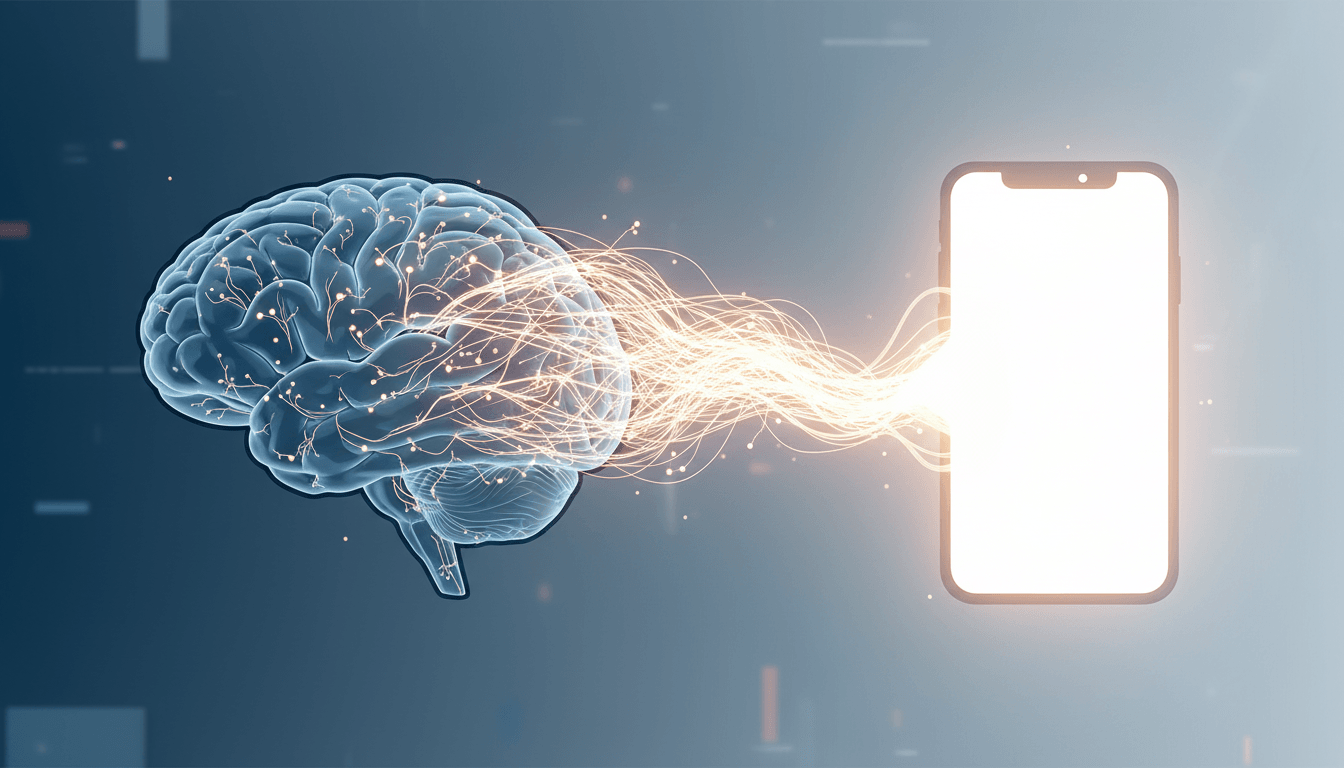
Sparrow called this the Google Effect. The internet has become a form of "transactive memory," a system where information is stored collectively outside the individual. We've always done this with other people. (Your partner remembers the dentist appointment, you remember the WiFi password.) The new thing is that the "partner" is a device that's always available, never forgets, and never argues about who was supposed to remember what.
It's Not Just Search
A 2024 meta-analysis in Frontiers in Public Health confirmed the Google Effect across multiple studies. Intensive internet search behavior consistently reduces internal memory encoding while enhancing source-location memory. We're not getting dumber. We're redirecting. The brain is outsourcing storage to the most reliable external system available.
But the effect extends beyond search. Research on cognitive offloading shows the pattern everywhere.
Photography. People who photograph an experience remember it worse than people who just look at it. The act of capturing delegates the memory to the device. The brain gets the signal. This has been saved externally. No need to store it internally.
GPS navigation. Habitual GPS users show measurably worse spatial memory than people who navigate from their own mental maps. The hippocampus (the same structure that builds your memories) also builds your spatial maps. When GPS takes over navigation, the hippocampus does less work, and the skill atrophies.
Note-taking. Students who take notes on laptops tend to transcribe lectures verbatim and remember less than students who take notes by hand. The hand-writers, forced to compress and paraphrase in real time, engage deeper processing. The laptop note-takers offloaded to the screen.
The Transactive Shift
Humans have used transactive memory forever. Hunter-gatherers divided knowledge. One person knew which plants were edible, another knew water sources. Families do the same. It's efficient. It scales.
What's different now is that the external store is infinite, instant, and always in your pocket. The incentive to memorize anything keeps shrinking. Why learn a route when Maps knows it? Why memorize a recipe when it's one search away? Why remember a fact when Google has it?
The honest answer is: there often isn't a practical reason. For most daily tasks, offloading to your phone is the rational choice. It's faster, more reliable, and less error-prone than internal memory.
But there's a cost that doesn't show up immediately.
What Gets Lost
The research is still early, but the pattern is consistent. The more you offload, the less you encode. And encoding isn't just about storing facts. It's about building the internal web of associations that lets you think creatively, make unexpected connections, and have original ideas.
When you memorize something, it doesn't sit in isolation. It links to other things you know. Those links are what let you see a pattern nobody else sees, or make a connection between two domains that seem unrelated. The person who's memorized a lot of poetry doesn't just have poems stored. They have a network of language, rhythm, and imagery that informs everything else they think about.
When you outsource that to a device, the information is technically accessible. But it's not linked. Not integrated. Not part of your thinking. It's a file in a folder you might never open again.
What I've Noticed
I'm not going to pretend I memorize phone numbers. I don't. I use GPS for everything. I google things I used to know by heart.
But I notice the difference. When I was learning to code and forced myself to type solutions from memory instead of copying them, the understanding stuck differently. When I study something without a screen nearby, I retain more. Offloading is convenient but shallow. Encoding is effortful but deep.
I don't think the answer is to throw your phone in a lake. Probably just awareness. Every time you offload a memory to a device, your brain takes the cue and stores less internally. Sometimes that trade is worth it. Sometimes it isn't.
Your phone is the most reliable memory system ever built. But it's not your memory. And the gap between what your phone knows and what you know keeps getting wider.
Sources
- Sparrow, B., Liu, J. & Wegner, D.M. "Google Effects on Memory." Science (2011) (opens in new tab)
- Google effects on memory: a meta-analytical review. Frontiers in Public Health (2024) (opens in new tab)
- The Cognitive Architecture of Digital Externalization. Educational Psychology Review (2023) (opens in new tab)
- How is the internet shaping our cognition? Exploring the Google Effect. CogBites (2025) (opens in new tab)
- Columbia News: Study Finds That Memory Works Differently in the Age of Google (opens in new tab)
Part of the Rewrite series. Previous: Why You Can't Remember Being Three. Next: You've Never Used Your Full Memory.