You've Never Used Your Full Memory
The world's top memory athletes have ordinary brains. A Radboud University study trained regular people to near-elite recall in 40 days using a 2,500-year-old technique almost nobody uses.
In 2017, Martin Dresler at Radboud University put 23 of the world's top memory athletes into an fMRI scanner. People who memorize shuffled decks of cards in under 20 seconds. Who recall hundreds of random digits in minutes.
The first thing Dresler checked: are their brains structurally different? Bigger hippocampi? More gray matter? Better wiring?
No. Structurally, their brains looked like everyone else's.
They hadn't been built differently. They'd been trained differently.
The Training Study
Dresler didn't stop at scanning the athletes. He took 51 ordinary people with no memory training and split them into three groups.
One group got six weeks of daily training in the method of loci, an ancient memorization technique. Thirty minutes a day, 40 sessions. One group got working memory training (dual n-back, the kind in brain training apps). The last group did nothing.
Before training, all three groups recalled about 26 words from a 72-word list. The memory athletes recalled 71.
After 40 days:
- Method of loci group: 62 words. From 26 to 62.
- Working memory group: modest improvement on the trained task only.
- Control group: no change.
Ordinary people went from average to near-elite performance in six weeks. When Dresler scanned their brains again, the connectivity patterns of the trained group had started to resemble the athletes'.
Four months later, without any continued training, the improvements held.
Published in Neuron. Exceptional memory isn't a gift. It's a skill.
The 2,500-Year-Old Hack
The method of loci dates back to ancient Greece. Legend credits it to the poet Simonides, around 500 BC. A banquet hall collapsed and killed everyone inside. Simonides reconstructed who had been sitting where by mentally walking through the room.
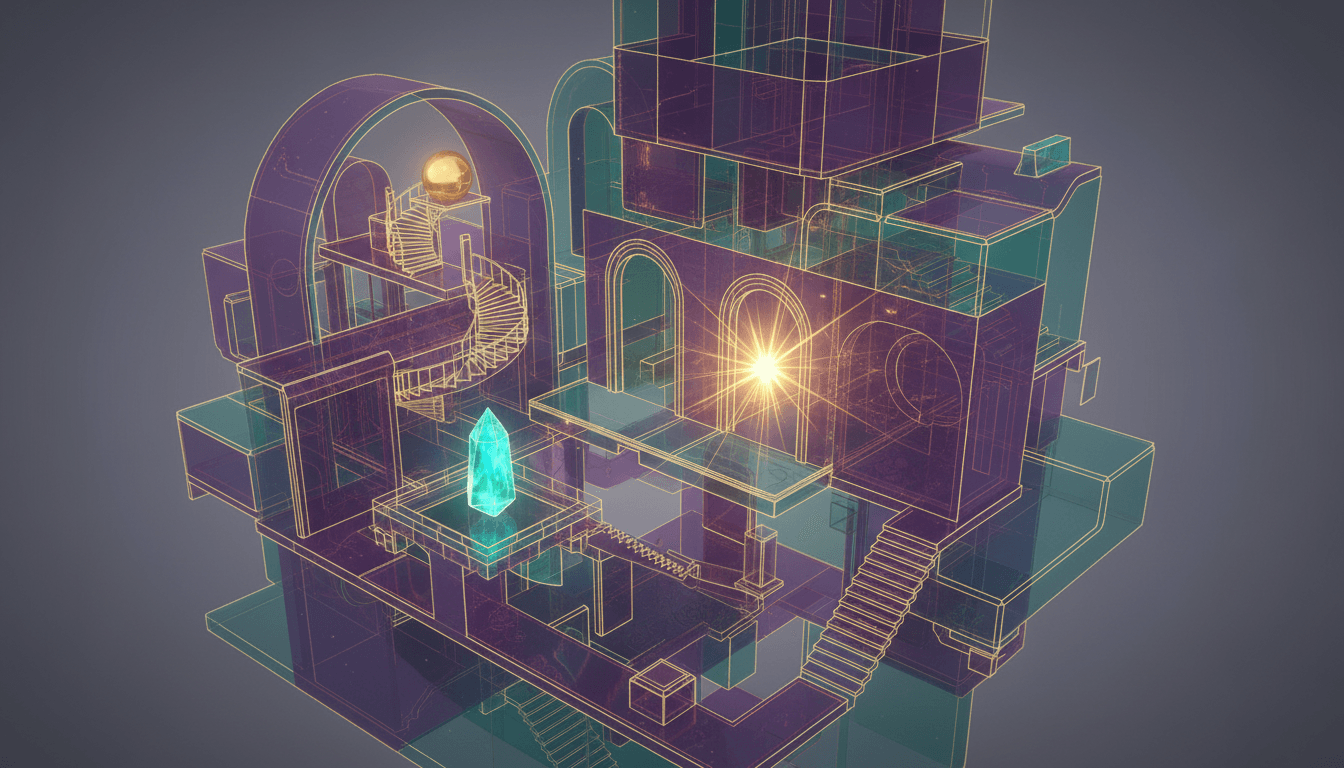
You take a route you know intimately. Your apartment, your drive to work, your childhood home. You mentally walk through it, placing the things you want to remember at specific locations along the route. The weirder and more vivid the placement, the better.
Want to remember a grocery list? Picture a 6-foot egg cracking open on your front porch, yolk pooling down the steps. A river of milk flooding your hallway. A loaf of bread the size of a couch jammed into your bathtub. To recall the list, you walk the route in your mind and "see" each one where you left it.
It sounds absurd. It works because it converts abstract information (a list of words, a sequence of numbers) into spatial and visual memory. Exactly the type of encoding the hippocampus evolved to handle. Your brain is built to remember places and scenes. The method of loci hijacks that hardware for general-purpose memorization.
What It Doesn't Do
The method of loci produces extraordinary results for memorization tasks. It doesn't make you smarter.
A 2021 study found that only n-back working memory training improved performance on untrained tasks. The method of loci made people great at memorizing lists. It didn't improve their working memory, their attention, or their reasoning.
Memory athletes aren't cognitively superior. They're specialists. Like a sprinter. Incredibly fast in a straight line. Not necessarily better at swimming.
What the Brain Scans Show
A 2025 follow-up compared neural patterns between athletes and trained novices. The trained people's brains didn't just perform better. They encoded information through entirely different pathways. Three regions (prefrontal cortex, inferior temporal cortex, posterior parietal cortex) all lit up differently during memorization.
The method of loci doesn't just give you a trick. It gives your brain a different way of encoding information entirely. What happens in a trained brain when it memorizes a word looks nothing like what happens in an untrained one. And the new pathways persist even after you stop practicing.
This is why the improvements lasted four months without continued training. The brain had physically reorganized.
The Bigger Picture
The memory athletes prove something at the extreme end. But it applies everywhere. How you encode determines what you retain. And the gap between the best and worst encoding strategies is enormous.
I'm not a memory athlete. I don't compete. But I've used the method of loci for learning code concepts, and the difference is noticeable. When I anchor a concept to a physical location in my mind, it sticks in a way that reading documentation three times doesn't. The technique feels ridiculous. It works anyway.
That's the uncomfortable part of Dresler's study. Forty days of training physically reorganized people's brains. The connectivity patterns changed. And the changes lasted months without practice. Which means most of us are walking around with memory capacity we've never accessed. Not because we can't. Because nobody taught us the technique a Greek poet figured out 2,500 years ago.
Sources
- Dresler, M. et al. "Mnemonic Training Reshapes Brain Networks to Support Superior Memory." Neuron (2017) (opens in new tab)
- Method of loci training yields unique prefrontal representations. bioRxiv (2025) (opens in new tab)
- Dresler, M. et al. "Durable memories and efficient neural coding through mnemonic training." Science Advances (2021) (opens in new tab)
- Stanford Medicine: Memorization tool bulks up brain's internal connections (2017) (opens in new tab)
- The method of loci: A systematic review and meta-analysis. PMC (2025) (opens in new tab)
Part of the Rewrite series. Previous: The More Your Phone Remembers, the Less You Do. Next: Nostalgia Isn't Sentimental. It's Medicine..