Your Anxiety Is a Weather Forecast That's Always Wrong
Predictive processing reframes anxiety not as excessive fear but as a miscalibrated prediction system — one that's stuck forecasting storms that never arrive.
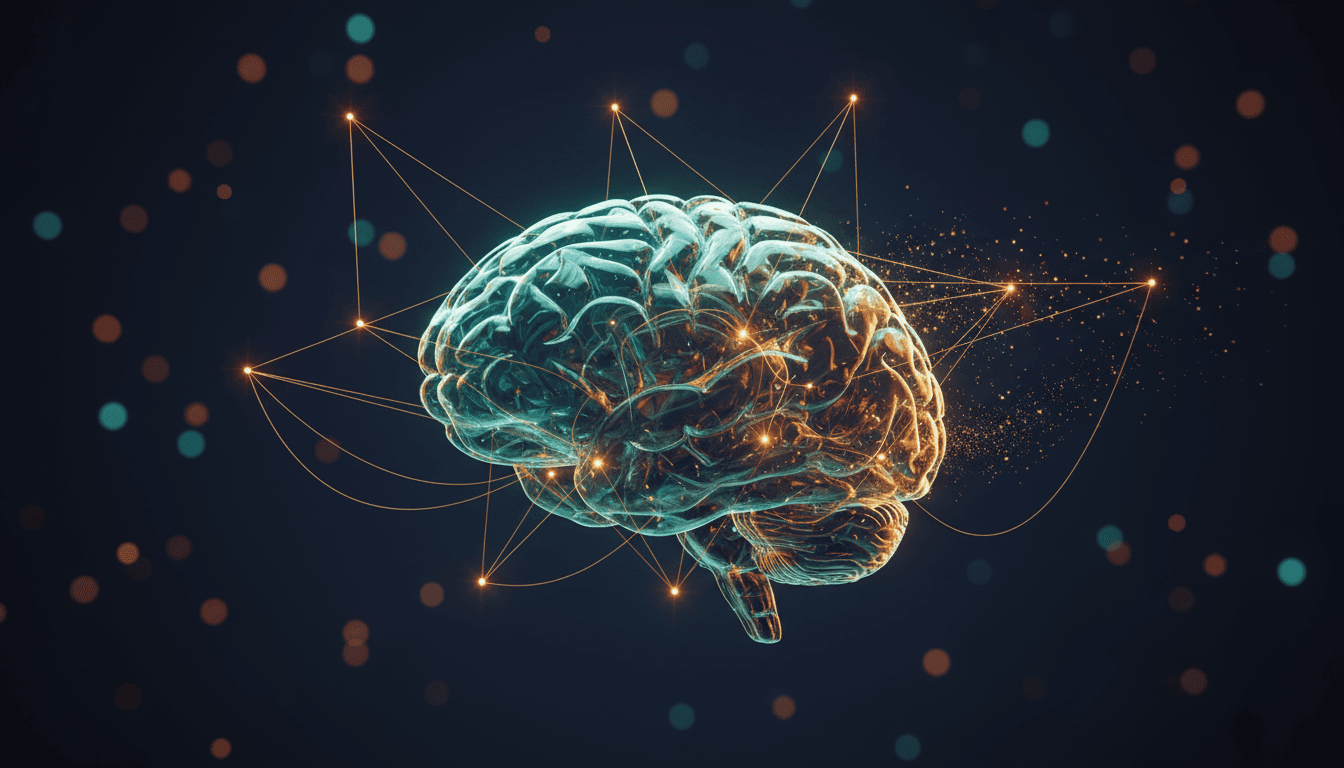
Your brain is a weather forecaster. It wakes up every morning, checks its internal models, and generates predictions about what's coming. Will this conversation go badly? Will that email contain bad news? Will the chest tightness mean something terrible?
Anxiety is what happens when the forecaster is broken. Not broken like it stopped working. Broken like it's predicting hurricanes every single day in a city that hasn't seen one in decades.
If you've been following this series, you know the core idea: your brain doesn't passively receive reality. It generates predictions about what's happening and then checks those predictions against incoming sensory data. The difference between prediction and reality is a prediction error. Those errors are the only signals that actually update your model of the world.
Emotions, as Lisa Feldman Barrett proposed in her theory of constructed emotion, are themselves predictions. Your brain predicts what your body will need in the next few seconds and pre-builds the emotional state to match. Fear before the threat arrives. Anger before the confrontation. Sadness before the loss is confirmed.
Anxiety is a specific corruption of this system. The brain chronically over-predicts threat. Not because there's more danger in the environment. Because the prediction machinery itself is miscalibrated.
The Precision Problem
In Bayesian terms (which is how predictive processing models the brain), every prediction comes with a confidence level. Karl Friston calls this "precision." High precision means the brain treats a signal as important and reliable. Low precision means it gets filtered out as noise.
Healthy brains assign low precision to most body signals. Your heart rate fluctuates constantly. Your breathing changes. Your gut gurgles. Your muscles twitch. These are normal variations, and your brain's prediction system smooths over them without you ever noticing.
Sahib Khalsa and Martin Paulus at the Laureate Institute for Brain Research found something different in people with panic disorder. In research published in Biological Psychiatry (2018), they showed that people with panic disorder have significantly heightened sensitivity to interoceptive prediction errors. Normal heartbeat variations that a healthy brain filters out? The anxious brain flags them as important. It notices the fluctuation, assigns it high precision, and generates a prediction: something is wrong with my heart.
The interoceptive prediction machinery is turned up too high. Every body signal becomes a potential emergency broadcast.
This is why anxiety feels so physical. The racing heart, the tight chest, the churning stomach. These aren't just symptoms of anxiety. They're the content of anxiety. The brain is generating threat predictions about its own body and then experiencing those predictions as real sensations. Anil Seth describes this as the brain being a "prediction machine" that constructs bodily experience from the inside out, not just passively reading signals from the body.
Why Anxiety and Depression Travel Together
Here's something the prediction model explains beautifully. Anxiety and depression co-occur at staggering rates. About 60% of people with anxiety also have symptoms of depression. Traditional models struggle to explain why two seemingly opposite states (hypervigilance versus withdrawal) show up in the same person.
Predictive processing makes it simple. Both are precision-weighting disorders. They're just miscalibrated in different directions.
Anxiety overweights prediction errors. Every mismatch between expectation and reality gets flagged as urgent. The world feels unpredictable, dangerous, full of signals that demand attention. Everything is too loud.
Depression overweights priors. The brain's existing model ("nothing will work," "I can't change anything," "there's no point") is held with such high confidence that incoming sensory evidence to the contrary gets suppressed. Good things happen and they don't register. The model says nothing good is coming, and the model wins.
Barrett, Quigley, and Hamilton proposed this framework, and computational models by Moran and colleagues formalized it mathematically. Same system. Same architecture. Two different ways it breaks.
I think about this from my own experience. After losing my best friend Riley, I lived in both states simultaneously for years. Hypervigilant about everything that could go wrong. Simultaneously convinced that nothing I did would matter anyway. The prediction system was broken in both directions at once.
Why Avoidance Is the Worst Possible Fix
If your brain makes a prediction ("this situation is dangerous") and you avoid the situation, what happens to the prediction?
Nothing. It never gets tested.
No test means no prediction error. No prediction error means no update to the model. The threatening prediction persists. And it might actually get stronger, because your brain can interpret the avoidance itself as confirming evidence. You ran, so the threat must have been real.
This is the cruelest trick of anxiety. The thing that feels most protective (avoiding what scares you) is the thing that keeps the system broken. You're a weather forecaster who predicts a hurricane, boards up the windows, and then when the hurricane doesn't come, concludes that the boards must have stopped it.
Andy Clark, in "The Experience Machine," describes this as the brain becoming trapped in a self-confirming loop. The predictions generate the avoidance, and the avoidance prevents the predictions from being corrected. The model becomes hermetically sealed against disconfirming evidence.
Why Therapy Works (Through a Prediction Lens)
Cognitive behavioral therapy is, at its core, a prediction error generator.
You have a belief: "If I speak up in the meeting, everyone will think I'm stupid." CBT asks you to test that prediction. You speak up. People respond normally. Maybe someone even says "good point." The catastrophe you predicted didn't happen.
That gap between prediction and outcome is a prediction error. And prediction errors are the only signals that update your brain's model. The new evidence competes with the old belief. Do this enough times and the old model starts losing confidence.
Exposure therapy is even more direct. Michelle Craske and colleagues published a landmark reframing in Behaviour Research and Therapy (2014) that shifted the entire field. They argued that exposure therapy doesn't work through habituation (getting used to the fear). It works through "inhibitory learning." You're not extinguishing the old fear prediction. You're building a new, competing prediction that says "this situation is actually safe."
The old prediction doesn't disappear. It's still in there. But the new prediction can override it if it's strong enough and practiced enough. This is why exposure therapy needs to be done repeatedly and in varied contexts. You're not just learning "this one specific elevator is safe." You're building a general prediction that elevators are safe.
This also explains why anxiety can come back after successful treatment. The old prediction was never deleted. It was just outcompeted. Under enough stress, fatigue, or novel circumstances, the old threat model can resurface. Relapse isn't failure. It's the old forecast breaking through when the new one is temporarily weakened.
Recalibrating the Forecaster
The prediction model suggests something practical about managing anxiety. The goal isn't to stop predicting. You can't. Prediction is the fundamental operation of your brain. The goal is to recalibrate the precision settings.
Jakob Hohwy, in "The Predictive Mind," describes this as adjusting how much confidence the brain assigns to different signals. Meditation research supports this. Norman Farb and colleagues (2007) found that mindfulness practice shifts neural activity from the default mode network (where your brain runs its prediction models on autopilot) to direct sensory processing. You're temporarily turning down the precision on your predictions and turning up the precision on what's actually happening right now.
Exercise does something similar through a different mechanism. Broman-Fulks and colleagues (2004) showed that aerobic exercise reduces anxiety sensitivity, which is the tendency to catastrophize about body sensations. Running makes your heart pound, your breathing heavy, your muscles burn. But nothing bad happens. Your brain learns that elevated heart rate doesn't equal danger. That's a prediction error. Repeated across hundreds of workouts, it recalibrates the interoceptive prediction system.
This is why the standard anxiety advice (exercise, meditation, therapy, gradual exposure) actually works. It's not random wellness fluff. Every one of these interventions does the same thing through the prediction lens: it generates controlled prediction errors that update the brain's miscalibrated threat model.
Your anxiety isn't a character flaw. It isn't weakness. It isn't something wrong with who you are. It's a forecasting system that's been set to predict storms with too much confidence and ignore clear skies. The forecast can be recalibrated. But only if you're willing to step outside and check the actual weather.
Sources
- A Theory of Cortical Responses (Friston, 2005, Philosophical Transactions of the Royal Society B)
- Whatever Next? Predictive Brains, Situated Agents, and the Future of Cognitive Science (Clark, 2013, Behavioral and Brain Sciences)
- The Experience Machine: How Our Minds Predict and Shape Reality (Clark, 2023, Pantheon)
- Being You: A New Science of Consciousness (Seth, 2021, Dutton/Faber & Faber)
- The Theory of Constructed Emotion (Barrett, 2017, Social Cognitive and Affective Neuroscience)
- How Emotions Are Made: The Secret Life of the Brain (Barrett, 2017, Houghton Mifflin Harcourt)
- Interoception and Mental Health: A Roadmap (Khalsa et al., 2018, Biological Psychiatry: Cognitive Neuroscience and Neuroimaging)
- The Predictive Mind (Hohwy, 2013, Oxford University Press)
- Maximizing Exposure Therapy: An Inhibitory Learning Approach (Craske et al., 2014, Behaviour Research and Therapy)
- Attention, Uncertainty, and Free-Energy (Feldman & Friston, 2010, Frontiers in Human Neuroscience)
- Attending to the Present: Mindfulness Meditation Reveals Distinct Neural Modes of Self-Reference (Farb et al., 2007, Social Cognitive and Affective Neuroscience)
- Effects of Aerobic Exercise on Anxiety Sensitivity (Broman-Fulks et al., 2004, Behaviour Research and Therapy)
- An Interoceptive Predictive Coding Model of Conscious Presence (Seth, Suzuki & Critchley, 2012, Frontiers in Psychology)
Part of the Prediction Machine series. Previous: Your Brain Invents Every Emotion You Feel. Next: Why Sugar Pills Actually Work.