There Are No Pain Receptors
Your body doesn't have pain receptors. It has danger detectors. The difference between those two things explains almost everything about chronic pain, phantom limbs, and why a soldier can take a bullet and feel nothing.
You do not have pain receptors. Nobody does. They don't exist.
Almost everyone gets this wrong. Doctors. Physical therapists. The diagrams in biology textbooks. The idea that your body contains specialized nerve endings whose job is to detect pain is so deeply embedded that questioning it feels absurd.
But it is wrong.
What you have are nociceptors. Charles Sherrington named them in 1906, from the Latin "nocere," meaning to harm. Nociceptors are danger detectors. They respond to mechanical pressure, extreme temperatures, and chemical irritation. They fire when something potentially damaging is happening to your tissue.
The word "potentially" is doing a lot of work in that sentence.
Nociceptors don't detect pain. They detect events that might be dangerous. They send that information toward the spinal cord and brain. What happens next is where everything gets interesting, and where the textbook model completely falls apart.
The Gate in Your Spinal Cord
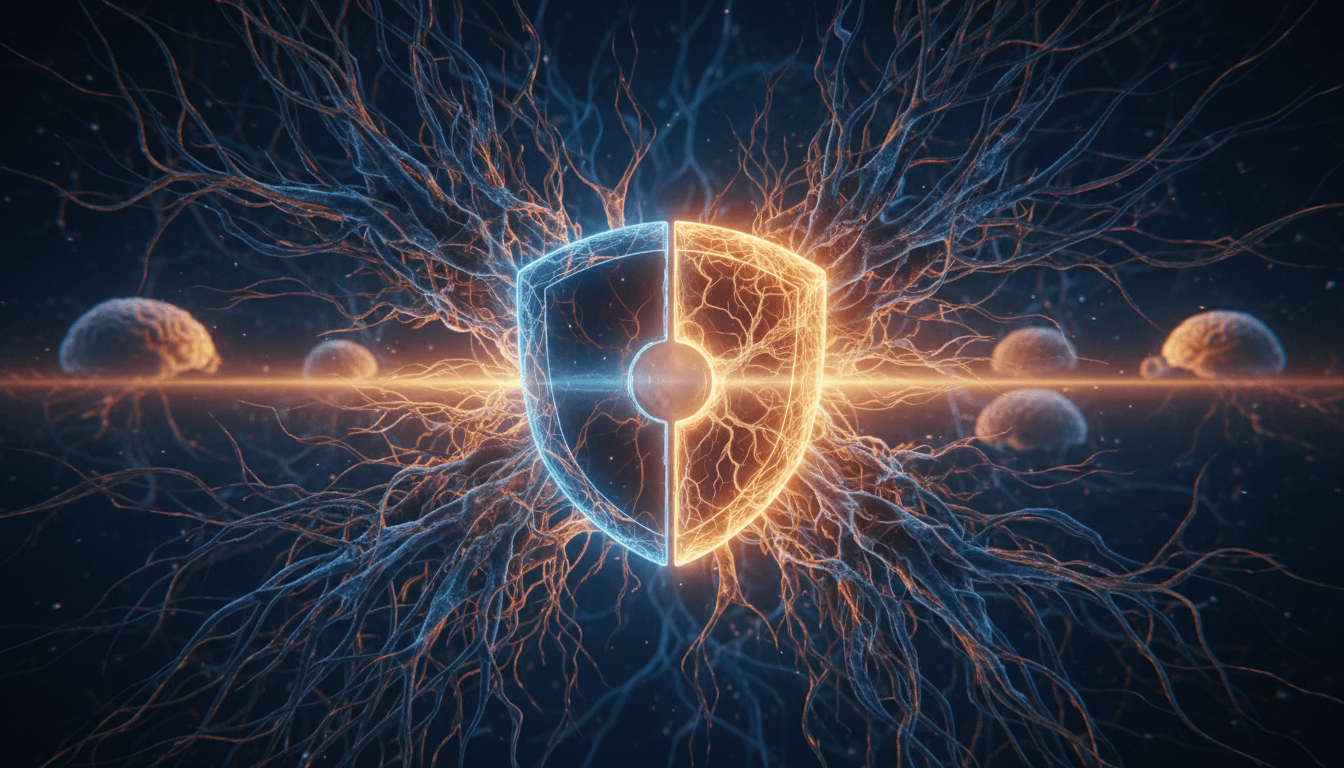
In 1965, Ronald Melzack and Patrick Wall published a paper in Science called "Pain Mechanisms: A New Theory." It proposed something radical. The spinal cord contains a neurological gate that can amplify or dampen nociceptive signals before they ever reach the brain.
Think about what that means. The signal from your stubbed toe isn't a direct line to your consciousness. It passes through a checkpoint. And that checkpoint can be opened wider or squeezed shut by other inputs.
You already know this. When you bump your shin, you rub it. That rubbing activates non-nociceptive nerve fibers that close the gate. You've been doing it since you were three. Melzack and Wall explained why it works.
The gate isn't just controlled by touch. Emotional state opens and closes it. Attention opens and closes it. Descending signals from the brain itself open and close it. Your brain isn't passively receiving pain reports. It's actively deciding how much of the danger signal to let through.
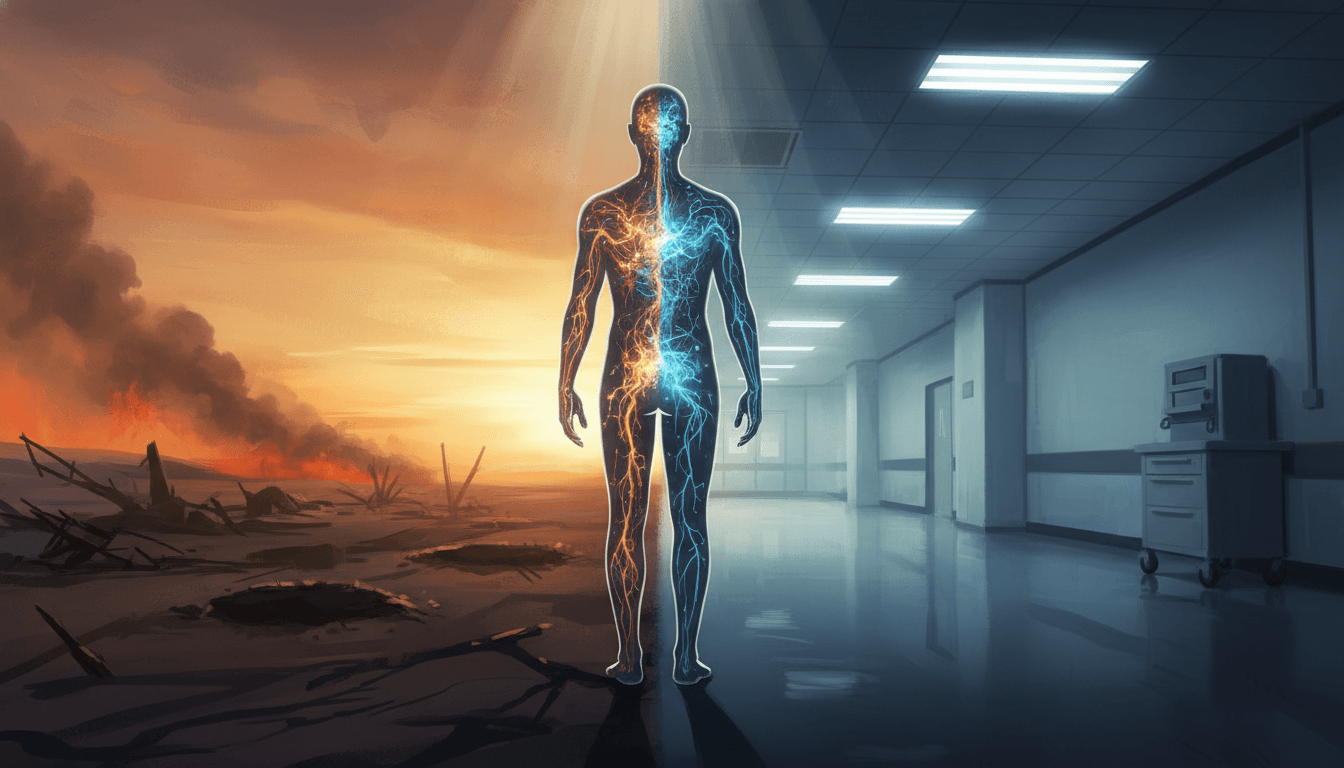
The Wounded Soldier Problem
Henry Beecher was a military anesthesiologist who treated soldiers at Anzio during World War II. In 1946, he published a study in the Annals of Surgery documenting something that didn't fit the textbook model at all.
Soldiers with severe combat wounds, the kind of injuries that would have a civilian screaming for morphine, frequently reported little or no pain. Beecher found that only 32% of badly wounded soldiers requested pain medication. Comparable injuries in civilian surgical patients? Over 80% needed it.
Same tissue damage. Radically different pain.
The soldiers weren't tougher. They weren't suppressing it. For them, the wound meant they were alive. They were going home. The context of the injury changed the brain's evaluation of threat. Less threat, less pain. Not less tissue damage. Less pain.
This is what nociception-is-not-pain looks like in the real world.
Pain Without a Body
If pain were a signal from damaged tissue, removing the tissue should end the pain. Amputees prove otherwise.
Phantom limb pain affects 50-80% of amputees. They feel pain in a limb that no longer exists. No nociceptors firing. No tissue. No nerve ending sending a signal. And yet the pain is absolutely real.
Ronald Melzack addressed this directly. In 1990, he published his neuromatrix theory in Trends in Neurosciences, arguing that pain is generated by a widely distributed neural network he called the "body-self neuromatrix." This network integrates sensory input, emotional state, and cognitive evaluation into a single output. The output is the experience of pain.
The critical insight. Nociceptive input is just one contributor. And it's optional.
Herta Flor and colleagues showed in a 1995 Nature paper that phantom limb pain correlates with cortical reorganization. After amputation, the brain region that used to process signals from the missing limb gets invaded by neighboring regions. The more reorganization, the more phantom pain. The brain is generating pain from its own internal model of the body, not from any signal coming in from the periphery.
V.S. Ramachandran took this further. In 1996, he and Rogers-Ramachandran published a study in Proceedings of the Royal Society B showing that a simple mirror could trick the brain into releasing a phantom limb from a clenched, painful position. The patient places their intact hand in front of a mirror so it looks like the missing hand. They open it. The brain sees "both hands" opening. The phantom pain resolves.
A visual illusion treating real pain. No drugs. No surgery. No nociceptors involved.
Beth Chan and colleagues confirmed this in a 2007 controlled trial published in the New England Journal of Medicine. Mirror therapy significantly reduced phantom limb pain compared to covered-mirror and mental visualization controls.
There Is No Pain Center
If pain were a simple signal, you'd expect a single destination in the brain. A pain center. Light it up and you feel pain. Damage it and you don't.
No such region exists.
Irene Tracey's lab at Oxford has spent decades mapping pain in the brain using fMRI. Her work, including a 2019 review in Cerebral Cortex, shows that pain activates a distributed network: the somatosensory cortex (body mapping), the anterior cingulate cortex (emotional significance), the insula (interoception), the prefrontal cortex (evaluation and decision-making), and the thalamus (relay and integration).
Pain isn't received by the brain. It's constructed. Sensory information. Emotional weight. Memories. Expectations. Context about what the danger signal means for your survival and your goals. All of it integrated into a single experience that you call pain.
The Stuck Prediction
This is Article 1 of a 12-part series, and I'm starting here because everything else depends on understanding this distinction. If pain is just a signal from damaged tissue, then chronic pain means chronic damage, and the only solution is to fix the tissue or numb the signal. That framework has driven decades of treatment that often doesn't work and sometimes makes things worse.
But if pain is a prediction the brain constructs from multiple inputs, including but not limited to nociception, then everything changes. The brain can get the prediction wrong. Pain can persist long after tissue has healed. Context, beliefs, emotions, and expectations aren't secondary to pain. They're part of the mechanism that generates it.
A.V. Apkarian and colleagues published a 2004 study in the Journal of Neuroscience showing that chronic back pain is associated with decreased gray matter in the prefrontal cortex and thalamus. Chronic pain physically changes the brain. And Baliki et al. showed in a 2012 Nature Neuroscience paper that the brain's corticostriatal connectivity can predict which acute back pain patients will develop chronic pain. The transition from acute to chronic isn't about tissue damage getting worse. It's about the brain's pain-prediction system getting stuck.
In 2020, the International Association for the Study of Pain updated its official definition of pain for the first time since 1979. The new definition: "An unpleasant sensory and emotional experience associated with, or resembling that associated with, actual or potential tissue damage." The key addition was six explanatory notes, including: "Pain and nociception are different phenomena. Pain cannot be inferred solely from activity in sensory neurons."
The scientific consensus caught up. Pain is not a signal your body sends. Pain is a decision your brain makes.
The rest of this series is about what happens when that decision goes wrong.
Sources
- Pain Mechanisms: A New Theory (Melzack & Wall, 1965, Science) (opens in new tab)
- Phantom limbs and the concept of a neuromatrix (Melzack, 1990, Trends in Neurosciences) (opens in new tab)
- Pain in Men Wounded in Battle (Beecher, 1946, Annals of Surgery) (opens in new tab)
- Phantom-limb pain as a perceptual correlate of cortical reorganization following arm amputation (Flor et al., 1995, Nature) (opens in new tab)
- Synaesthesia in Phantom Limbs Induced with Mirrors (Ramachandran & Rogers-Ramachandran, 1996, Proceedings of the Royal Society B) (opens in new tab)
- The perception of phantom limbs: The D.O. Hebb lecture (Ramachandran & Hirstein, 1998, Brain) (opens in new tab)
- Mirror Therapy for Phantom Limb Pain (Chan et al., 2007, New England Journal of Medicine) (opens in new tab)
- Chronic Back Pain Is Associated with Decreased Prefrontal and Thalamic Gray Matter Density (Apkarian et al., 2004, Journal of Neuroscience) (opens in new tab)
- Corticostriatal functional connectivity predicts transition to chronic back pain (Baliki et al., 2012, Nature Neuroscience) (opens in new tab)
- Finding the Hurt in Pain (Tracey, 2019, Cerebral Cortex) (opens in new tab)
- IASP Revised Definition of Pain (2020, Pain) (opens in new tab)
Part of the Pain Illusion series. Next: Three-Quarters of Soldiers With Major Wounds Didn't Want Morphine.