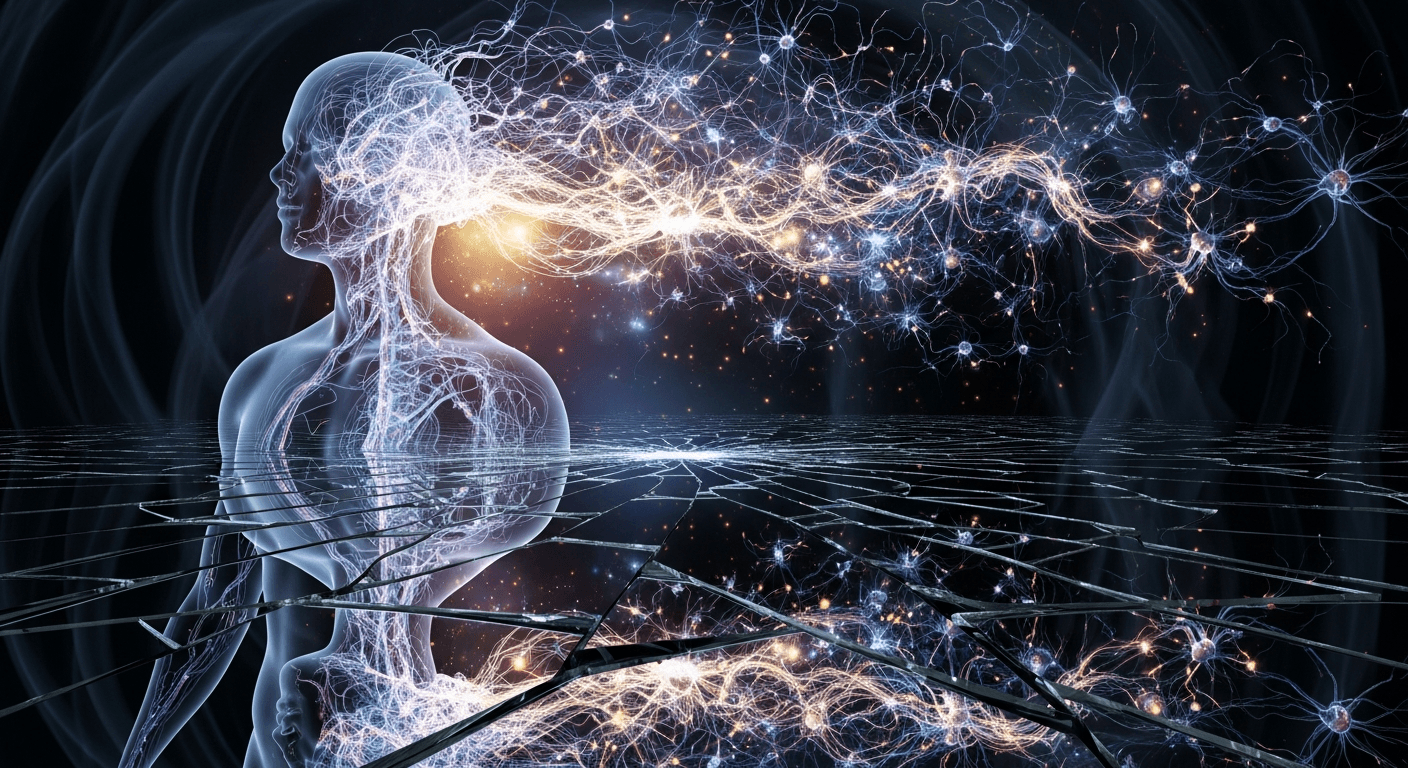
The Pain Illusion
Your brain doesn't feel pain: it creates it. Discover the shocking science behind chronic pain, phantom limbs, and why the best painkiller might be the one that hurts.
The Pain Illusion
You've been lied to about pain. Not by anyone malicious, by your own nervous system. Every time you stub a toe or touch a hot stove, you assume the pain is coming from there, streaming like a damage report straight from your fingertips to your brain. It's not. There are no pain receptors. Your body sends danger signals, and your brain (drawing on memory, context, expectation, and emotion) decides whether to hurt you. It's the world's most sophisticated prediction engine, and sometimes it gets it catastrophically wrong.
This twelve-part series dismantles everything you thought you knew about pain. You'll meet soldiers with shattered limbs who refused morphine, amputees tortured by limbs that no longer exist, and patients cured by fake surgery. You'll learn why rejection lights up the same circuits as a burn, why the words a doctor uses can double your suffering, and why chronic pain is less like a broken alarm and more like a program your brain refuses to stop running. By the end, you won't just understand pain differently: you'll understand that your brain has a volume knob, and you've never been taught where it is.
In This Series
- 1
There Are No Pain Receptors
Your body doesn't have pain receptors. It has danger detectors. The difference between those two things explains almost everything about chronic pain, phantom limbs, and why a soldier can take a bullet and feel nothing.
6 min read - 2
Three-Quarters of Soldiers With Major Wounds Didn't Want Morphine
In 1946, an Army doctor discovered that soldiers with devastating injuries reported less pain than civilians with minor surgeries. The reason rewrites everything you think you know about how pain works.
7 min read - 3
The Limb That Isn't There Still Hurts
80% of amputees feel a limb that no longer exists. 50-80% feel pain in it. Phantom limb research is the clearest proof that pain is built by the brain, not reported by the body.
6 min read - 4
A Ten-Dollar Mirror That Cured Phantom Pain
V.S. Ramachandran placed a mirror on a table and tricked the brain into releasing a fist that didn't exist. What happened next rewrote our understanding of how pain works.
6 min read - 5
Your Brain Learned Chronic Pain Like It Learned Your Name
A Northwestern brain imaging study predicted who would develop chronic pain with 85% accuracy, and the answer had nothing to do with their injuries.
7 min read - 6
Fake Surgery Works
In 2002, a surgeon proved that pretending to operate on arthritic knees worked just as well as actually operating. The implications for how we understand pain are staggering.
7 min read - 7
Rejection Literally Hurts
Your brain processes a breakup using the same neural hardware as a broken bone. A physical painkiller can reduce the sting of social exclusion. This isn't a metaphor.
6 min read - 8
Words That Wound: How Language Changes Pain
A saline injection relieved real pain because a doctor said it would. The words activated the brain's own opioid system. If pain is a prediction, language is one of the most powerful things that can rewrite it.
7 min read - 9
Your Brain Has a Volume Knob for Pain
Some people experience more pain from identical injuries. The biggest predictor isn't tissue damage. It's a measurable thinking pattern called catastrophizing, and it can be unlearned.
6 min read - 10
Teaching People Their Pain Away
A single neuroscience lecture can reduce chronic pain. Not drugs, not surgery. An explanation.
7 min read - 11
The Best Painkiller Is the One That Hurts
Exercise reduces pain as effectively as drugs. But for chronic pain patients, movement itself triggers the alarm. The fix is teaching your brain that motion isn't danger.
6 min read - 12
Debugging the Pain Program
For 41 years, the official definition of pain was wrong. The fix points to a future where we treat chronic pain by rewriting the brain's predictions, not replacing body parts.
8 min read