Your Brain Learned Chronic Pain Like It Learned Your Name
A Northwestern brain imaging study predicted who would develop chronic pain with 85% accuracy, and the answer had nothing to do with their injuries.
In 2012, a neuroscientist named Vania Apkarian at Northwestern University followed 39 people who had just developed back pain. Brand new pain. He scanned their brains, then scanned them again over the next year.
Some of them healed normally. The pain came, did its job, and left.
Some of them didn't heal. The pain stayed. It became chronic.
The difference between the two groups had almost nothing to do with their backs.
Apkarian's team, publishing in Nature Neuroscience, watched the pain literally move inside people's brains. In the patients who recovered, pain activity stayed in sensory regions. Normal pain doing normal pain things.
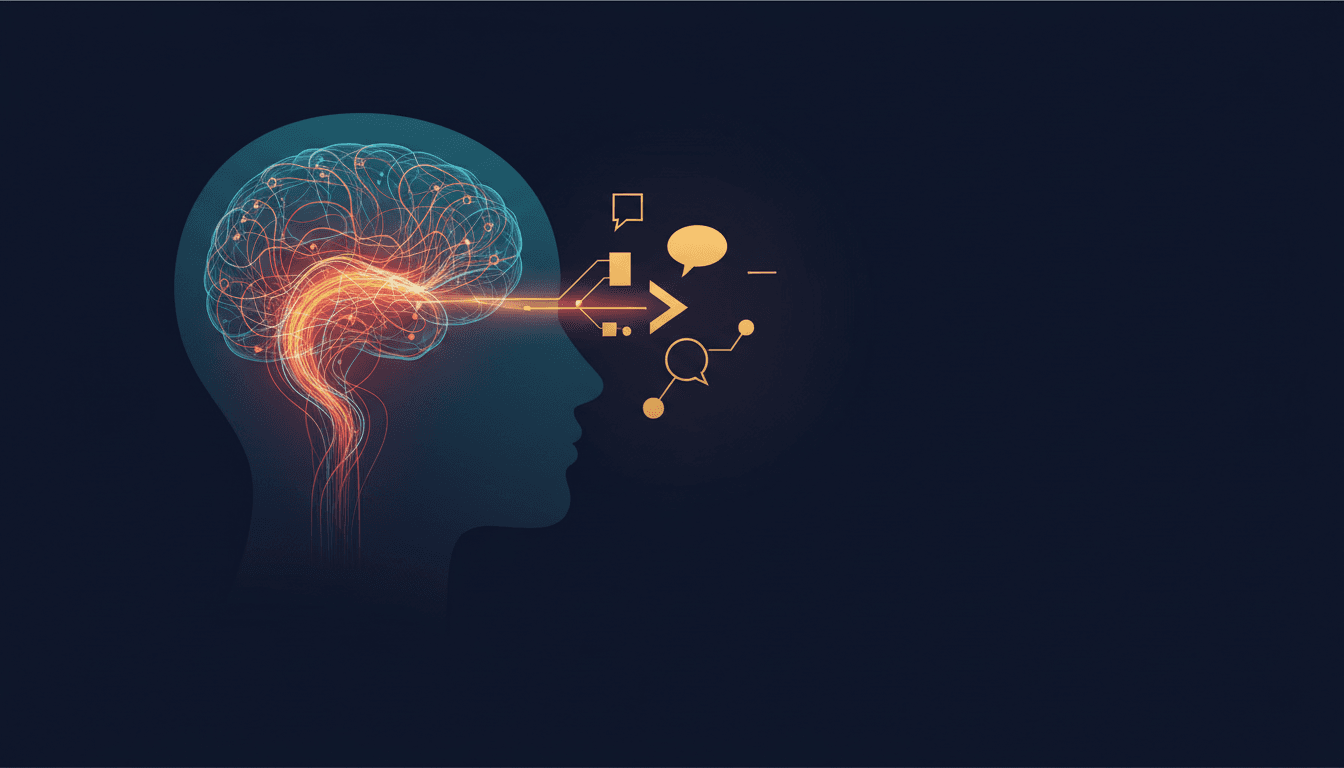
In the patients who developed chronic pain, the activity migrated. It shifted out of sensory cortex and into the medial prefrontal cortex and nucleus accumbens. Those are the brain's habit and emotional learning circuits. Routines, associations, cravings.
Their brains weren't sensing an injury anymore. They were running a pattern.
And the predictor showed up before the chronic pain did. The strength of the connection between the medial prefrontal cortex and nucleus accumbens at the very first scan predicted who would develop chronic pain with 85% accuracy. Before anyone knew who would recover and who wouldn't.
Not the most injured backs. Not the worst disc herniations. The most pattern-prone brains.
Pain Becomes the Default
Marwan Baliki, working with Apkarian, took this further. His 2012 Nature Neuroscience paper showed that in people with established chronic pain, pain wasn't a response to movement or pressure anymore. It had become the brain's resting state. The default.
Acute pain is like an alarm. Something happens, the alarm goes off, you respond, the alarm stops. Chronic pain is like an alarm that rewired itself into the building's electrical system. It's not responding to a fire. It IS the wiring now.
The brain learned pain the way it learns anything it practices. Synapses strengthened. Pathways consolidated. Prediction circuits locked in. The more pain the brain produced, the better it got at producing pain.
This is the same mechanism behind every habit you've ever built. Good or bad.
This Was Always the Theory
Ronald Melzack saw it coming decades earlier. His gate control theory of pain, published with Patrick Wall in Science in 1965, was the first credible challenge to the idea that pain is a signal traveling from body to brain. The nervous system actively modulates pain. A "gate" in the spinal cord could amplify or dampen the signal before it ever reached the brain.
By 1990, Melzack had expanded this into his neuromatrix theory. Pain wasn't a readout of tissue damage. It was an output of a distributed brain network integrating sensory data, emotional state, memory, and expectation. The brain didn't just receive pain. It constructed it.
Apkarian's scans were essentially watching Melzack's theory play out in real time. Given enough repetition, the neuromatrix learned to construct pain on autopilot.
The Tissue Doesn't Match the Pain
Earlier work by Apkarian hinted at this. His 2004 paper in the Journal of Neuroscience found that people with chronic back pain had decreased gray matter density in the prefrontal cortex and thalamus. The longer the pain, the more brain tissue lost. Not back tissue. Brain tissue.
The changes aren't just consequences. They're maintainers. Reduced prefrontal gray matter means reduced ability to regulate emotional responses and inhibit learned patterns. The chronic pain brain is literally less equipped to turn off the pain it learned to produce.
Henry Beecher documented something related from a different angle in 1946. Studying soldiers wounded at the Anzio beachhead during World War II, Beecher found that only 25% of men with serious combat injuries requested morphine, even though over 80% of civilians with comparable surgical wounds did. Same tissue damage. Different context. For the soldiers, the wound meant survival. Evacuation. Going home.
Chronic pain is the inverse. The tissue has healed, but the threat assessment never updated. The context has changed. The prediction hasn't.
A Threat Detector Stuck on High
The International Association for the Study of Pain revised their official definition in 2020. Pain and nociception are different things. Nociception is the sensory nervous system detecting potentially harmful stimuli. Pain is the experience. They do not have to correspond.
Irene Tracey at Oxford has spent years mapping how far apart they can drift. Her 2019 paper "Finding the Hurt in Pain" in Cerebral Cortex shows how expectation, attention, mood, and prior experience all actively shape pain processing. The same nociceptive input produces radically different pain experiences depending on what the brain predicts should happen.
In chronic pain, that prediction machinery has been trained by months or years of repetition. The brain predicts pain, produces pain, confirms its own prediction, and strengthens the pattern. A feedback loop running on the same learning circuitry that helps you ride a bike without thinking.
Except you never wanted to learn this one.
Retraining the Prediction
If chronic pain is learned, the question becomes whether it can be unlearned.
Lorimer Moseley tested this directly. His 2004 study in the European Journal of Pain found that simply educating chronic low back pain patients about how pain works, showing them that pain does not equal tissue damage, produced measurable improvements in both pain and physical function. No drugs. No surgery. Information changed the brain's predictions, and changed predictions changed the pain.
Adriaan Louw's 2011 systematic review in Archives of Physical Medicine and Rehabilitation found the same across chronic musculoskeletal pain. Consistent reductions in pain, disability, anxiety, and catastrophizing. Telling people the truth about what their nervous system was doing actually helped their nervous system stop doing it.
Jo Nijs and colleagues proposed a combined approach in 2014 in Physical Therapy. Education plus movement retraining. The education reframes the brain's threat model. The movement provides corrective sensory input. The new evidence slowly overwrites the old prediction.
Exercise itself modulates pain processing. Koltyn's 2000 review in Sports Medicine documented exercise-induced analgesia through endogenous opioid and endocannabinoid release. A 2017 Cochrane review by Geneen confirmed small-to-moderate improvements in chronic pain severity and function.
None of this is fast. You didn't learn to ride a bike in one session. You won't unlearn chronic pain in one either. New experiences, repeated consistently, build new predictions. The old pattern weakens the way any unused pathway weakens.
The Uncomfortable Implication
Saying chronic pain is "learned" makes some people furious. It sounds like saying the pain isn't real. Or that it's their fault.
Neither of those is true.
The pain is completely real. It's produced by the same neural machinery that produces all pain. It hurts exactly as much as it hurts. The fact that it's driven by prediction rather than tissue damage doesn't make it imaginary. All pain is driven by prediction. That's how pain works.
And it's not anyone's fault. Nobody chose a brain that formed strong emotional associations. Nobody decided to develop chronic pain. The brain did what brains do. It learned from experience. It just learned something maladaptive.
What changes is the treatment target. If the problem is in the tissue, you fix the tissue. If the problem is a learned pattern, you retrain the pattern. Decades of failed surgeries and ineffective medications suggest we've been targeting the wrong thing.
The pain is real. The danger, very often, is not. The difference between those two is where recovery starts.
Sources
- Chronic Back Pain Is Associated with Decreased Prefrontal and Thalamic Gray Matter Density (Apkarian et al., 2004, Journal of Neuroscience) (opens in new tab)
- Corticostriatal functional connectivity predicts transition to chronic back pain (Baliki et al., 2012, Nature Neuroscience) (opens in new tab)
- Pain Mechanisms: A New Theory (Melzack & Wall, 1965, Science) (opens in new tab)
- Phantom limbs and the concept of a neuromatrix (Melzack, 1990, Trends in Neurosciences) (opens in new tab)
- Pain in Men Wounded in Battle (Beecher, 1946, Annals of Surgery) (opens in new tab)
- Finding the Hurt in Pain (Tracey, 2019, Cerebral Cortex) (opens in new tab)
- IASP Revised Definition of Pain (2020) (opens in new tab)
- Evidence for a direct relationship between cognitive and physical change during an education intervention in people with chronic low back pain (Moseley, 2004, European Journal of Pain) (opens in new tab)
- The effect of neuroscience education on pain, disability, anxiety, and stress in chronic musculoskeletal pain (Louw et al., 2011, Archives of Physical Medicine and Rehabilitation) (opens in new tab)
- A Modern Neuroscience Approach to Chronic Spinal Pain (Nijs et al., 2014, Physical Therapy) (opens in new tab)
- Analgesia following exercise: A review (Koltyn, 2000, Sports Medicine) (opens in new tab)
- Physical activity and exercise for chronic pain in adults (Geneen et al., 2017, Cochrane Database of Systematic Reviews) (opens in new tab)
Part of the Pain Illusion series. Previous: A Ten-Dollar Mirror That Cured Phantom Pain. Next: Fake Surgery Works.