The Limb That Isn't There Still Hurts
80% of amputees feel a limb that no longer exists. 50-80% feel pain in it. Phantom limb research is the clearest proof that pain is built by the brain, not reported by the body.
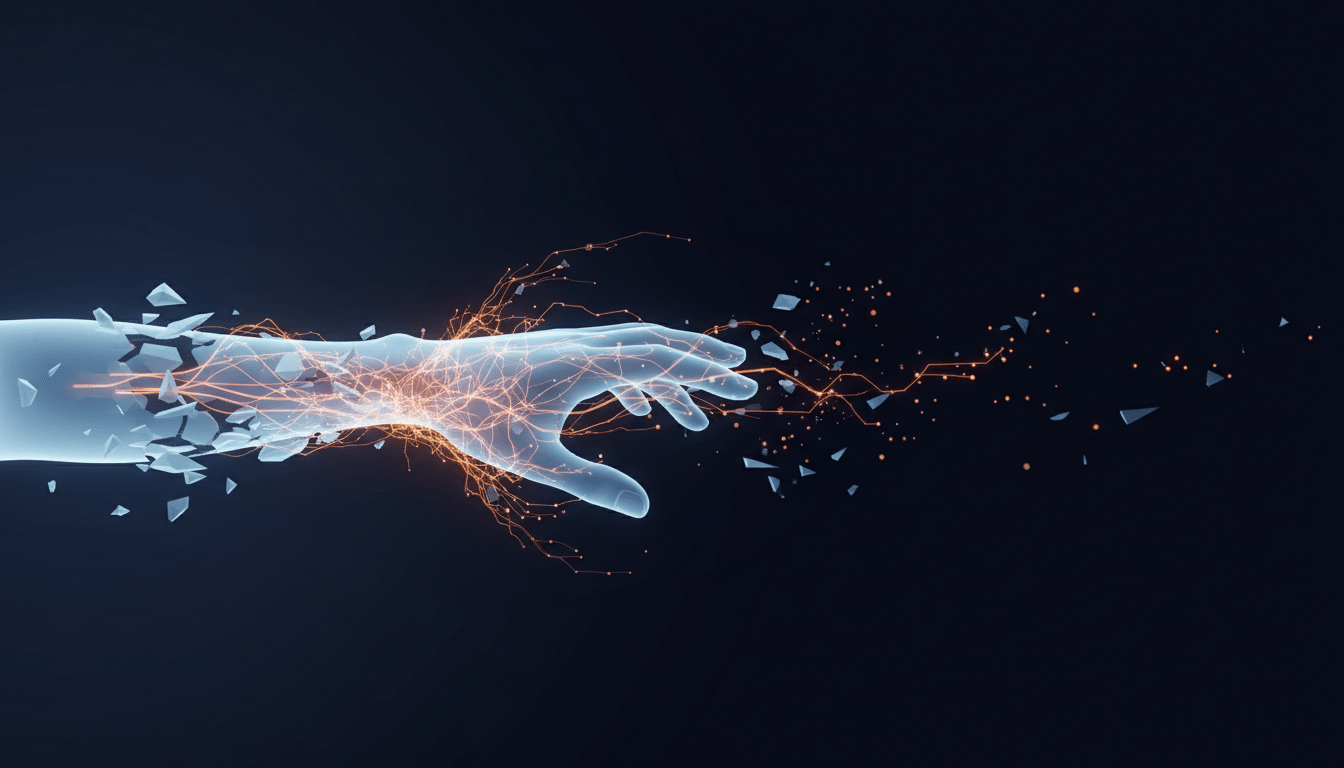
A soldier loses his arm to a cannon blast. Weeks later, he feels it. Not a memory of the arm. The arm itself. Fingers curling. Wrist aching. An itch on a palm that was buried in a field hospital.
Silas Weir Mitchell documented this during the American Civil War in 1872. He called them phantom limbs. 150 years later, we know that roughly 80% of amputees experience phantom sensations. Somewhere between 50% and 80% feel phantom limb pain.
Pain. In a limb that does not exist.
No tissue. No nerves. No injury signal traveling up a pathway that was severed months or years ago. Just pain in a body part that is gone. Sometimes for decades.
If pain were a signal from damaged tissue to the brain, phantom limb pain would be impossible. The hardware was removed. And yet the pain persists.
In 1965, Ronald Melzack and Patrick Wall published "Pain Mechanisms: A New Theory" in Science, introducing gate control theory. Pain signals could be amplified or suppressed before they ever reached the brain. The spinal cord had gates. Context mattered.
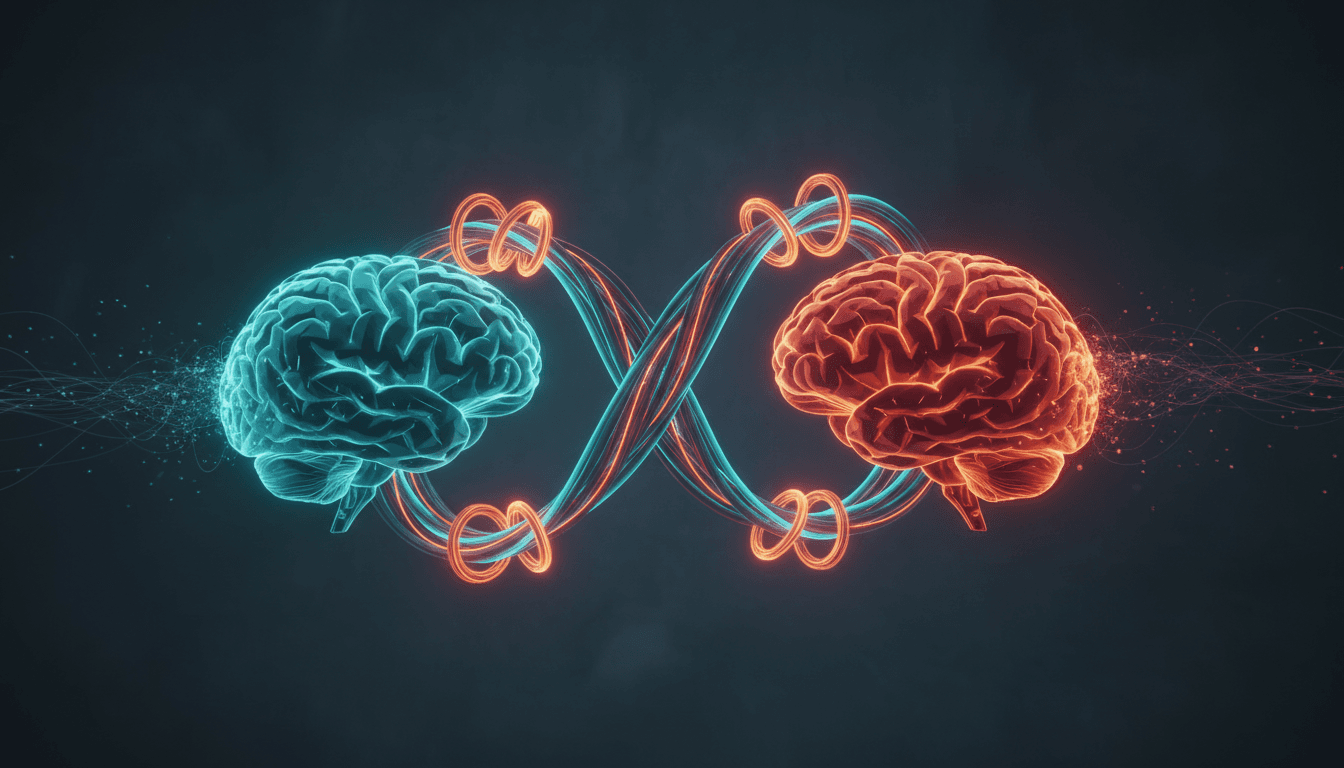
Phantom limbs pushed Melzack further. In 1990 he published his neuromatrix theory in Trends in Neurosciences. The brain doesn't just receive pain. It generates a complete body image. A neural representation that exists independently of sensory input. When the limb is gone, the neuromatrix keeps running. The brain keeps producing the experience of a body part that no longer feeds it data.
The map outlives the territory.
The Brain Rewires Itself Into Pain
V.S. Ramachandran at UC San Diego took this from theory to something you could watch happen in real time.
In the 1990s, Ramachandran found that after amputation, the brain's somatosensory cortex reorganizes. The strip of brain tissue that maps your body doesn't leave the missing limb's territory empty. Neighboring regions invade it. The cortical area that once handled a missing hand often gets colonized by the face region, which sits right next to it on the map.
The result is bizarre. Touch an amputee's cheek and they feel it in their phantom hand. A drop of water running down the face produces the sensation of water trickling across fingers that aren't there. Ramachandran and Hirstein published the precise topography in Brain in 1998.
Strange, but not painful. The pain piece came from a different insight.
Herta Flor at the University of Heidelberg asked whether the degree of cortical reorganization predicted the intensity of phantom pain. Her 1995 study in Nature showed exactly that. Amputees whose brains had reorganized the most experienced the most pain. More remapping, more suffering.
That reframed phantom limb pain as a brain plasticity problem. The same mechanism that lets you learn piano or memorize London streets was building a pain state. The brain wasn't broken. It was doing what brains do. Rewiring based on input. Except the input was absence, and the output was agony.
The Clenched Fist You Can't Open
Many phantom limb patients report something specific and horrifying. Their missing hand is clenched into a fist. Fingernails digging into the palm. They can't unclench it.
Ramachandran had a theory. Before amputation, many of these limbs were already immobilized. Bandaged, paralyzed, locked in position. The brain sent motor commands to open the hand. No feedback came back saying the hand had moved. The brain learned the hand was frozen. When the limb was removed, that learned paralysis came with it.
His solution was absurdly simple. A mirror.
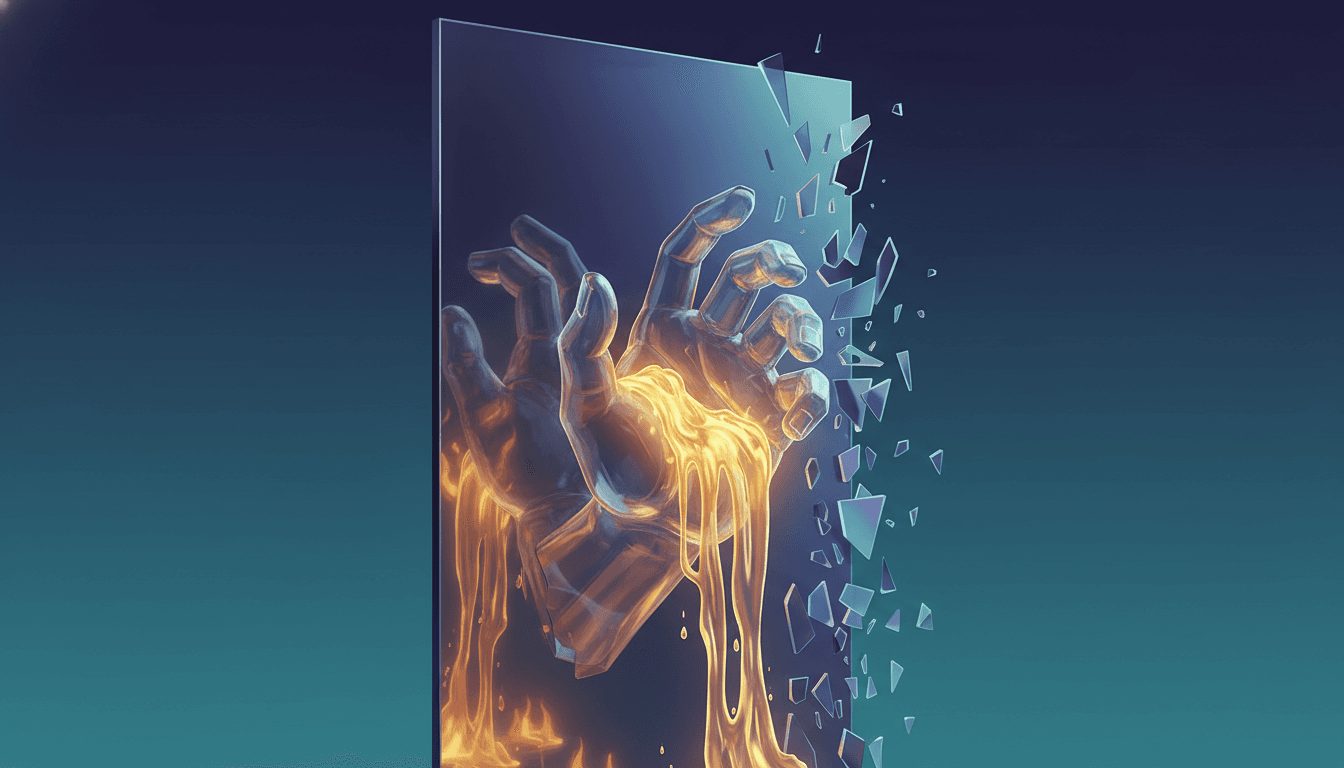
Ramachandran placed a mirror between the patient's arms so the reflection of the intact hand appeared where the missing hand should be. The patient moved the intact hand. The brain saw "both" hands moving. The phantom unclenched.
Ramachandran and Rogers-Ramachandran published this in Proceedings of the Royal Society B in 1996. Some patients who had lived with a clenched phantom fist for years felt it release for the first time. A few reported the phantom disappearing entirely.
No drugs. No surgery. A piece of glass.
Chan and colleagues later ran a randomized controlled trial of mirror therapy, published in the New England Journal of Medicine in 2007. 100% of the mirror therapy group reported reduced pain. The control groups, using a covered mirror or mental visualization alone, showed no improvement. Some got worse.
The treatment worked because the problem was never in the limb. It was in the brain's model of the limb.
Pain Eats the Brain
A. Vania Apkarian at Northwestern asked what sustained pain does to brain structure.
His 2004 study in the Journal of Neuroscience scanned chronic back pain patients against healthy controls. The chronic pain group had lost 5-11% of their neocortical gray matter. The equivalent of 10-20 years of normal aging. The prefrontal cortex and thalamus were hit hardest. Decision-making, emotional regulation, sensory integration. All shrinking.
A diminished brain is worse at regulating pain. Which means more pain. Which means more brain loss.
A feedback loop. Structural decay feeding functional suffering feeding more decay.
Apkarian's later work with Marwan Baliki, published in Nature Neuroscience in 2012, followed patients with acute back pain over a year. Changes in corticostriatal functional connectivity predicted who would develop chronic pain and who would recover. The brain's wiring pattern, not the severity of the original injury, determined the outcome.
Same injury. Different brains. The brains wired for threat prediction and emotional reactivity were the ones that got stuck.
A Prediction Engine Running on Outdated Data
Phantom limb pain is the cleanest experiment in pain science. Remove the body part. The pain stays. The pain was never in the body part.
The lesson extends past amputees. The same plasticity that creates a phantom fist creates chronic back pain that persists long after the disc has healed. The same cortical reorganization that makes a face-touch feel like a hand-touch can turn normal sensations into threat signals in fibromyalgia. The same feedback loop that shrinks gray matter operates in anyone whose brain has learned that a particular body region is dangerous.
Irene Tracey at Oxford put it precisely in her 2019 work in Cerebral Cortex. Pain is constructed in the brain. It uses sensory data when that data is available. It doesn't require it. The brain can generate pain from memory, expectation, or context alone.
A mirror fixes a phantom fist because the brain is making a prediction and the mirror provides counter-evidence. That same principle (give the brain new evidence, change the prediction, change the pain) runs through neuroscience education, graded exposure, and movement-based therapy.
The ghost in the brain isn't a malfunction. It's the system working exactly as designed. A prediction engine running on outdated data, building an experience of a body that no longer matches reality.
Phantom pain is real. The prediction generating it is wrong. And for millions of people living with chronic pain, that's the same shape of the problem.
Sources
- Pain Mechanisms: A New Theory (Melzack & Wall, 1965, Science) (opens in new tab)
- Phantom limbs and the concept of a neuromatrix (Melzack, 1990, Trends in Neurosciences) (opens in new tab)
- The perception of phantom limbs: The D.O. Hebb lecture (Ramachandran & Hirstein, 1998, Brain) (opens in new tab)
- Synaesthesia in Phantom Limbs Induced with Mirrors (Ramachandran & Rogers-Ramachandran, 1996, Proceedings of the Royal Society B) (opens in new tab)
- Phantom-limb pain as a perceptual correlate of cortical reorganization following arm amputation (Flor et al., 1995, Nature) (opens in new tab)
- Chronic Back Pain Is Associated with Decreased Prefrontal and Thalamic Gray Matter Density (Apkarian et al., 2004, Journal of Neuroscience) (opens in new tab)
- Corticostriatal functional connectivity predicts transition to chronic back pain (Baliki et al., 2012, Nature Neuroscience) (opens in new tab)
- Mirror Therapy for Phantom Limb Pain (Chan et al., 2007, New England Journal of Medicine) (opens in new tab)
- Finding the Hurt in Pain (Tracey, 2019, Cerebral Cortex) (opens in new tab)
- IASP Revised Definition of Pain (2020) (opens in new tab)
Part of the Pain Illusion series. Previous: Three-Quarters of Soldiers With Major Wounds Didn't Want Morphine. Next: A Ten-Dollar Mirror That Cured Phantom Pain.