Your Brain Has a Volume Knob for Pain
Some people experience more pain from identical injuries. The biggest predictor isn't tissue damage — it's a measurable thinking pattern called catastrophizing, and it can be unlearned.
Two people get the same knee surgery, performed by the same surgeon, with the same degree of joint damage. One recovers in weeks with manageable discomfort. The other is still in significant pain a year later.
The difference isn't their knees. It's their brains.
Robert Edwards and colleagues at Harvard's Brigham and Women's Hospital published a study in 2009 in Arthritis and Rheumatism that should have rewritten how we think about surgical outcomes. They tracked patients undergoing knee replacement and measured everything: joint damage, surgical technique, post-op protocols. Then they measured something most orthopedic surgeons never ask about. How the patient thinks about pain.
The finding was stark. A cognitive pattern called pain catastrophizing predicted post-surgical pain intensity better than the actual degree of joint destruction. Patients with demolished knees but low catastrophizing reported less pain than patients with moderate damage but high catastrophizing.
Read that again. The thinking pattern outweighed the tissue state.
What Catastrophizing Actually Is
Michael Sullivan at McGill University developed the Pain Catastrophizing Scale in 1995, published in Clinical Journal of Pain. It measures three components.
Rumination: "I can't stop thinking about how much it hurts."
Magnification: "Something serious must be happening."
Helplessness: "There's nothing I can do about it."
This isn't dramatic personality. It's not weakness. It's a measurable cognitive pattern with specific neural signatures, and roughly 30% of chronic pain patients score high on it.
High catastrophizers consistently report more pain from identical stimuli. They use more painkillers. They take longer to recover from surgery. They're significantly more likely to develop chronic pain conditions. Sullivan's research showed these effects hold even when you control for depression, anxiety, and injury severity.
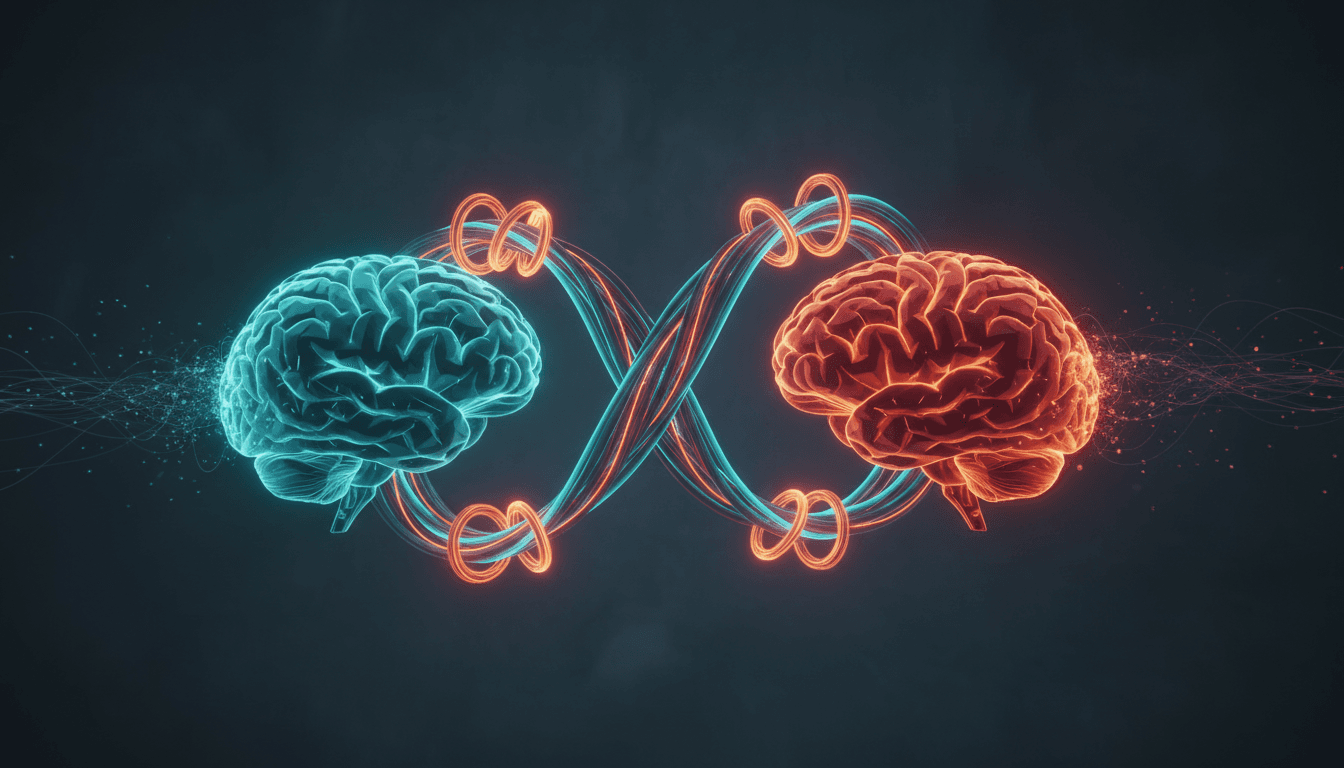
The pattern is self-reinforcing. You ruminate on the pain, which amplifies the brain's threat prediction, which increases the pain signal, which gives you more to ruminate about. A feedback loop running on neural hardware.
The Brain Scans Don't Lie
If catastrophizing were just complaining, you'd expect identical brain activity between high and low catastrophizers receiving the same painful stimulus. That's not what happens.
David Seminowicz and Karen Davis published a neuroimaging study in 2006 in Pain that showed exactly what's going on under the hood. They applied identical heat pain to high and low catastrophizers while scanning their brains.
High catastrophizers showed amplified activation in the anterior cingulate cortex, the insula, and the prefrontal cortex. These are core regions of what Irene Tracey at Oxford calls the "pain matrix," the network that constructs the pain experience. Same input. Louder output.
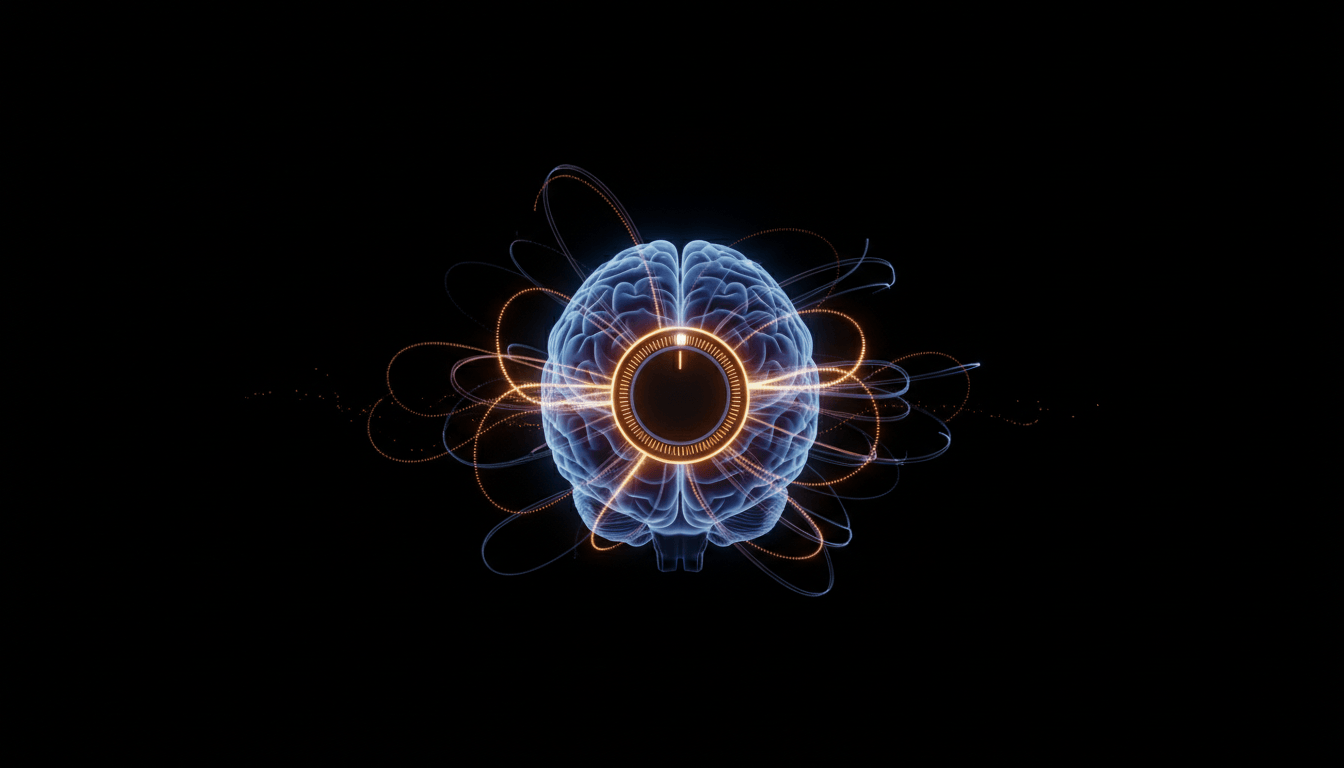
Their brains were literally turning up the volume.
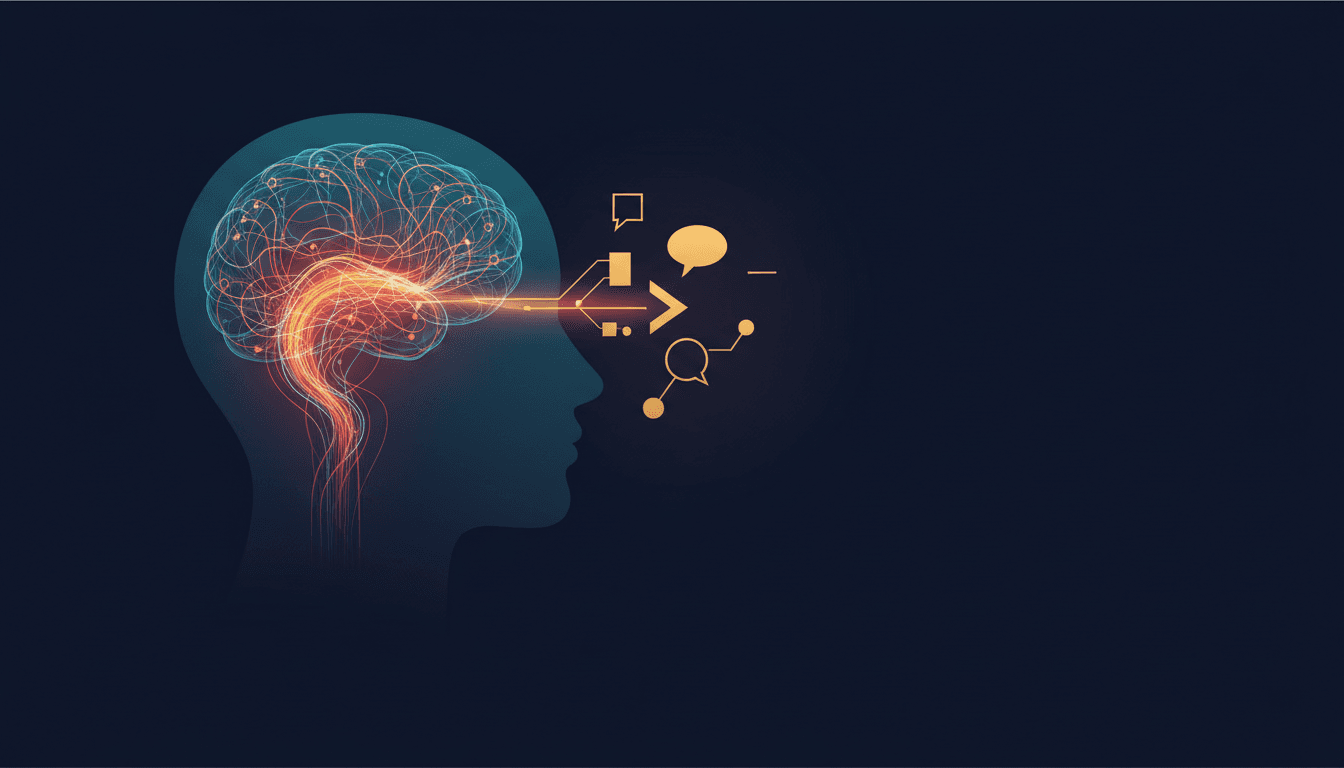
This connects directly to the neuromatrix theory Ronald Melzack proposed in 1990 in Trends in Neurosciences. Pain isn't a signal that travels from tissue to brain like a phone call. It's a prediction the brain constructs using inputs from the body, context from memory, and expectations about threat. Catastrophizing hijacks the expectation channel. It tells the brain: this is dangerous, this will get worse, you can't handle it.
The brain, doing exactly what it's designed to do, responds by amplifying the pain prediction.
This Is the Nocebo Effect's Cousin
If this mechanism sounds familiar, it should. Fabrizio Benedetti and colleagues demonstrated in 2007 in Neuroscience that negative expectations alone can increase pain. Tell someone a procedure will hurt more, and their brain produces more pain. The words change the prediction. The prediction changes the experience.
Catastrophizing is like a chronic nocebo effect running in the background. Instead of a doctor's warning triggering a one-time expectation shift, the patient's own thought patterns continuously feed threat signals into the prediction engine.
Elaine Lang and colleagues showed in a 2005 study in Pain that even the language clinicians use during procedures changes pain outcomes. "You're going to feel a big bee sting" produces more pain than "We're going to begin now." Words reshape predictions. Habitual thought patterns reshape them permanently.
And this helps explain something A. Vania Apkarian's lab found in their 2004 Journal of Neuroscience study. Chronic pain patients show decreased gray matter in the prefrontal cortex and thalamus. The prefrontal cortex is the region responsible for top-down regulation of pain. For putting the brakes on the alarm system. Chronic catastrophizing may be wearing out the brake pads.
Apkarian's later work with Marwan Baliki, published in 2012 in Nature Neuroscience, showed that the transition from acute to chronic pain could be predicted by corticostriatal functional connectivity. The brain's learning and reward circuits were literally encoding pain as a habit. Catastrophizing appears to accelerate that encoding.
The Good News Is the Whole Point
Here's where this stops being depressing and starts being useful.
Catastrophizing is modifiable. It's a learned pattern, which means it can be unlearned.
A 2014 randomized controlled trial by Smeets and colleagues in The Journal of Pain took chronic low back pain patients and split them into groups. One group got standard physical therapy. Another got cognitive-behavioral interventions specifically targeting catastrophizing. The CBT group showed greater reductions in both catastrophizing scores and reported pain than the physical therapy group.
Change the thinking pattern. Change the brain's prediction. Change the pain.
Lorimer Moseley demonstrated this from the education angle in 2004 in the European Journal of Pain. Simply teaching chronic pain patients how pain actually works, that it's a brain-constructed prediction rather than a damage readout, reduced both their pain and their disability. Education alone shifted the cognitive pattern enough to change the neural output.
Adriaan Louw and colleagues confirmed this in a 2011 systematic review in Archives of Physical Medicine and Rehabilitation. Pain neuroscience education reduced pain, disability, anxiety, and catastrophizing across multiple studies. Knowing how your brain constructs pain gives you leverage over the construction process.
Jo Nijs and colleagues published a framework in 2014 in Physical Therapy combining pain neuroscience education with targeted motor control training. The approach works because it addresses both the cognitive prediction and the physical inputs simultaneously. You're not just thinking differently. You're giving the brain new evidence that movement is safe.
I Recognize This Pattern
I've caught myself catastrophizing about things that aren't pain but use the same architecture. A weird physical sensation becomes "something is seriously wrong" becomes three hours of anxious Googling becomes genuine suffering that started as a neutral signal.
The mechanism is identical. Ambiguous input. Catastrophic interpretation. Brain amplifies the threat prediction. Body responds to the amplified prediction. The response becomes evidence for the catastrophic interpretation. Loop.
Understanding the loop doesn't automatically stop it. But it gives you a moment of space between the input and the interpretation. That space is where the pattern becomes modifiable.
Henry Beecher documented this from the opposite direction in 1946 in the Annals of Surgery. Soldiers at Anzio with devastating wounds reported remarkably little pain. Their context, alive, going home, out of combat, told the brain: this isn't a threat. Same tissue damage that would have been agonizing in a civilian hospital barely registered because the prediction engine was running different software.
Catastrophizing is the inverse of that. It's the brain running worst-case prediction software on every input, including inputs that don't warrant it. The soldiers proved context can turn down pain from severe injuries. Catastrophizers prove context can turn up pain from minor ones.
The volume knob goes both ways. And it responds to what you practice thinking.
Sources
- Theoretical perspectives on the relation between catastrophizing and pain (Sullivan et al., 1995, Clinical Journal of Pain)
- Catastrophizing and pain in arthritis, fibromyalgia, and other rheumatic diseases (Edwards et al., 2009, Arthritis and Rheumatism)
- Cortical responses to pain in healthy individuals depends on pain catastrophizing (Seminowicz & Davis, 2006, Pain)
- Phantom limbs and the concept of a neuromatrix (Melzack, 1990, Trends in Neurosciences)
- When words are painful: Unraveling the mechanisms of the nocebo effect (Benedetti et al., 2007, Neuroscience)
- Can words hurt? Patient-provider interactions during invasive procedures (Lang et al., 2005, Pain)
- Chronic Back Pain Is Associated with Decreased Prefrontal and Thalamic Gray Matter Density (Apkarian et al., 2004, Journal of Neuroscience)
- Corticostriatal functional connectivity predicts transition to chronic back pain (Baliki et al., 2012, Nature Neuroscience)
- Evidence for a direct relationship between cognitive and physical change during an education intervention (Moseley, 2004, European Journal of Pain)
- The effect of neuroscience education on pain, disability, anxiety, and stress in chronic musculoskeletal pain (Louw et al., 2011, Archives of Physical Medicine and Rehabilitation)
- A Modern Neuroscience Approach to Chronic Spinal Pain (Nijs et al., 2014, Physical Therapy)
- Pain in Men Wounded in Battle (Beecher, 1946, Annals of Surgery)
- Finding the Hurt in Pain (Tracey, 2019, Cerebral Cortex)
Part of the Pain Illusion series. Previous: Words That Wound: How Language Changes Pain. Next: Teaching People Their Pain Away.