A Ten-Dollar Mirror That Cured Phantom Pain
V.S. Ramachandran placed a mirror on a table and tricked the brain into releasing a fist that didn't exist. What happened next rewrote our understanding of how pain works.
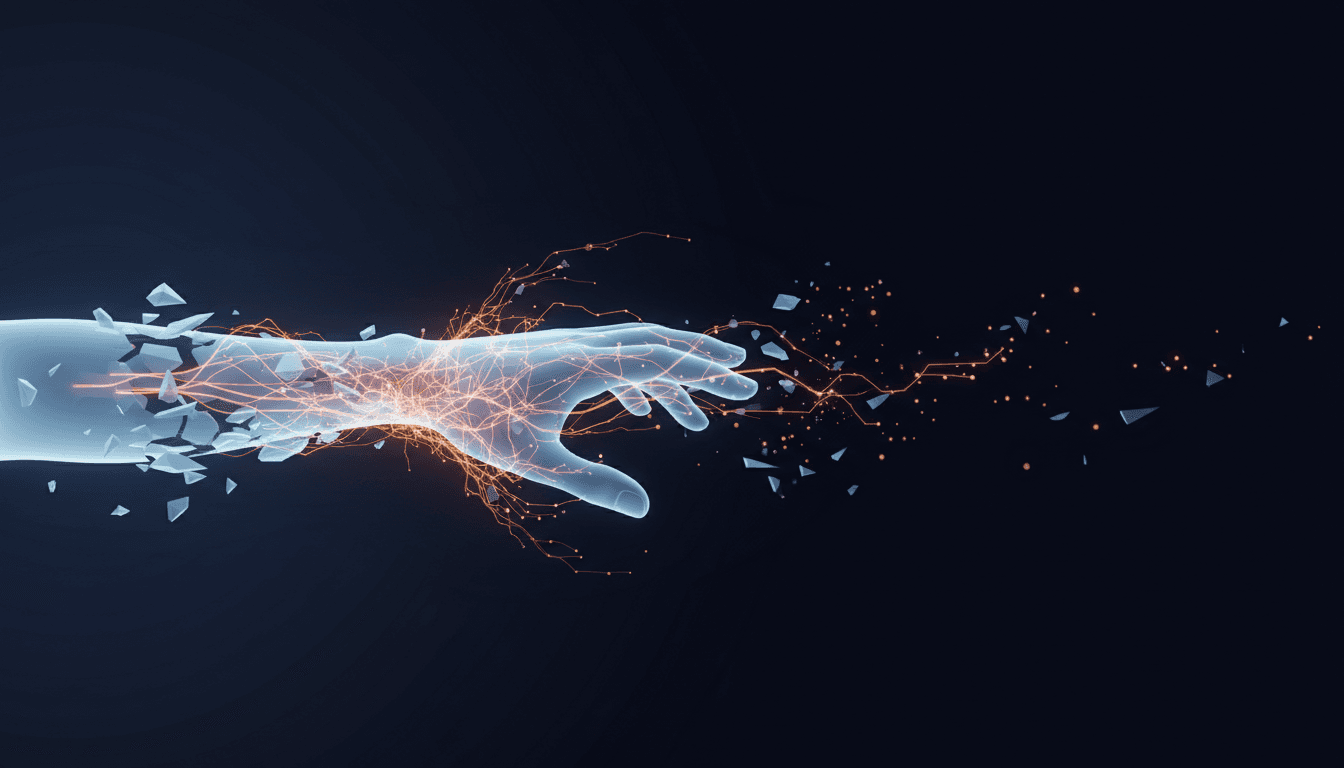
A man walks into a lab at UC San Diego with a phantom hand that's been clenched into a fist for ten years. The hand doesn't exist. His arm was amputated above the elbow. But the fist is there, fingernails digging into a palm he can feel but can't see, can't open, can't relax. He's tried everything. Nothing works.
V.S. Ramachandran hands him a mirror.
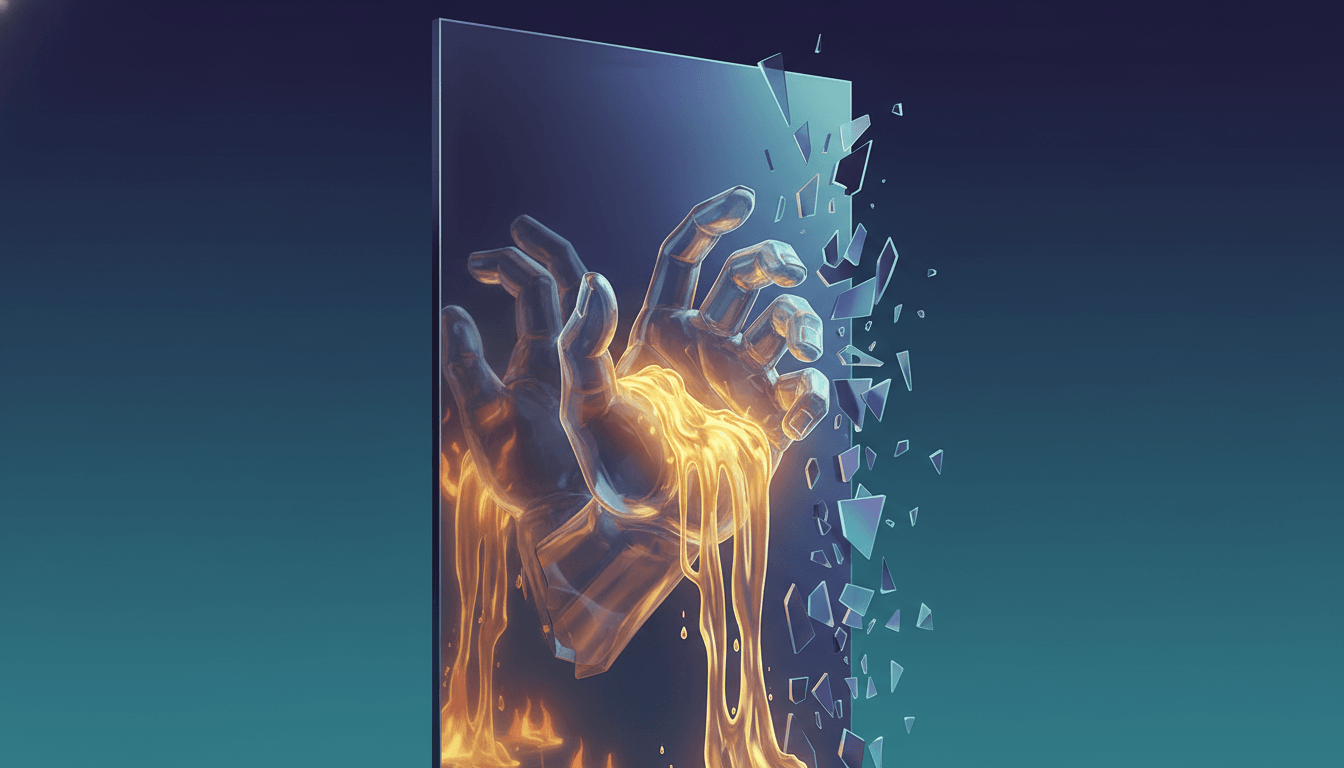
In 1996, Ramachandran and Rogers-Ramachandran published a paper in Proceedings of the Royal Society B describing one of the simplest and most elegant interventions in modern neuroscience. The setup cost about ten dollars. A mirror placed vertically on a table. The patient puts their intact hand on one side and their stump on the other. They look into the mirror and see the reflection of their real hand superimposed where the phantom should be.
Now they open their real hand. And in the mirror, the phantom hand opens too.
The man with the decade-long clenched fist watched his phantom hand unclench for the first time. The pain released. Immediately.
No drugs. No surgery. A visual lie that told the brain a deeper truth.
Why It Works
To understand the mirror box, you need to understand the prediction error that creates phantom pain in the first place.
When you try to move a limb, your motor cortex sends a command. Then it waits for sensory feedback confirming the movement happened. Hand moved, muscles stretched, joint rotated, all good. That feedback loop runs constantly, thousands of times a day, and you never think about it.
After amputation, the motor cortex still sends commands to the missing limb. Move the hand. Open the fist. But no feedback comes back. The brain is issuing predictions about movement and getting nothing in return. That mismatch between prediction and feedback is a conflict the brain needs to resolve.
Ramachandran and Hirstein laid this out in their 1998 D.O. Hebb lecture published in Brain. The brain resolves the conflict by doubling down. It increases the gain on the signal. It's like sending an email and getting no reply, so you send it again, louder, more urgent. The motor commands intensify. The phantom fist clenches harder. The pain escalates.
The mirror short-circuits the whole thing.
When the patient opens their real hand while watching the mirror, the brain receives visual feedback saying the phantom hand opened. The prediction error resolves. Motor command sent, movement confirmed, conflict over. The brain stands down.
The Numbers
In 2007, Chan and colleagues published a randomized controlled trial in the New England Journal of Medicine. Twenty-two amputees were split into three groups: mirror therapy, covered mirror (same setup but the reflection was hidden), and mental visualization (just imagining the phantom moving).
After four weeks, 100% of the mirror group reported decreased pain. The covered mirror group? Seventeen percent. The visualization group? Zero.
The sample was small. Twenty-two people isn't a massive trial. But the effect was so large and so clean that it's been replicated and extended across multiple studies since. The visual feedback was doing something the brain couldn't do on its own.
The Brain Was Lying About the Body
Here's what makes mirror therapy more than a clever trick. It reveals the mechanism of the pain itself.
Ronald Melzack spent decades building the case that pain isn't a simple signal from body to brain. His 1965 paper with Patrick Wall in Science introduced gate control theory, showing that pain signals could be amplified or suppressed by the nervous system before they ever reached consciousness. By 1990, Melzack had proposed the neuromatrix, a distributed brain network that generates a body-self experience independent of sensory input. You don't need a hand for your brain to feel a hand. The brain builds the hand from the inside.
Herta Flor's group confirmed this at a structural level. In a 1995 paper in Nature, they showed that phantom limb pain correlates directly with cortical reorganization. After amputation, the brain territory that used to represent the missing hand gets invaded by neighboring regions. The face area creeps into hand territory. Touch a patient's cheek and they feel it in their phantom fingers. The more reorganization, the more pain.
The brain's map of the body has been rewritten. And the new map is wrong. The mirror works because it gives the brain evidence to rewrite the map again.
Beyond the Mirror
Lorimer Moseley's group has taken Ramachandran's insight and built it into a structured clinical protocol called graded motor imagery. Three stages. First, you train the brain to recognize left versus right images of hands, which activates motor planning areas without actually moving. Second, you imagine moving the affected limb. Third, you use the mirror.
The progression matters. You're retraining the brain's representation of the limb step by step, giving it time to update its predictions gradually rather than all at once. Moseley published evidence in a 2004 paper in the European Journal of Pain showing that educating patients about how pain actually works (not damage signals from the body, but protective predictions from the brain) produced measurable changes in both pain and physical function.
That's worth sitting with. Teaching people a more accurate model of their own pain reduced the pain itself.
Adriaan Louw and colleagues confirmed this in a 2011 systematic review in Archives of Physical Medicine and Rehabilitation. Pain neuroscience education across multiple chronic musculoskeletal conditions consistently reduced pain, disability, anxiety, and catastrophizing. Knowing what pain is changes how much it hurts.
The Prediction Machine
The mirror box is a ten-dollar window into how your brain actually works. Pain isn't a readout from damaged tissue. It's a prediction. The brain takes motor commands, sensory feedback, visual information, prior experience, and emotional context, and it constructs a best guess about whether you're in danger.
When the guess is wrong, the mirror can fix it. When motor commands go out and no feedback comes back, the brain panics. Give it feedback (even fake feedback, even a reflection of the wrong hand) and the panic stops.
Irene Tracey described this elegantly in a 2019 paper in Cerebral Cortex called "Finding the Hurt in Pain." The brain doesn't passively receive pain. It actively constructs it. Every sensation you experience is a hypothesis, assembled from evidence, weighted by context, and subject to revision.
The mirror box proved you can revise it with a piece of glass.
I keep coming back to this when I think about problems that feel stuck. Sometimes the issue isn't the situation. It's the model your brain built of the situation. And sometimes the fix isn't changing reality. It's giving your brain better information about the reality that already exists.
The man with the ten-year phantom fist didn't need his hand back. He needed his brain to stop predicting a clenched fist. A mirror did what a decade of trying couldn't.
The brain built the pain. The brain can unbuild it. But only if you understand that the pain was a construction in the first place.
Sources
- Synaesthesia in Phantom Limbs Induced with Mirrors (Ramachandran & Rogers-Ramachandran, 1996, Proceedings of the Royal Society B)
- The perception of phantom limbs: The D.O. Hebb lecture (Ramachandran & Hirstein, 1998, Brain)
- Mirror Therapy for Phantom Limb Pain (Chan et al., 2007, New England Journal of Medicine)
- Pain Mechanisms: A New Theory (Melzack & Wall, 1965, Science)
- Phantom limbs and the concept of a neuromatrix (Melzack, 1990, Trends in Neurosciences)
- Phantom-limb pain as a perceptual correlate of cortical reorganization following arm amputation (Flor et al., 1995, Nature)
- Evidence for a direct relationship between cognitive and physical change during an education intervention in people with chronic low back pain (Moseley, 2004, European Journal of Pain)
- The effect of neuroscience education on pain, disability, anxiety, and stress in chronic musculoskeletal pain (Louw et al., 2011, Archives of Physical Medicine and Rehabilitation)
- Finding the Hurt in Pain (Tracey, 2019, Cerebral Cortex)
Part of the Pain Illusion series. Previous: The Limb That Isn't There Still Hurts. Next: Your Brain Learned Chronic Pain Like It Learned Your Name.