Why Red Light Beats Ice for Sore Muscles
A controlled trial pitted red light against cryotherapy for post-exercise recovery, and red light won across the board. The combination was worse than red light alone.
Every major NBA team has red light panels in their training facility. NFL recovery rooms. Olympic training centers. High-end gyms charging $60/month for "light therapy recovery stations." The marketing message is clear: red light fixes your muscles faster.
The evidence is more complicated. Not wrong. Complicated.
The Review That Started the Hype
In 2016, Ferraresi, Hamblin, and colleagues published a review in the Journal of Biophotonics (opens in new tab) looking at photobiomodulation in human muscle tissue. Their conclusion: PBM shows a genuine advantage in three areas.
Fatigue delay. Post-exercise recovery speed. Reduction in muscle damage markers.
That last one is the most measurable. When you destroy muscle fibers during intense exercise, an enzyme called creatine kinase leaks into your blood. Higher CK levels mean more damage. Multiple studies show PBM reduces those levels significantly compared to placebo.
One randomized double-blind trial found that PBM at 30 and 50 joules (total energy delivered to the tissue) significantly reduced delayed onset muscle soreness versus placebo. CK levels dropped at 10, 30, and 50 joules compared to controls. The reduction held from 24 to 96 hours post-exercise.
That's not subtle. Four days of measurably less muscle damage.
The Soccer Study
A triple-blind, placebo-controlled crossover RCT with 22 male soccer players found that red light treatment enhanced athletic performance and improved post-exercise recovery versus placebo.
Triple-blind means the participants didn't know if they got real treatment, the people administering the light didn't know, and the people measuring the outcomes didn't know. That's about as methodologically rigorous as exercise science gets. Most studies in this space are single or double-blind. This one went further.
The crossover design matters too. Same athletes tested both conditions. You're comparing each person against themselves, which eliminates a huge chunk of individual variability.
Red Light vs. Ice Baths
This is the finding that surprised me most. Researchers directly compared PBM alone, cryotherapy alone, and PBM plus cryotherapy for post-exercise recovery.
PBM alone won. Across the board.
Better maximum voluntary contraction (basically how much force your muscles can produce). Lower soreness scores. Lower creatine kinase from 24 to 96 hours.
The combination of PBM plus cryotherapy was no better than PBM alone. In some measures it was worse. Cold therapy appears to interfere with whatever the light is doing at the cellular level.
This challenges a common practice. A lot of athletes stack recovery modalities. Ice bath then red light panel. Cryotherapy chamber then infrared sauna. The assumption is more recovery tools equals more recovery. This data suggests that's not how it works. At least not with these two.
I find this fascinating. The recovery industry stacks interventions constantly. Foam rolling plus percussion gun plus cold plunge plus compression boots. Nobody asks whether combining them cancels out the individual benefits. This study actually asked. The answer was uncomfortable.
The Part Nobody Wants to Talk About
A 2022 systematic review in the International Journal of Sports Physical Therapy found problems that are hard to ignore.
The positive findings come predominantly from a limited number of research groups. The same labs keep producing the encouraging results. Independent replication is weak.
Sample sizes are small. 10 to 30 participants in most trials. That's enough to detect large effects but not enough to be confident about moderate ones.
Protocol standardization barely exists. Different wavelengths. Different doses. Different timing relative to exercise. Different placement on the body. Comparing studies is like comparing recipes where everyone used different ingredients and different ovens and just wrote down "cake" as the result.
This pattern matters. Concentrated positive findings from a small cluster of labs, without broad independent confirmation, is a known warning sign in exercise science. It doesn't mean the effect is fake. It means the effect size and optimal protocols remain genuinely uncertain.
The signal is likely real. The hype is ahead of the evidence.
The Honest Summary
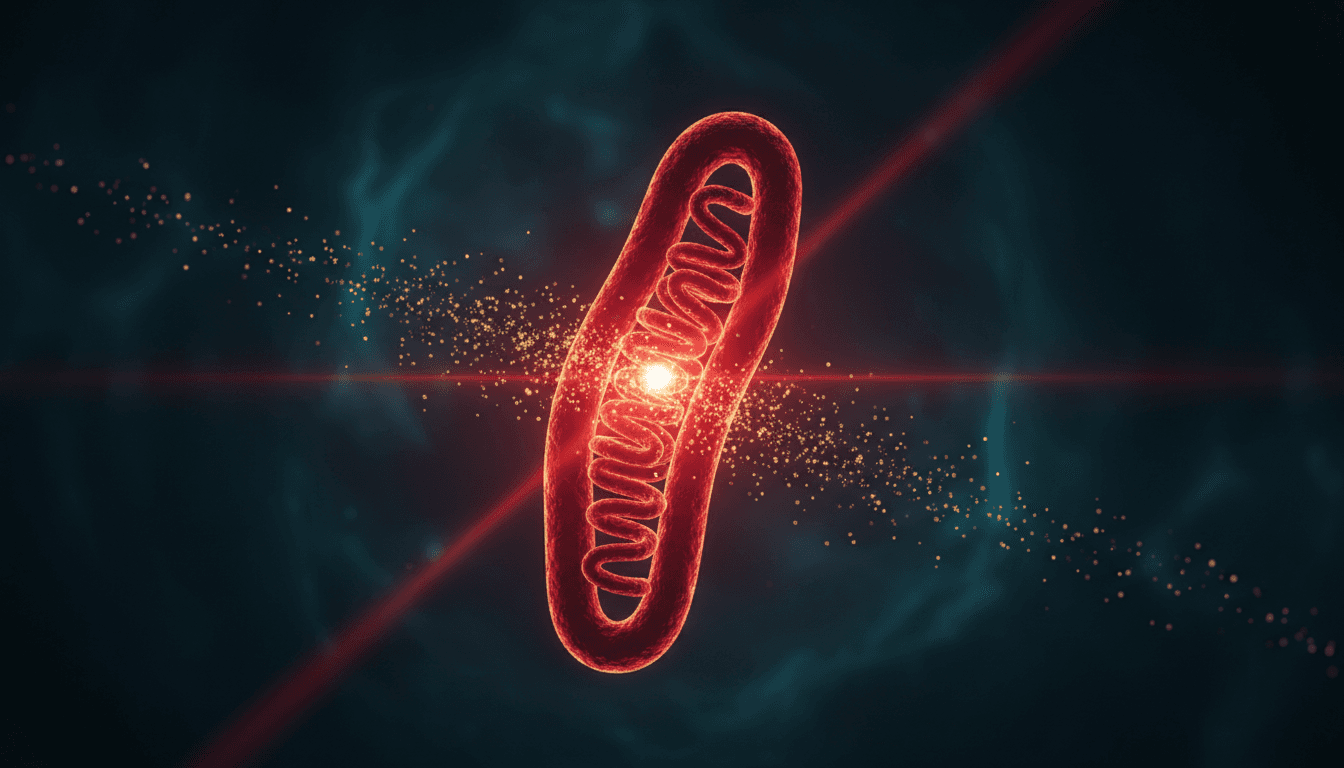
If you're considering red light for muscle recovery, the honest summary: it probably helps, the mechanism makes sense (boosting mitochondrial energy production in stressed muscle tissue), and the best evidence points to reduced soreness and faster recovery of muscle function.
But nobody can tell you the optimal dose, wavelength, or timing with real confidence. The 630-850nm range used in most studies covers a wide band. Energy delivery ranged from 10 to 50 joules across positive trials. Pre-exercise versus post-exercise timing showed different effects in different studies.
And if you're doing ice baths after workouts, you might want to pick one or the other. Not both.
Sources
- Ferraresi C, Hamblin MR, Parizotto NA. "Photobiomodulation in human muscle tissue: an advantage in sports performance?" Journal of Biophotonics (2016). https://pmc.ncbi.nlm.nih.gov/articles/PMC5167494/ (opens in new tab)
- Hamblin MR. "Mechanisms and applications of the anti-inflammatory effects of photobiomodulation." AIMS Biophysics (2017). https://pmc.ncbi.nlm.nih.gov/articles/PMC5523874/ (opens in new tab)
- Vanin AA et al. "Photobiomodulation therapy for the improvement of muscular performance and reduction of muscular fatigue associated with exercise." International Journal of Sports Physical Therapy (2022).
- de Oliveira AR et al. "Photobiomodulation in human muscle tissue: a molecular evidence review." Journal of Plastic, Reconstructive & Aesthetic Surgery (2021). https://www.sciencedirect.com/science/article/abs/pii/S1748681520307348 (opens in new tab)