Red Light Therapy
The science of photobiomodulation — how specific wavelengths of red and near-infrared light interact with your mitochondria and why the clinical evidence is stronger than the marketing suggests.
Red Light Therapy
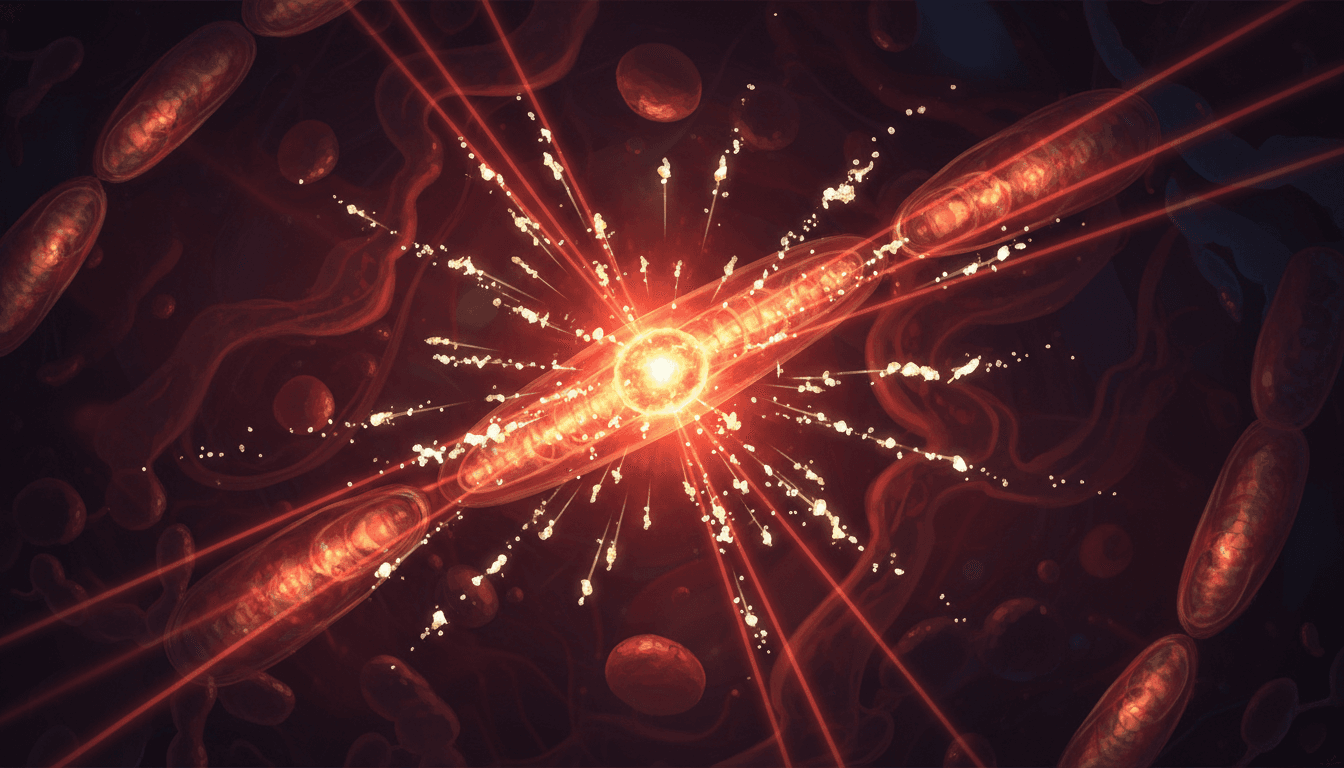
There's an enzyme sitting inside your mitochondria right now that absorbs red light. Not metaphorically. A specific protein called cytochrome c oxidase takes in photons at wavelengths between 630 and 850 nanometers and converts them into measurable increases in cellular energy production. That mechanism — identified in the 1980s by a Russian biophysicist and confirmed by hundreds of studies since — is the foundation of everything called "red light therapy" or "photobiomodulation."
This ten-part series separates the science from the marketing. You'll learn how one photochemical reaction cascades into effects on skin, pain, brain function, muscle recovery, hair growth, thyroid health, and vision. You'll meet the researchers who proved it — from Tiina Karu identifying the chromophore to Michael Hamblin mapping the anti-inflammatory cascade to Glen Jeffery showing that three minutes of red light once a week improves aging eyesight. And you'll learn why most consumer devices can't replicate clinical results, why more light isn't better, and what the evidence actually does and doesn't support.
In This Series
- 1
Your Mitochondria Have a Light Switch
Red light therapy works because a specific enzyme in your mitochondria absorbs photons and releases the molecule that's been choking your cellular energy production.
4 min read - 2
The Collagen Study That Wasn't Subjective
A 2014 trial used ultrasound to measure collagen density changes from red light therapy. The results were structural, not cosmetic.
4 min read - 3
The Anti-Inflammatory That Doesn't Suppress Inflammation
Red light therapy doesn't blunt inflammation like a drug. It accelerates the body's own resolution process, and the evidence for pain reduction is some of the strongest in photobiomodulation.
4 min read - 4
Your Brain on Light: Shining Infrared Through Your Skull Actually Works
Researchers at UT Austin are shining infrared light through people's skulls and measuring real cognitive improvements. The science is newer than skin or pain applications, but the mechanistic logic is hard to argue with.
4 min read - 5
Why Red Light Beats Ice for Sore Muscles
A controlled trial pitted red light against cryotherapy for post-exercise recovery, and red light won across the board. The combination was worse than red light alone.
5 min read - 6
The Hair Loss Treatment That Doesn't Come in a Bottle
Red light therapy for hair growth has FDA-cleared devices, multicenter trials, and results comparable to minoxidil. Without the side effects.
4 min read - 7
73% Antibody Reduction. From Light.
Red light therapy on the thyroid produced some of the largest effect sizes in photobiomodulation research. Then a 2024 study found nothing. Both results make sense.
4 min read - 8
Your Retina Has More Mitochondria Than Any Other Tissue
A UCL neuroscientist found that 3 minutes of red light per week improved declining vision by 17%. The retina's extreme mitochondrial density makes it uniquely responsive to photobiomodulation.
5 min read - 9
Your Red Light Panel Probably Isn't Doing What You Think
The difference between red light therapy that works and red light therapy that doesn't comes down to four variables most people get wrong.
5 min read - 10
Red Light Therapy Works. The Marketing Doesn't.
The science behind red light therapy is real. The consumer market has stretched every fact until it's unrecognizable.
4 min read