The Anti-Inflammatory That Doesn't Suppress Inflammation
Red light therapy doesn't blunt inflammation like a drug. It accelerates the body's own resolution process, and the evidence for pain reduction is some of the strongest in photobiomodulation.
170 patients with rheumatoid arthritis. Pain attenuation of up to 90%. Not from a new biologic drug. Not from steroids. From light.
That number comes from a photobiomodulation study using wavelengths between 630-850nm on inflamed joints. And it's not an outlier. Pain reduction is one of the most clinically replicated effects in the entire PBM literature. Multiple meta-analyses. Systematic reviews across research groups. Joint pain, nerve pain, post-surgical pain. The evidence base here is deep.
But the mechanism isn't what most people assume.
Not a Painkiller
When you take ibuprofen, it suppresses prostaglandin production across the board. Inflammation drops. Pain drops. But so does the acute inflammatory response your body needs to actually heal.
Red light does something different.
Michael Hamblin, formerly of Harvard Medical School and MIT, published a comprehensive review in AIMS Biophysics in 2017 where he stated: "One of the most reproducible effects of PBM is an overall reduction in inflammation." But he was careful about the mechanism. PBM doesn't suppress inflammation the way a drug does. It modulates the inflammatory timeline.
Two phases. First, PBM stimulates the acute inflammatory response. This is the normal, necessary phase where your body sends repair crews to damaged tissue. Second, once that acute phase completes, PBM accelerates the resolution of chronic inflammatory signals that would otherwise linger.
That distinction matters. An anti-inflammatory drug hits the brakes on the whole process. PBM helps your body shift gears from "damage detected" to "repair complete" faster than it would on its own.
That's not pain suppression. That's pain resolution.
The Molecular Path
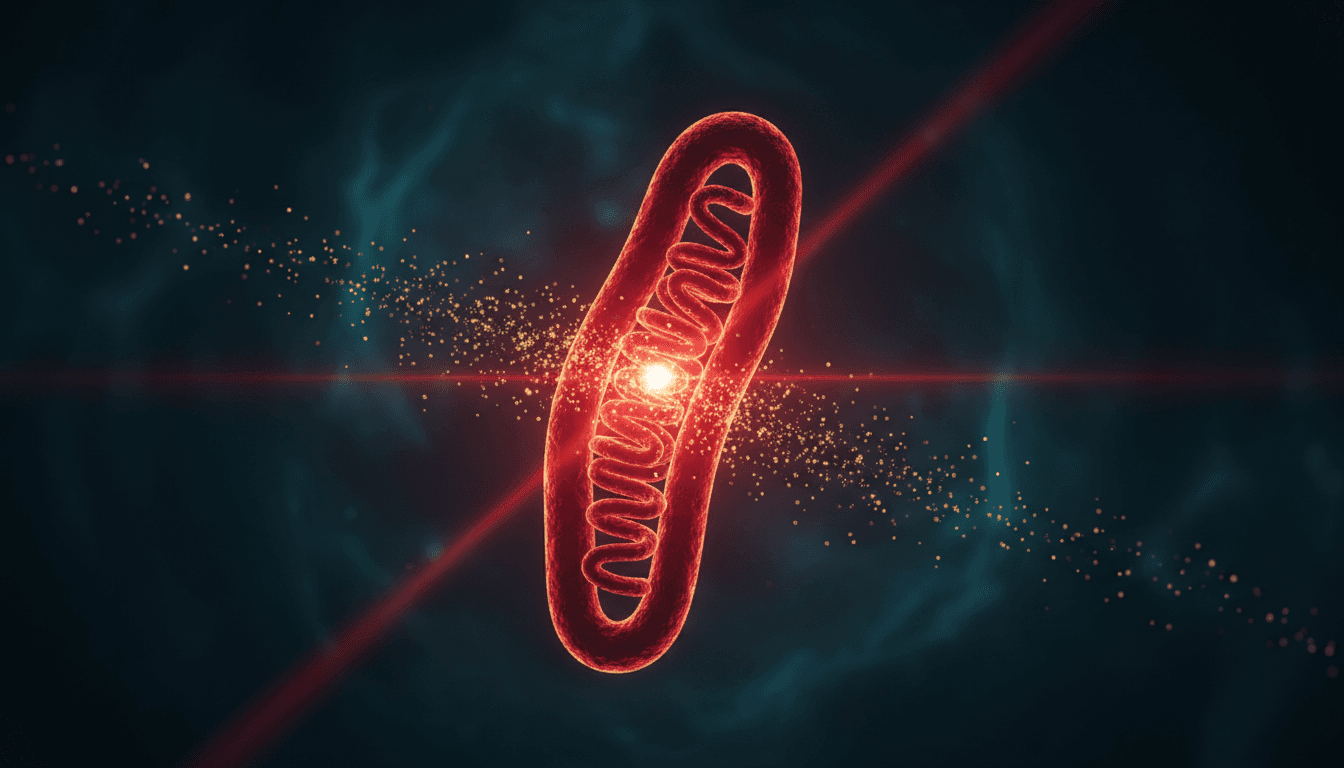
The pathway runs through the same cytochrome c oxidase cascade I covered in article one. Light hits the enzyme. ATP goes up. A controlled burst of reactive oxygen species activates NF-kB. From there, the downstream effects split.
Anti-inflammatory cytokines go up. Interleukin-10 and TGF-beta get upregulated. Pro-inflammatory cytokines go down. TNF-alpha, IL-1beta, IL-6. And PGE2 (prostaglandin E2), one of the key molecules that makes damaged tissue hurt, gets reduced.
One input. One enzyme. The same mechanism that drives collagen synthesis in skin drives pain reduction in joints. The body just does different things with the ATP and gene expression programs depending on the tissue type.
Joints and Nerves
For knee osteoarthritis specifically, multiple meta-analyses conclude that PBM "remarkably ameliorates joint pain." Knee OA is a useful test case because the joints are accessible, the pain is measurable, and the patient population is large enough for real statistical power.
NIR wavelengths (800-850nm) penetrate deeper into tissue than visible red. For a knee or hip, where the joint capsule and synovial tissue sit under layers of muscle and fat, that deeper penetration matters. Superficial red light at 630nm won't reach the structures causing the pain. This is one of those cases where wavelength selection isn't a marketing distinction. It's a physics constraint.
A 2023 review in the International Journal of Molecular Sciences titled "The Mechanisms and Efficacy of Photobiomodulation Therapy" documented the pain pathways in more detail. Reduced prostaglandin synthesis. Reduced substance P, the neuropeptide that amplifies pain signaling. Increased beta-endorphin release. Axonal regrowth in peripheral nerve injuries. Reduced neuroinflammation in central sensitization models.
The nerve findings are the ones I keep coming back to. Sciatica. Thoracic outlet syndrome. Post-surgical numbness that lingers for months. These are conditions people manage for years with partial solutions. The idea that PBM might support actual axonal repair, not just temporary pain relief, puts it in a different category than almost anything else currently available.
The Dose Problem (Again)
Same caveat as the first two articles. The dose matters.
Clinical studies producing these pain results use specific energy densities, typically 4-10 J/cm² for superficial targets and higher for deep joints where tissue absorption reduces what reaches the target. They use NIR wavelengths for depth. They position the light source at distances calibrated to deliver known irradiance at the tissue surface.
Most consumer pain devices don't publish enough specs to know if they're hitting those parameters. Some probably do. Some definitely don't. A $40 red light "pain relief" wand from Amazon is not the same instrument used in a controlled clinical trial. (You knew that. But the marketing hopes you'll forget.)
The evidence for PBM and pain is strong. Genuinely strong. Strong enough that it's been cleared by the FDA for certain pain indications. Strong enough that physical therapy clinics, sports medicine practices, and rehab facilities have been using it for years.
But "the science supports this" and "this specific device at this price point will work for your specific problem" are two very different statements. The first one I can back up. The second one requires information most manufacturers won't give you.
Part of the Red Light Therapy series. Previous: The Collagen Study That Wasn't Subjective.
Sources
- Hamblin MR. "Mechanisms and applications of the anti-inflammatory effects of photobiomodulation" (2017, AIMS Biophysics) (opens in new tab)
- Photobiomodulation: A review of the molecular evidence (2021, Journal of Plastic, Reconstructive & Aesthetic Surgery) (opens in new tab)
- Ferraresi et al. "Photobiomodulation in human muscle tissue" (2016, Journal of Biophotonics) (opens in new tab)
- Photobiomodulation Therapy on Brain (2024, Cells) (opens in new tab)