Your Brain on Light: Shining Infrared Through Your Skull Actually Works
Researchers at UT Austin are shining infrared light through people's skulls and measuring real cognitive improvements. The science is newer than skin or pain applications, but the mechanistic logic is hard to argue with.
A neuroscientist at the University of Texas at Austin named Francisco Gonzalez-Lima has spent years pointing infrared lasers at people's foreheads. Not as a party trick. As rigorous science. And the results keep showing the same thing: measurable improvements in memory, executive function, and mood.
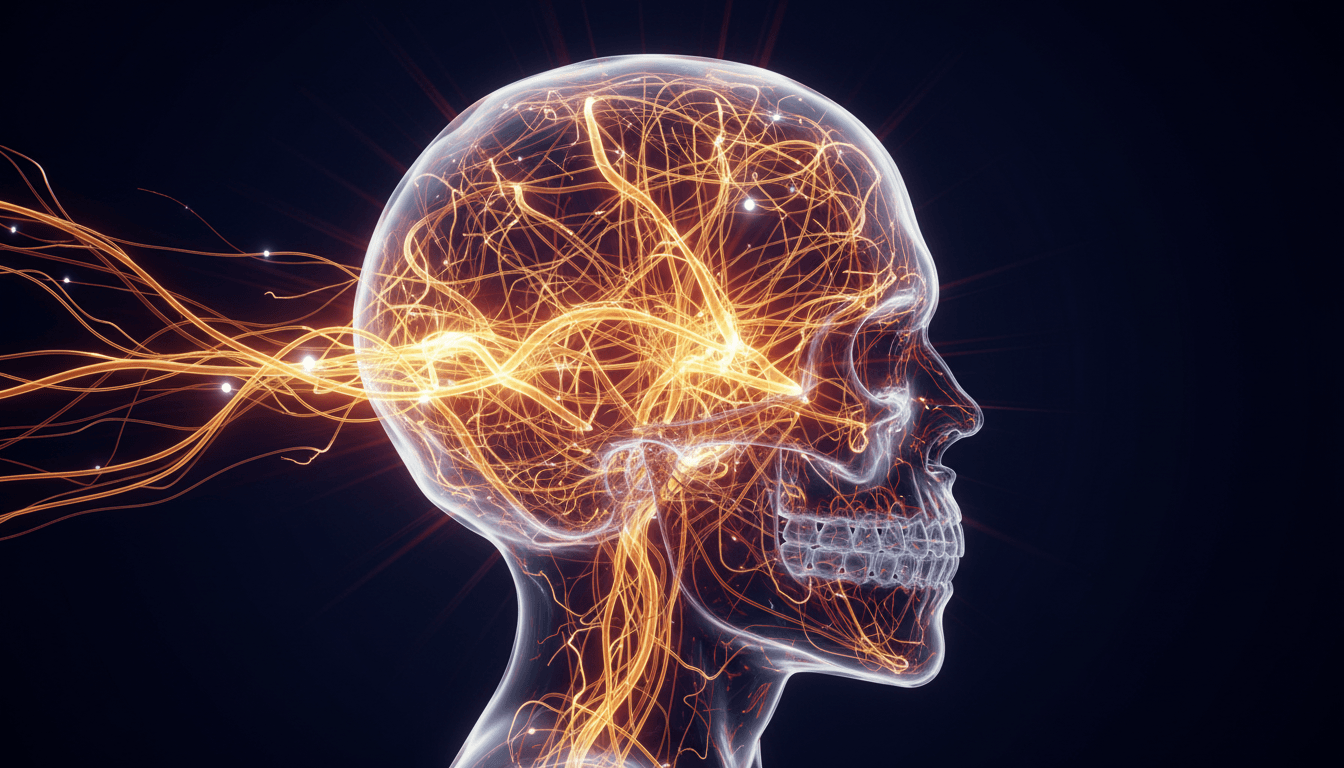
This is transcranial photobiomodulation. tPBM if you want the abbreviation. The idea sounds like something from a bad sci-fi movie. Shine light through your skull. Make your brain work better.
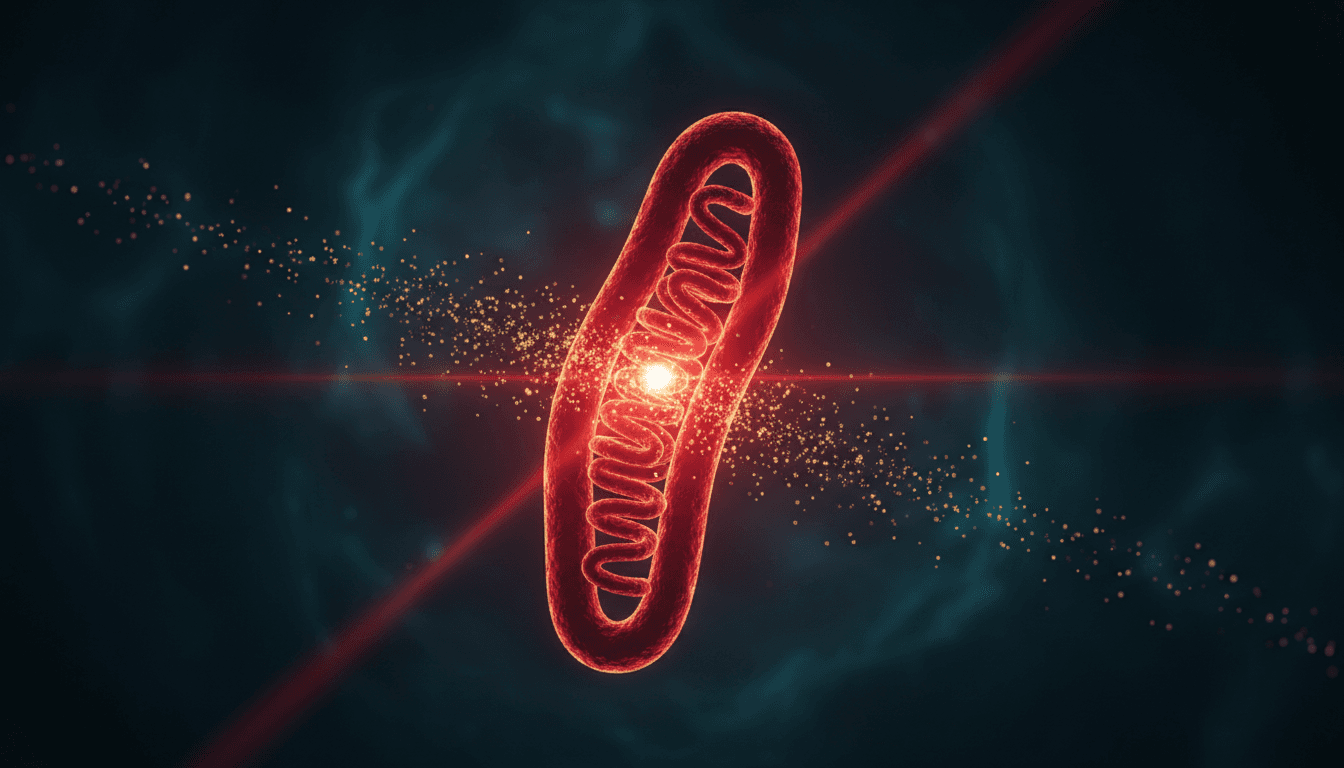
But the mechanism is the same one we've been talking about throughout this series. Cytochrome c oxidase. The enzyme in your mitochondria that absorbs specific wavelengths of light and converts them into cellular energy. Your neurons have mitochondria. Lots of them, actually. Neurons are among the most metabolically demanding cells in your body. And certain wavelengths of infrared light can penetrate bone and reach cortical tissue.
The logic chain is straightforward. The clinical evidence is catching up.
The Study That Made Me Pay Attention
In 2022, a team led by Zhao published a study in Science Advances that did something most brain-light studies don't do. They controlled for almost everything.
They applied 1064nm light to the right prefrontal cortex while measuring brain activity with EEG. Specifically, they tracked something called contralateral delay activity (CDA), a neural signal that directly correlates with working memory capacity. Think of it as a brainwave signature for how much information you can hold in your head at once.
The results: working memory capacity improved after tPBM at 1064nm to the right prefrontal cortex. The CDA signal increased, meaning the brain was processing more information.
What makes this hold up is what they tested next. 852nm light: no effect. Left prefrontal cortex instead of right: no effect. The positive finding was wavelength-specific and location-specific. When your null conditions produce null results and your experimental condition produces the predicted result, that's much harder to dismiss as placebo.
What Gonzalez-Lima's Lab Has Shown
Gonzalez-Lima and his colleague Douglass Barrett have published multiple studies on what they call transcranial infrared laser stimulation (TILS). The consistent findings across their work:
Improved executive function. Better reaction times. Enhanced mood. Better performance on rule-based category learning, which is a higher-order cognitive function that depends on prefrontal-hippocampal circuitry.
These aren't self-report outcomes where people say they feel smarter. They're measured via cognitive task performance and neuroimaging. The proposed mechanisms include increased regional cerebral blood flow (measured directly via functional MRI), the same cytochrome c oxidase pathway that operates in every other tissue, anti-neuroinflammatory effects, and upregulation of BDNF (brain-derived neurotrophic factor), a protein critical for neuroplasticity.
BDNF is particularly interesting. It's the same molecule that increases with exercise and that's been linked to learning and memory formation. If tPBM genuinely upregulates BDNF, the cognitive effects aren't just acute. They're building something.
Beyond Healthy Brains
The research extends beyond healthy brains. Spera and colleagues published a 2021 pilot study in the Journal of Alzheimer's Disease testing dose-dependent effects of tPBM in Alzheimer's patients. Preliminary results. Small sample. But they established safety and found dose-response relationships, meaning more light (within a range) produced more effect. That's what you want to see in early-stage research.
A 2024 systematic review in Cells looked at tPBM across multiple brain conditions and found consistent evidence for cognitive improvement in traumatic brain injury patients. Reduced symptoms. Better performance on neuropsychological tests.
A 2022 randomized controlled trial on older women with mild cognitive impairment found significant improvements versus sham stimulation.
None of this is slam-dunk clinical evidence. But the pattern is coherent. Light at specific wavelengths reaches cortical tissue. Neurons have the same mitochondrial machinery that responds to these wavelengths in every other cell type. Multiple independent groups are finding effects in the same direction.
What's Still Unproven
Effect sizes are modest. Sample sizes are small. The field lacks standardized protocols. Nobody has run the kind of large-scale, multi-site RCT that would make this a proven clinical intervention. We're not there yet.
And the consumer device problem is even worse for brain applications than for skin or pain. Most consumer red light panels emit 630-660nm and 830-850nm. The strongest brain evidence is at 1064nm. Different wavelength entirely. Someone shining their $200 red light panel at their forehead is not replicating the Gonzalez-Lima protocols.
I think about this in practical terms. Brain fog, post-concussion symptoms, cognitive decline — these are conditions where the current toolkit is genuinely limited. The research makes me hopeful that tPBM could become a real tool here. But "could become" and "is" are different sentences.
The mechanistic logic is sound. Neurons have mitochondria. Cytochrome c oxidase is there. The right wavelengths can reach cortical tissue through bone. Multiple human studies show real effects with proper controls.
The honest take: brain PBM is where skin PBM was maybe 10 years ago. Strong biological plausibility. Accumulating human evidence. Not yet ready for clinical recommendations. Worth watching closely. Not worth buying a $3,000 brain-specific device over.
Sources
- Zhao C, et al. "Transcranial photobiomodulation enhances visual working memory capacity in humans." Science Advances (2022). https://www.science.org/doi/10.1126/sciadv.abq3211 (opens in new tab)
- Photobiomodulation Therapy on Brain: A Systematic Review. Cells (2024). https://www.mdpi.com/2073-4409/13/11/966 (opens in new tab)
- Hamblin MR. "Mechanisms and applications of the anti-inflammatory effects of photobiomodulation." AIMS Biophysics (2017). https://pmc.ncbi.nlm.nih.gov/articles/PMC5523874/ (opens in new tab)
- Wunsch A, Matuschka K. "A Controlled Trial to Determine the Efficacy of Red and Near-Infrared Light Treatment." Photomedicine and Laser Surgery (2014). https://pmc.ncbi.nlm.nih.gov/articles/PMC3926176/ (opens in new tab)